
Wrapping a rice dumpling looks effortless when an aunty does it at a market stall: two bamboo leaves, a fold into a cone, a scoop of rice and filling, a twist of string, done. Then you try it yourself and the rice spills everywhere. That is exactly why a rice dumpling making class in Singapore is such a popular Dragon Boat Festival activity, especially when the festival lands in the June school holidays and families are looking for something hands-on to do together.
This guide covers the types of zongzi (粽子) wrapping sessions you can find, what to check before you book, and how to host your own session at home if you would rather gather the family around the kitchen table. If you want to learn about the dumplings themselves first, our bak chang guide explains the main styles.
Where to Find a Rice Dumpling Wrapping Session
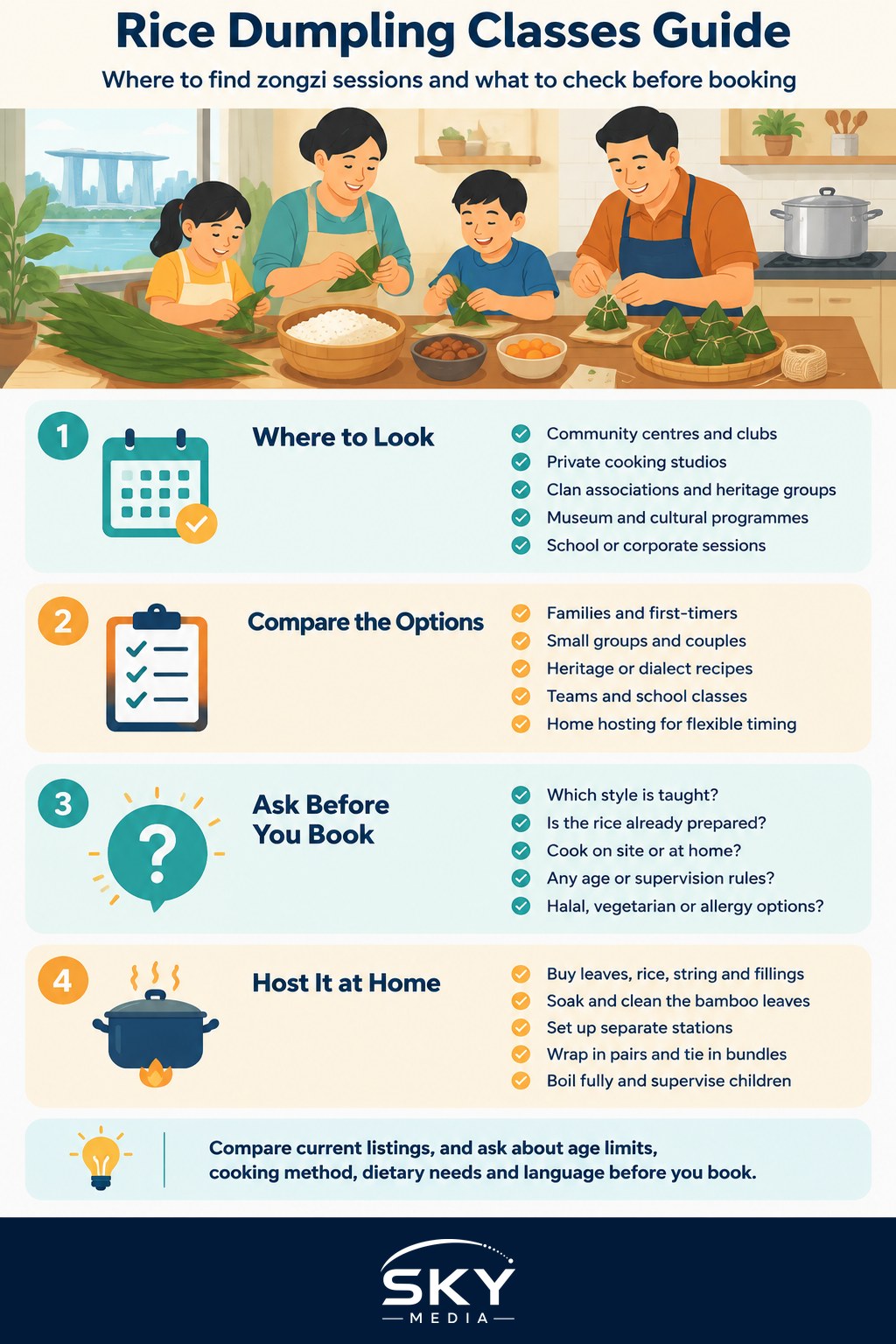
Zongzi classes are seasonal. Most appear in the weeks leading up to the fifth day of the fifth lunar month, then disappear until the next year. Watch for them from around a month before the festival. The main places to look:
- Community centres and clubs. Many community centres run festive cooking workshops, and these are usually listed on the People’s Association’s OnePA portal. They tend to be friendly, neighbourhood-scale sessions that suit families and seniors.
- Independent cooking studios. Private studios that run baking and cuisine classes sometimes add a festive dumpling workshop. These may offer smaller groups and more styles, such as Nyonya chang alongside Hokkien bak chang.
- Clan associations and cultural groups. Some clan associations and heritage groups organise wrapping sessions for members and the public as part of their festival programming, often with an emphasis on dialect-group recipes.
- Heritage and museum programmes. Cultural institutions sometimes include demonstrations or workshops in festival-season family programmes.
- Corporate and school sessions. Some instructors run wrapping sessions as team-building or school enrichment activities, so ask your HR or your child’s school whether anything is planned.
Search for terms like “zongzi workshop”, “bak chang class” or “rice dumpling workshop” along with the current year, and check community notice boards and residents’ committee chat groups too.
How Classes Compare
Each type of session suits a slightly different group. Use the comparison below to narrow down your options.
| Option | Best for | What to check |
|---|---|---|
| Community centre workshop | Families, seniors, first-timers on a budget | Minimum age, whether children need a paying adult with them, registration deadline |
| Private cooking studio | Small groups, couples, those wanting multiple styles | Group size, whether you take dumplings home, cancellation terms |
| Clan or cultural association | Anyone keen on dialect recipes and heritage | Language of instruction, whether it is open to non-members |
| Corporate or school session | Teams and classes | Dietary requirements, allergy handling, venue kitchen facilities |
| Hosting at home | Extended families, flexible timing | Enough pots and stove space, ingredient prep time, who leads |
Prices and formats change each year, so compare current listings and read the details carefully rather than assuming last year’s arrangements still apply.
Questions to Ask Before You Book
A few checks save disappointment on the day.
- Which style is taught? Hokkien bak chang (savoury pork, mushroom and chestnut), Nyonya chang (sweet and savoury with candied winter melon and spices, often tinted blue with butterfly pea flower) and kee chang (small plain alkaline dumplings) all wrap differently. Pick the one your family actually likes to eat.
- Is the rice pre-prepared? Most classes soak and season the rice and cook the filling in advance so the session focuses on wrapping. Some longer classes include the full preparation.
- Do you cook them there or at home? Rice dumplings need a long boil. Many classes send you home with raw wrapped dumplings and cooking instructions, so ask how long they keep and how to store them.
- Age limits and supervision. Children can usually manage the wrapping with help, but hot water and sharp scissors are involved. Check the minimum age and whether an adult must stay with each child.
- Dietary needs. Fillings often include pork, dried shrimp and nuts. Ask whether halal, vegetarian or allergy-friendly options are available before booking.
- Language. Classes may be taught in English, Mandarin or a mix. If you are bringing grandparents or newcomers, confirm this in advance.
How to Host a Zongzi Wrapping Session at Home
If you have a few willing relatives and a big pot, hosting at home is one of the nicest ways to spend a festival afternoon. It also keeps the recipe in the family.
A day or two before
- Buy dried bamboo leaves, glutinous rice, string or raffia and your fillings from a wet market or supermarket. Leaves and string are easier to find in the run-up to the festival.
- Soak and clean the bamboo leaves. Many cooks boil them briefly, then keep them in water so they stay pliable. Trim the hard stem ends.
- Wash and soak the glutinous rice according to your recipe, then season it.
- Cook or marinate fillings such as braised pork, mushrooms, chestnuts and salted egg yolk.
On the day
- Set up stations. One table with rice, one with fillings, one with leaves and string. Cover surfaces; this gets messy.
- Let an experienced wrapper demonstrate slowly. Ask them to show the cone fold several times. Overlapping two leaves makes it more forgiving for beginners.
- Pair up. Beginners wrap better with a partner holding the cone while they fill. Children are great at adding fillings and tying knots.
- Tie in bunches. Tie dumplings together by their strings in bundles, which makes them easier to lower into and lift out of the pot.
- Boil thoroughly. Follow your recipe for boiling time, keep them fully covered in water, and top up with hot water as needed. Supervise children around the pot at all times.
Expect lopsided first attempts. The second and third are always better, and the slightly odd-looking ones taste exactly the same.
Making It a Festival Day for Everyone
A wrapping session is more memorable with a little extra around it.
- Tell the story. While the dumplings boil, share the legend of Qu Yuan and why rice was thrown into the river. Children wrap with more care once they know the reason.
- Label the batches. Use different coloured string for each person or style so everyone can find their own dumpling later.
- Share them out. Giving home-wrapped dumplings to neighbours or older relatives is a long-standing festival gesture and a nice lesson for children.
- Pair it with other outings. The festival week often coincides with dragon boat racing and community events, so you can turn it into a full festival day.
If wrapping sparks a wider interest in hand-made food, a dim sum making class or taking up dumpling making as a hobby are natural next steps that you can enjoy all year round.
Frequently Asked Questions
Why do my rice dumplings leak or fall apart when boiling? The usual causes are loose wrapping, weak string and rice that was not packed firmly. Overlap two leaves, press the rice in, fold tightly and tie securely. Keep the dumplings fully submerged and avoid a violent boil. Beginners find it easier with a partner holding the cone.
Can I freeze dumplings I wrapped in class before boiling them? Ask the instructor, because raw rice dumplings with meat fillings need careful handling. Most classes advise how long to keep them and when to cook, and refrigerating them and cooking soon is typical. Once boiled and cooled, dumplings freeze well, as covered in storage guidance.
Is wrapping at home worth the effort compared with buying? It depends on what you value. Making them yourself takes time and prep, but you control the fillings and can involve the whole family, and the lopsided ones taste the same. If you only want the dumpling, buying is simpler. A class is a good middle ground.
What if nobody in my family knows how to wrap? Join a class first or ask an experienced relative or neighbour to demonstrate slowly, several times. Overlapping two leaves makes the cone more forgiving. Start with a small batch, expect lopsided early attempts and learn together. The second and third dumplings are always better than the first.
What should I check about class prices? Check what the fee includes, such as ingredients, how many dumplings you take home, class length and whether children need a paying adult. Formats and prices change every year, so compare current listings and the cancellation terms rather than relying on last year’s arrangement.