
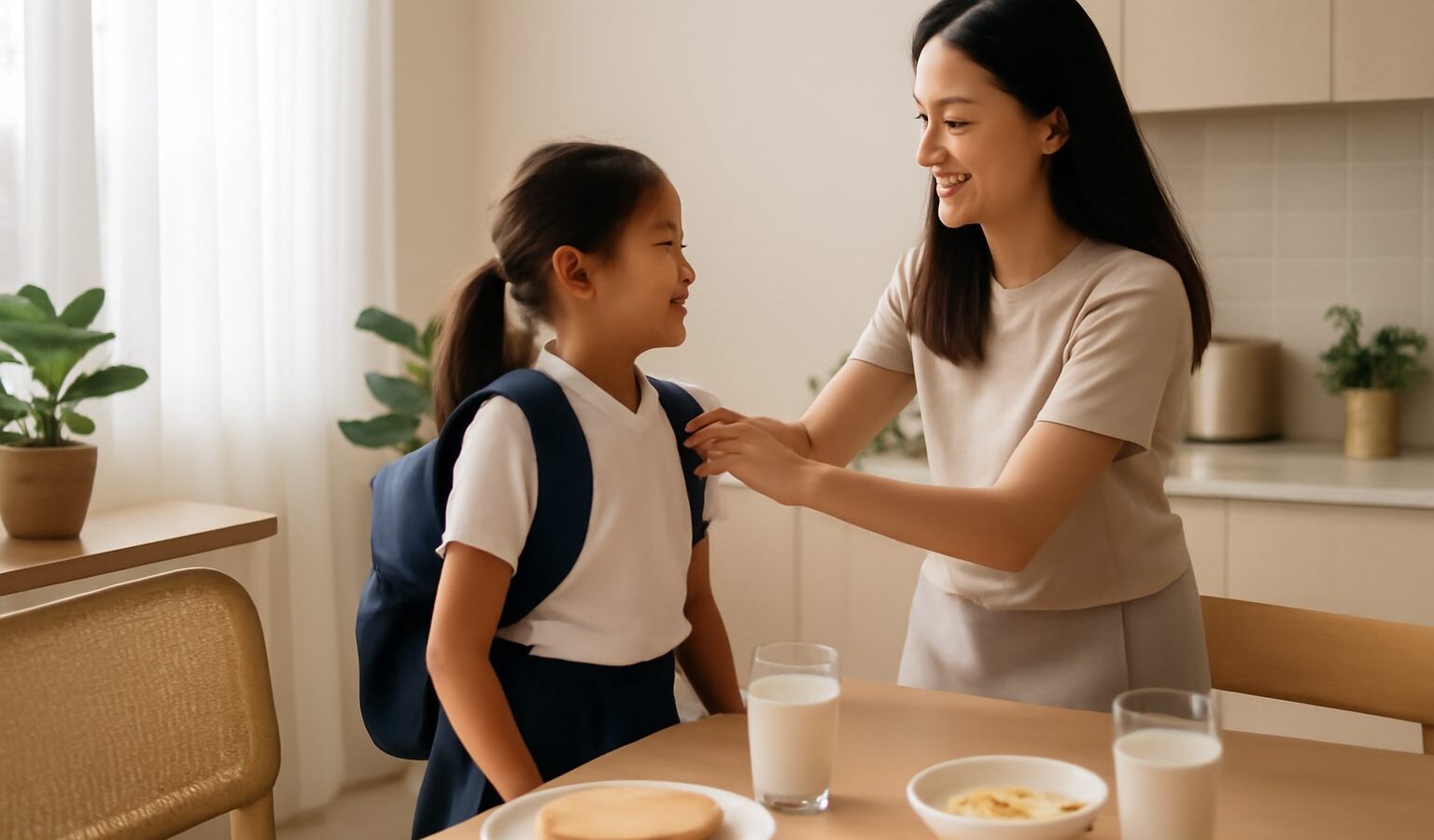
There is a particular kind of chaos that only a school morning can bring. The rice is still warm, one child cannot find a sock, another has suddenly remembered a spelling test, and the clock is ticking towards the school bus or the drop-off queue. If your mornings feel like a daily sprint, you are in very good company. A calmer morning routine kids singapore families can actually keep is not about doing more. It is about doing a few small things earlier and more predictably.
The good news is that children thrive on rhythm. When mornings follow a familiar pattern, there is less negotiation, less nagging and fewer meltdowns, because everyone already knows what comes next. You are not trying to build a rigid timetable. You are building a gentle current that carries the family towards the front door.

Prepare the Night Before
Almost every smooth morning is quietly built the evening before. The more decisions you can make while everyone is still calm, the fewer battles you fight when everyone is rushed and half-awake.
A few things worth sorting out at night:
- Lay out the full school uniform, socks, shoes by the door and any CCA kit. Let older children pick their own clothes to save a debate.
- Pack the school bag together and place it by the shoe rack. Sign forms and slot in the water bottle before bed.
- Decide breakfast in advance. Prep overnight oats, portion out fruit, or plan a quick stop for a favourite hawker breakfast if that suits your morning.
- Set out your own things too. A calm parent sets the tone for the whole household.
Mornings also start with the night before in a deeper sense. A child who is short on sleep will be slower, grumpier and harder to move. Protecting an early, consistent lights-out makes the biggest difference of all, which is why a settled bedtime routine for children is really the foundation of every good morning. If wake-ups are a daily struggle, look first at what time bedtime actually happens.
Build a Predictable Morning Flow
Once the night before is handled, the morning itself can follow a simple, repeatable order. Children remember sequences far better than they remember instructions shouted across a flat. Try to keep the same flow each day so it becomes automatic, wake, toilet, dress, eat, teeth, shoes, go.
Here are some habits that help this flow along:
- Wake a little earlier than feels necessary. Even ten extra minutes removes the frantic edge and gives room for the unexpected sock crisis.
- Use visual cues for younger children. A simple picture chart on the fridge lets a preschooler see what comes next without you repeating yourself.
- Keep screens off in the morning. A cartoon or a game is very hard to switch off and can swallow the whole schedule. Save devices for after school and read more about managing screen time for young children.
- Give time warnings, not sudden commands. Five more minutes, then shoes on works far better than a rushed shoes now.
- Let children own age-appropriate tasks. A child who carries their own bag and buckles their own shoes feels capable, and you get a helper instead of a passenger.
Breakfast deserves a special mention in our food-loving city. Mornings are busy, but a little something in the tummy helps children concentrate at school. It does not need to be elaborate. Wholemeal bread, a boiled egg, plain milk, a banana or a simple bowl of porridge all do the job. Try to keep sugary drinks and sweet snacks out of the morning rush, and lean on water instead. If you want a wider view of balanced meals, our guide to children’s nutrition and healthy eating has gentle, practical ideas.
Some mornings will still go sideways, and that is completely fine. A missed bus or a forgotten worksheet is not a failure of parenting, it is just Tuesday. When things wobble, keep your own voice steady, because your calm is contagious. Children who are hurried with warmth arrive at school feeling secure, and children who are hurried with panic carry that tension into their day.
Over time, small, consistent habits add up to mornings that feel less like a battle and more like a routine you can actually rely on. Start with just one change tonight, perhaps packing the bags before bed, and let the rest build slowly. A smoother morning is not about a perfect household. It is about a few kind, steady habits that give your family a gentler start and send everyone out the door feeling ready.
Frequently Asked Questions
What if my child is a slow eater and always makes us late? Start breakfast a little earlier and give gentle time warnings, such as ‘ten more minutes, then teeth’. A small, easy-to-finish meal helps, and you can make it a friendly challenge rather than a nag. If it is persistent, mention it to your paediatrician.
How can I get a teenager to wake up without daily shouting? Hand over responsibility. Let them set their own alarm and agree the consequences of oversleeping, such as making their own way to school. Make sure bedtime is realistic and phones are off the bed. A short chat about what would help works better than nagging.
How do I manage mornings with a baby and a school-going child together? Do as much as possible the night before, then give the older child a simple checklist so they need less help while you feed or change the baby. Wake yourself first for a few quiet minutes. Accept that some mornings will run late.
Should I use a reward chart to get kids moving in the morning? A reward chart can help for a short period, especially for preschoolers, if rewards are small and tied to specific tasks like getting dressed. Praise matters most. Avoid expensive prizes or sweets, and phase the chart out once the routine feels automatic.
How can working parents share the school morning run fairly? Split the tasks rather than the days, for example one parent handles breakfast and lunchboxes while the other manages dressing and bags. Talk about it on a calm evening, not mid-rush. Review every few weeks, and let older kids take on small jobs so the load is lighter.
Further reading: Home-Based Learning Tips for Parents · How to Pack a School Bag So Mornings Feel Easier