
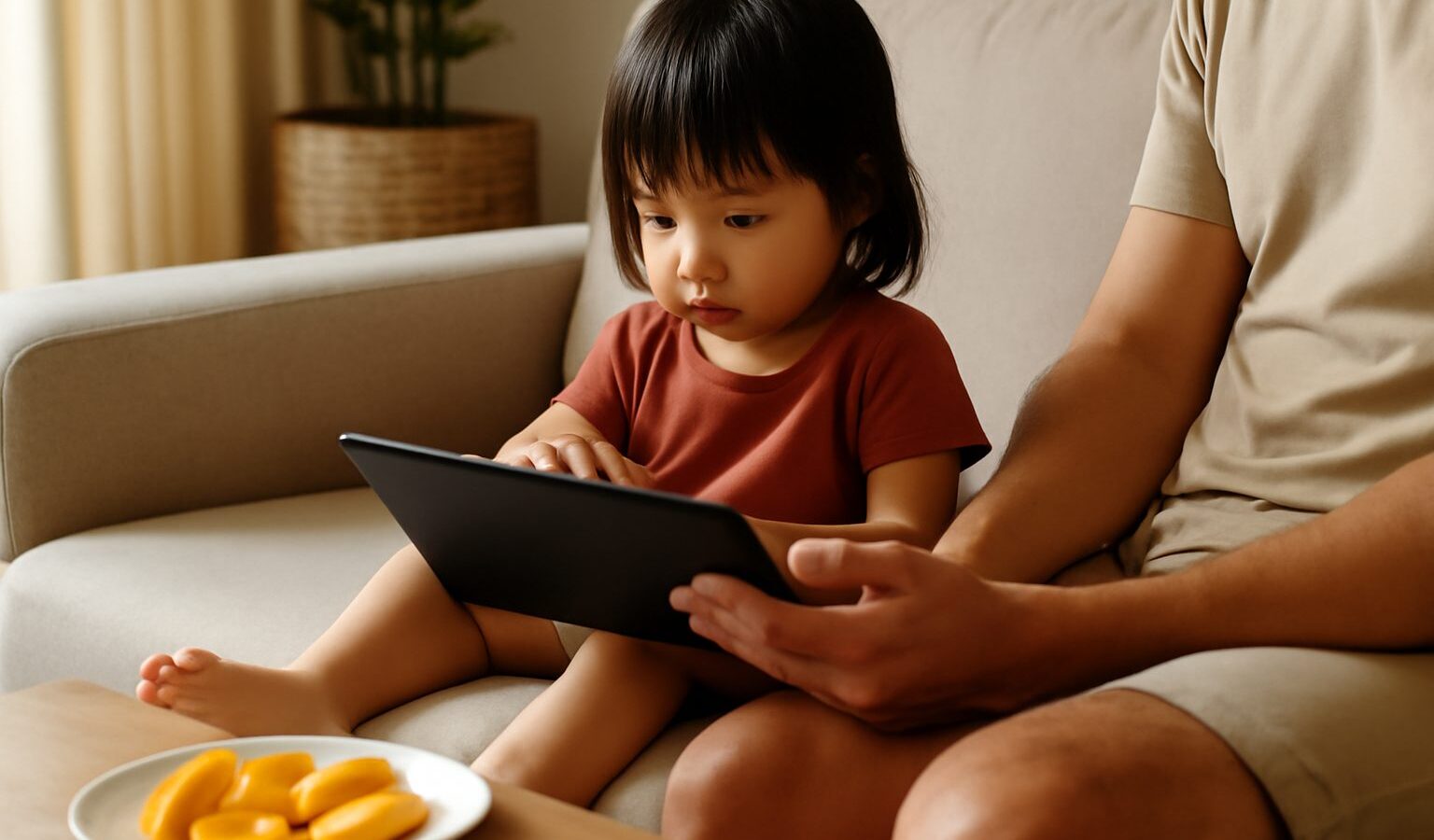
Screens are woven into daily life in Singapore, so it is completely natural to wonder how much is too much for a little one. If you are trying to think through screen time for young children in Singapore, the good news is that you do not need a rigid rulebook, just a few sensible principles and a willingness to adjust as your child grows. This guide offers a warm, general overview of how to strike a balance, what health bodies broadly advise, and small habits that make a big difference. It is general information only and not medical advice, so please check HealthHub and HPB for the current guidance, and speak to your doctor, a polyclinic, or your paediatrician about your own child.
What Health Bodies Generally Advise
Health authorities around the world, and locally through HealthHub and HPB, tend to encourage limiting recreational screen time for young children, and they are especially cautious about the very youngest. For babies and toddlers under two, general guidance leans towards avoiding screens beyond things like video calls with family, because the early years are a time of hands-on, face-to-face learning. As children get older, the message shifts towards keeping screens modest and purposeful rather than banning them outright.
Rather than fix on an exact number of minutes, which can change and varies by source, it is wiser to look up the current recommendations on HealthHub or HPB, or ask your doctor at a routine visit. What matters most is the overall shape of the day: plenty of play, movement, sleep, and real interaction, with screens taking a small, supporting role. If your child is well below any published limit but everything else in their day is crowded out, that is worth a rethink too.
Quality Matters More Than Quantity
Not all screen time is the same, and this is one of the most freeing things to understand. A slow, gentle programme that your child watches with you, and then chats about afterwards, is a very different experience from fast, endlessly autoplaying clips watched alone. When you can, favour content that is calm, age-appropriate, and unhurried, and be wary of formats designed to keep a child glued in place.
A few pointers that help:
- Choose slower, simpler content. Gentle pacing suits young children better than frantic, over-stimulating clips.
- Turn off autoplay. Ending an episode on purpose is easier than fighting an endless stream.
- Watch out for adverts and in-app pressure. Free content aimed at children can be surprisingly pushy.
- Keep it purposeful. A short video to learn a song or see how something works beats aimless scrolling.
Quality does not mean everything has to be strictly educational. A little fun is fine. The aim is simply to be intentional rather than letting screens run on by default.
Screens at Meals and Bedtime
Two moments are worth protecting in particular: mealtimes and the run-up to sleep. At the table, screens can distract from eating, from noticing when a child is full, and from the easy family chatter that meals are so good for. Keeping meals screen-free, for children and adults alike, helps everyone slow down and connect.
Around bedtime, screens can work against the wind-down you are trying to create. Bright, engaging content close to sleep can leave a young child wired rather than drowsy, so many families set a comfortable gap between the last screen and bed, and keep the bedroom a screen-free, restful space. A predictable, calm routine of a wash, a story, and dim lights tends to settle children far better than a final video. For specifics on sleep and screens, HealthHub is a good place to check, or ask your doctor.
Co-Viewing, Modelling, and Alternatives
Young children learn an enormous amount by watching the adults around them, so your own habits are part of the picture. Co-viewing, simply watching together and talking about what you see, turns passive time into shared time and helps a child make sense of what is on screen. It also lets you notice and steer away from anything unsuitable.
Modelling matters just as much away from the screen:
- Show your own balance. Putting your phone down during play and meals speaks louder than any rule.
- Narrate and extend. Ask questions about what you watched, then carry the idea into a book, a drawing, or real play.
- Have ready alternatives. Boredom is often what reaches for a screen, so a basket of simple toys, crayons, or picture books gives an easy other option.
- Get outside. Singapore has abundant playgrounds, parks, and shaded spots for active, unstructured play, which is exactly what young bodies and minds need.
None of this needs to be perfect. Screens will sometimes be a lifesaver on a long journey or a hard day, and that is fine. Balance is measured across weeks, not single afternoons.
A General Approach by Age
Every family and child is different, so treat the table below as a broad orientation only, not a strict prescription. For current, detailed limits, check HealthHub or HPB, or ask your paediatrician, because guidance is updated over time and children vary.
| Age stage | General approach to screens | Emphasis |
|---|---|---|
| Under two | Best kept minimal, beyond video calls with family | Hands-on play and face-to-face interaction |
| Toddler years | Small amounts of calm, chosen content, watched together | Co-viewing and gentle limits |
| Preschool years | Modest, purposeful screen time within a full, active day | Quality, routine, and clear off-times |
| Around school entry | Consistent household habits and screen-free meals and bedtimes | Balance with sleep, play, and family time |
Eyes, Myopia, and Physical Health
Singapore has a well-known concern about short-sightedness in children, and time spent close-up on screens is one of the things often discussed in that context. General public-health messaging tends to encourage plenty of outdoor time, regular breaks from near work, and sensible viewing distances, all of which are thought to support healthy eyes. Because this is a genuine medical area, please follow current eye-care guidance from HealthHub or an eye-care professional rather than relying on rules of thumb, and see a doctor or optometrist if you have any worries about your child’s vision, such as squinting, sitting very close, or eye discomfort.
Beyond eyes, keeping screens in proportion simply leaves more room for the movement, sleep, and play that young children thrive on. If screen habits ever seem to be affecting your child’s mood, sleep, eating, or behaviour, that is a reasonable thing to raise with your doctor or at a polyclinic.
Explore more
Filling the day with hands-on play makes screen limits far easier to keep. For ideas that suit little ones, see our guide to things to do with toddlers in Singapore, which is full of active, screen-free ways to spend time together.