
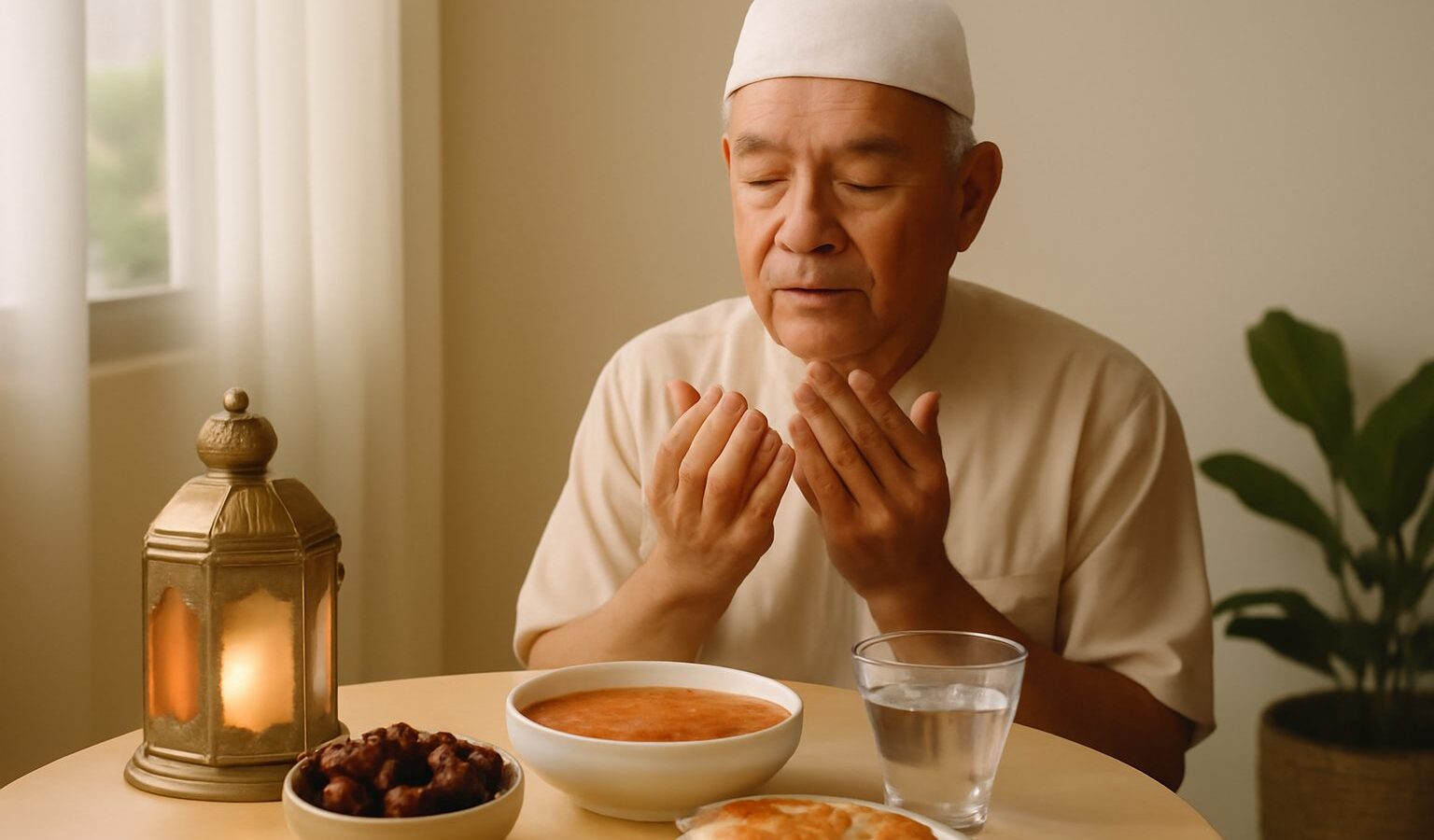
For many older Muslims in Singapore, Ramadan is a month they look forward to all year: the quiet of sahur before dawn, breaking fast with family, and evenings at the mosque. Fasting for seniors during Ramadan can be deeply meaningful, but ageing bodies handle long hours without food and water differently, especially in a hot, humid climate and alongside daily medicines. This guide covers the practical side for seniors and the families who support them: planning with a doctor, staying hydrated, adjusting meals and medicines, and knowing when it is time to stop.
This is general information, not medical or religious advice. Always speak to your own doctor about your health, and to an asatizah (religious teacher) or MUIS, the Islamic Religious Council of Singapore, about religious questions.

Start With a Pre-Ramadan Health Check
The single most useful step is a conversation with a doctor a few weeks before Ramadan begins. A family doctor, polyclinic doctor or specialist who already knows the senior’s health history is best placed to say whether fasting is reasonable and what needs to change.
Bring along:
- A full list of medicines, including supplements and traditional remedies
- Recent readings if you monitor blood sugar or blood pressure at home
- Notes on any falls, dizziness or hospital stays in the past year
- Questions about which medicines can move to sahur or iftar time
Seniors with conditions such as diabetes, heart disease, kidney disease or a history of low blood pressure need particular care, because fasting can change blood sugar, fluid balance and how medicines act. The doctor may suggest extra monitoring, a different medicine schedule, or advise against fasting. Never change or skip prescribed medicines on your own to make fasting easier.
It also helps to know that Islam provides for those who are unwell or too frail to fast. Many families find comfort in discussing exemptions, making up missed days later, or fidyah (a form of compensation for days that cannot be fasted) with a religious teacher. MUIS publishes guidance each Ramadan, so check its current advice rather than relying on what was done in past years.
Hydration in Singapore’s Heat
Dehydration is one of the biggest risks for older people who fast. The sense of thirst tends to weaken with age, so a senior may be low on fluids without feeling thirsty. Singapore’s heat and humidity make this worse, particularly on days with errands, outdoor walks to the mosque or busy bazaar visits.
Practical ways to spread fluids through the non-fasting hours:
- Drink steadily between iftar and sahur rather than a large amount at once
- Keep a filled water bottle by the bed and in the living room as a visual reminder
- Include water-rich foods such as soups, fruit and vegetables
- Go easy on very sweet drinks, which are common at iftar, and on strong coffee or tea, which some people find makes them need the toilet more often
- Stay in shaded, air-conditioned or well-ventilated spaces during the hottest part of the day
If the senior has a heart or kidney condition, the doctor may have given limits on fluids, so follow that advice instead of general tips. For more on coping with hot days, see our guide to keeping active and safe during hot weather as a senior.
Planning Sahur and Iftar Meals for Older Bodies
What a senior eats at sahur and iftar shapes how the fasting day feels. Sahur, the pre-dawn meal, is often skipped by older people who find it hard to wake up, but it is important for steady energy and fluids through the day. Family members can help by preparing something simple the night before.
Good habits for sahur:
- Choose slower-digesting foods such as wholegrain bread, oats, brown rice or thosai with dhal
- Add protein such as eggs, tofu or fish
- Limit very salty dishes, which can increase thirst
Good habits for iftar:
- Break fast gently, traditionally with dates and water, then pause before the main meal
- Keep portions moderate, since a large, rich meal after a long fast can cause discomfort
- Balance festive favourites like rendang, kuih and sweet bandung with vegetables and lean protein
- Eat slowly, especially if dentures or swallowing are an issue
The comparison below shows small adjustments that make a difference.
| Moment | Common habit | Gentler choice for seniors |
|---|---|---|
| Sahur | Skipping it to sleep longer | A light, prepared meal and water before dawn |
| Breaking fast | Several sweet drinks at once | Dates and water first, then a short pause |
| Main iftar meal | Large plates of fried and rich food | Moderate portions with vegetables and protein |
| Evening | Long prayers with little to drink | Small sips of water between activities |
| Medicines | Taking them whenever remembered | A fixed time agreed with the doctor |
Medicines and Fasting: Work It Out With the Doctor
Medicine timing is where seniors and families most need professional input. Some medicines are taken once a day and may move easily to iftar or sahur. Others, especially those taken several times a day or ones that affect blood sugar, may need a different plan entirely. Only a doctor or pharmacist can say what is safe for a particular person.
Questions worth asking:
- Which of my medicines must be taken with food?
- Can any doses be moved to sahur or iftar, and in what order?
- Does any medicine increase my risk of low blood sugar or dehydration while fasting?
- What readings should prompt me to break my fast?
Pharmacists at polyclinics and retail pharmacies can also help organise a pill box by sahur and iftar slots. HealthHub, the national health app and portal, is a useful place to view appointments and medicine records. Writing the schedule on a card on the fridge helps both the senior and any helper or family member keep track.
Warning Signs That Mean It Is Time to Break the Fast
Families should agree in advance on when a senior will stop fasting for the day. Having this settled removes the guilt and hesitation that can delay action.
Break the fast and seek advice if the senior has:
- Dizziness, fainting or confusion
- Shakiness, sweating or palpitations, which can signal low blood sugar in people with diabetes
- Very dark urine or little urine
- Chest pain, breathlessness or severe headache
- A fall, even a minor one
For anything serious, such as chest pain, sudden weakness or confusion, call 995 for an ambulance. For non-emergency concerns, contact the family doctor or polyclinic.
How Family and Caregivers Can Help
Ramadan is a shared month, and the support of family makes safe fasting much easier for an older person. Helpful roles include:
- Waking the senior gently for sahur and sitting with them while they eat
- Checking in by phone during the day if they live alone
- Driving or accompanying them to terawih prayers on hot or rainy nights
- Keeping iftar gatherings comfortable, with a seat near a fan and water within reach
- Respecting their choices while gently reminding them of the doctor’s advice
Some seniors feel left out if they cannot fast. Including them in preparing iftar, reading together or joining family prayers keeps them part of the month’s spirit. Our guide to Ramadan and fasting in Singapore explains the wider customs if younger relatives or non-Muslim caregivers want to understand the month better.
A Calm Plan Makes for a Meaningful Month
Safe fasting for older people comes down to planning ahead: a doctor’s check before Ramadan, steady fluids between iftar and sahur, gentle meals, a clear medicine schedule and agreed warning signs. Guidance from MOH, HealthHub and MUIS can change from year to year, so check their latest advice before each Ramadan. With the right preparation, many seniors can take part in the month in a way that suits their health and keeps its meaning.
Official sources: HealthHub
Further reading: Managing Fasting Employees During Ramadan: An Employer’s Guide · Helping Your Child Try Fasting During Ramadan · How to Build an Exercise Routine During Ramadan in Singapore