
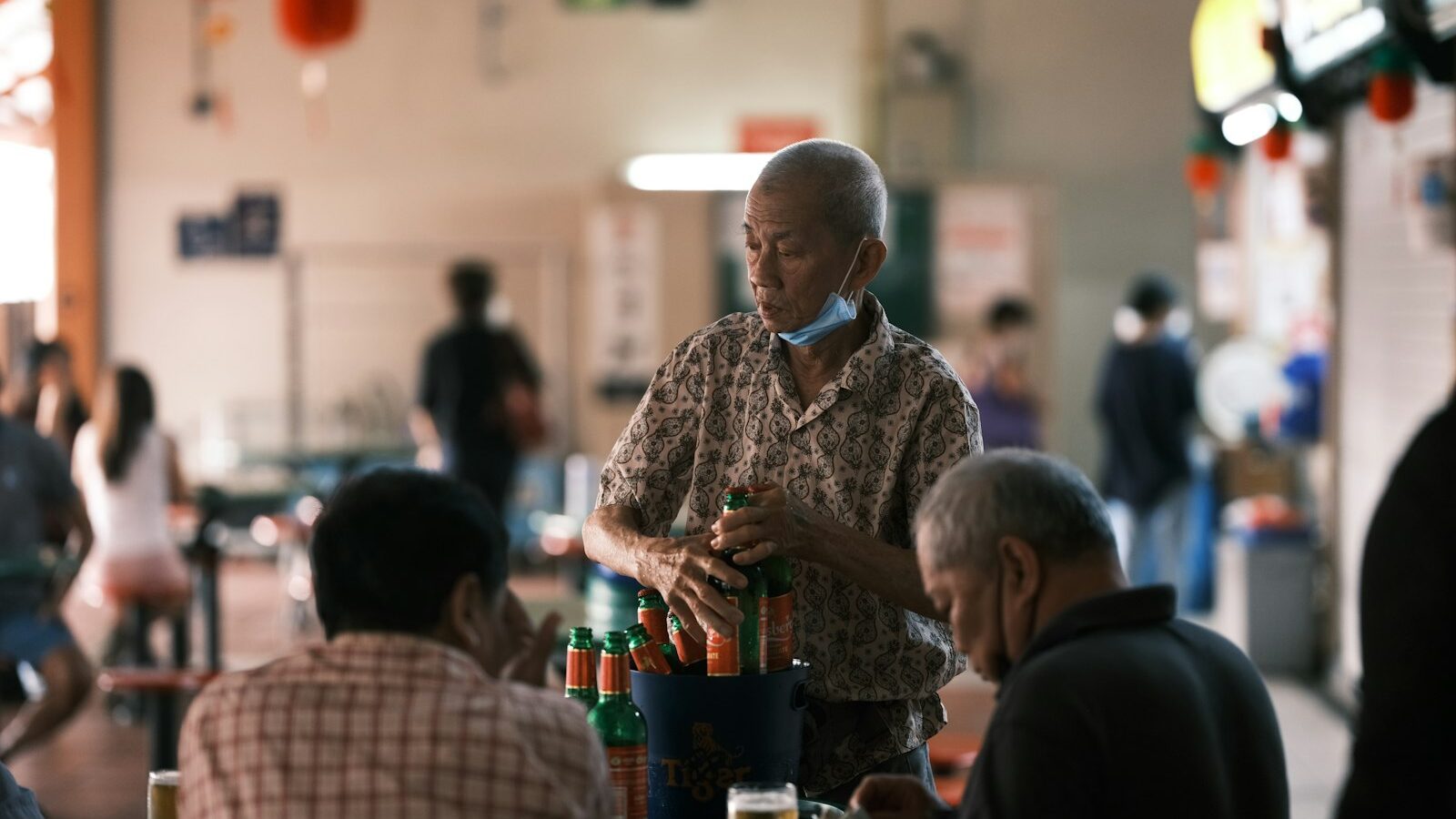
Many people enjoy a beer at a wedding dinner, a glass of wine at a reunion meal or a small drink with friends at the coffee shop. That does not have to stop in retirement. But alcohol and older adults are a combination worth thinking about carefully, because the body handles alcohol differently with age, many seniors take regular medicines, and a fall after a few drinks can have serious consequences.
This guide explains why tolerance drops as we get older, which kinds of medicines commonly clash with alcohol, and how drinking affects balance and fall risk. It is general information, not medical advice. Your doctor or pharmacist knows your health history and medicines and is the right person to tell you what is safe for you.
Why the Same Drink Hits Harder as You Age
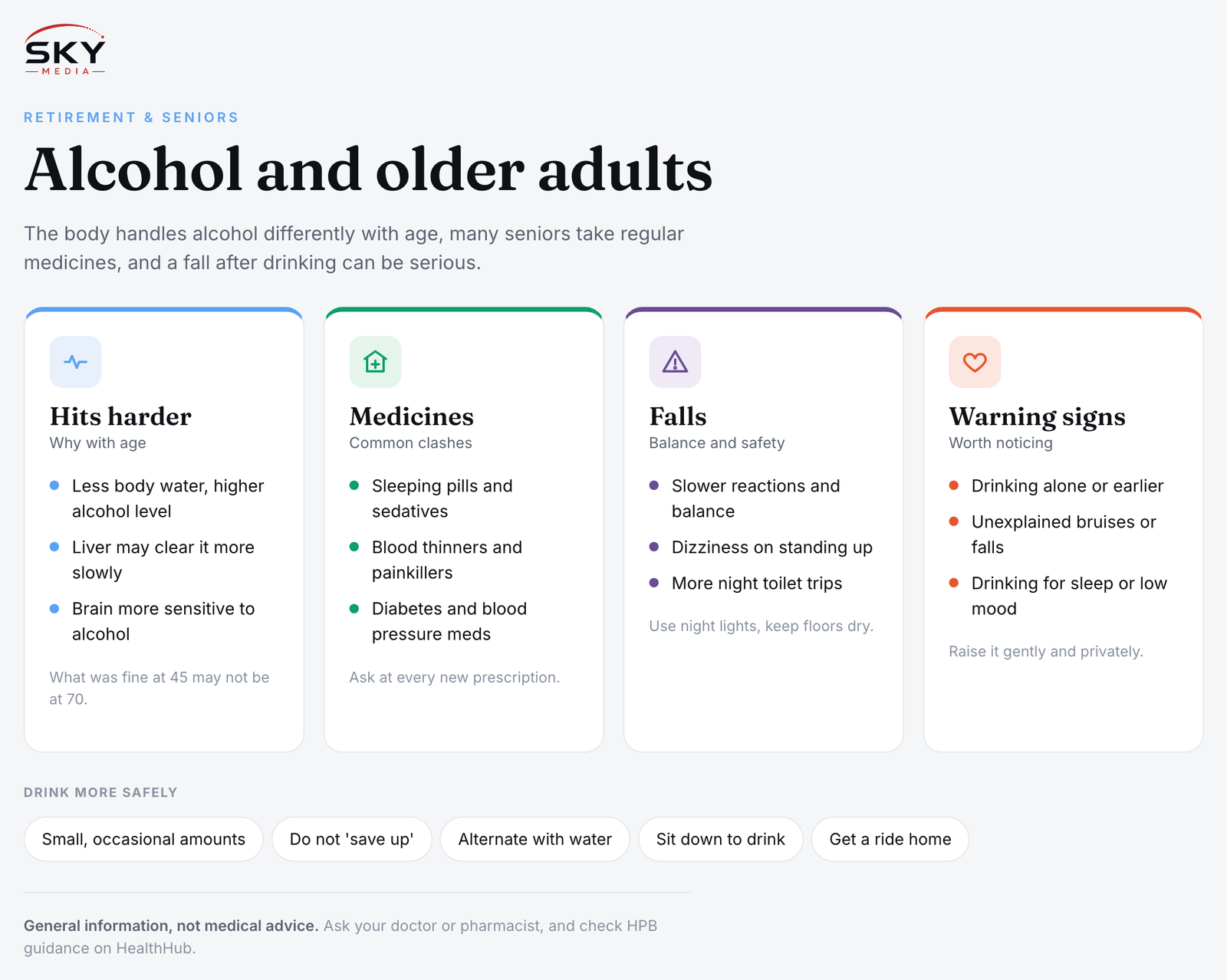
Many older adults notice that one or two drinks now feel stronger than they used to. That is not imagination. Several normal changes of ageing are at work:
- Less water in the body. As we age, muscle mass tends to fall and the proportion of body water drops. Alcohol spreads through body water, so the same drink produces a higher blood alcohol level in an older person than in a younger one of the same weight.
- Slower processing. The liver may clear alcohol more slowly with age, so its effects last longer and a second drink stacks on top of the first.
- A more sensitive brain. The ageing brain can be more affected by alcohol, so slowed reactions, drowsiness and unsteadiness may appear at lower amounts.
- Existing health conditions. High blood pressure, diabetes, heart rhythm problems, liver disease, memory problems and poor sleep can all be worsened by alcohol.
The result is simple: an amount that felt fine at 45 may be too much at 70. Habits sometimes need adjusting even if nothing else in your life has changed.
What Counts as a Safe Limit for Seniors
Singapore’s Health Promotion Board (HPB) publishes guidance on low-risk drinking and explains what a “standard drink” is, since a can of beer, a glass of wine and a shot of spirits contain different amounts of alcohol. Check the current guidance on HealthHub, HPB’s health information portal.
For older adults, a few practical points apply on top of the general guidance:
- General limits are a ceiling, not a target. Many doctors advise older adults to drink less than the general adult guidance, and some people should not drink at all.
- Some people should avoid alcohol completely. This can include people on certain medicines, those with liver disease, a history of falls, memory problems or past alcohol dependence. Your doctor can tell you if this applies.
- Pour sizes matter. Home pours of wine or spirits, and drinks at celebrations where glasses are topped up constantly, are often much larger than a standard drink.
- Avoid “saving up”. Not drinking during the week and then drinking heavily at a weekend dinner is more risky than small amounts spread out.
If you are unsure, ask your family doctor, polyclinic doctor or a geriatrician. Our guide to finding a geriatrician in Singapore explains how these specialists look at the whole picture of health and medicines in later life.
Medicines That Commonly Clash With Alcohol
This is the area where alcohol and ageing most often cause trouble. Older adults are more likely to take several medicines at once, and alcohol can make some of them stronger, weaker or more harmful. The table below shows common medicine types and the general concerns. It is not a complete list, and the right advice depends on your specific medicine and dose.
| Type of medicine | Why alcohol can be a problem |
|---|---|
| Sleeping pills, sedatives and some anxiety medicines | Alcohol adds to drowsiness and confusion, and can slow breathing; risk of falls rises sharply |
| Strong painkillers, including opioid types | Increased sleepiness and slowed breathing; dangerous combination |
| Blood thinners | Alcohol can affect how these medicines work and may raise bleeding risk |
| Diabetes medicines, including insulin | Alcohol can cause low blood sugar, sometimes hours later, which may be mistaken for being drunk |
| Blood pressure medicines | Combined effect can cause dizziness or fainting, especially when standing up |
| Some allergy and cold medicines | Drowsy-type antihistamines plus alcohol increase sleepiness and unsteadiness |
| Paracetamol and some other medicines processed by the liver | Regular drinking can add strain on the liver; ask about safe use |
| Certain antidepressants and other mental health medicines | Alcohol can worsen side effects such as drowsiness and may affect mood |
What to do about it:
- Ask at every new prescription. Ask the doctor or pharmacist directly: “Is it safe for me to drink alcohol with this?” Read the medicine label too.
- Keep an updated medicine list. Include over-the-counter medicines, traditional Chinese medicine and supplements, and bring it to appointments.
- Do not skip medicines to drink. Stopping a medicine for a party can be risky. Ask your doctor what to do instead.
- Watch for medicinal wines and tonics. Some herbal tonics and cooking wines used in confinement-style or traditional dishes contain alcohol. Mention them to your doctor if you take them regularly.
Alcohol, Balance and the Risk of Falls
Falls are one of the most common reasons older adults end up in hospital, and alcohol is a well-known contributor. Even small amounts can:
- slow reaction time, so you cannot catch yourself when you trip;
- affect balance and coordination;
- lower blood pressure when you stand, causing light-headedness;
- make you need the toilet more often, including at night;
- combine with poor eyesight, weak muscles or slippery floors.
Many alcohol-related falls happen at home late in the evening: getting up to use the toilet in the dark, stepping into a wet bathroom, or walking from the dining table to the sofa after a celebration. Falls can lead to fractures and head injuries, and people on blood thinners face a higher risk of bleeding after a knock to the head.
Practical steps to reduce the risk:
- Sit down to drink rather than standing for long periods at events.
- Alternate alcoholic drinks with water or tea, and eat while drinking.
- Use night lights between the bedroom and toilet, and keep floors dry.
- Get up slowly, sitting on the edge of the bed for a moment first.
- Arrange a ride home rather than walking a long way or taking stairs after drinking.
If you have had unexplained dizzy spells or blackouts, see a doctor. Our guide to fainting spells in older adults explains when to worry. People with heart rhythm problems should also know that alcohol can trigger episodes of irregular heartbeat; see our guide to atrial fibrillation in older adults.
Signs Drinking May Be Becoming a Problem
Drinking patterns can change quietly after retirement, bereavement or a move. Loneliness, boredom, pain and poor sleep can all lead to a nightly drink becoming two or three. Signs worth noticing, in yourself or a parent, include:
- drinking alone more often, or earlier in the day;
- unexplained bruises or falls;
- forgetfulness, confusion or mood changes that seem linked to drinking;
- using alcohol to help with sleep, pain or low mood;
- hiding bottles or becoming defensive when drinking is mentioned.
These signs are sometimes mistaken for “just getting old”. If you are concerned about a family member, raise it gently and privately, focus on health and safety rather than blame, and suggest seeing their doctor together. Family doctors, polyclinics and HealthHub can point to support services, and help is available at any age.
A Simple Plan for Drinking Safely in Later Life
You do not need to give up every celebratory toast. A sensible approach is to review your habits with your doctor, check every medicine for alcohol interactions, keep amounts small and occasional, and make your home safer against falls. Families can help by offering good non-alcoholic choices at gatherings and not pressing elders to “yam seng” more than they want. A little care lets you keep enjoying special occasions while protecting your independence and health.
Official sources: Health Promotion Board