
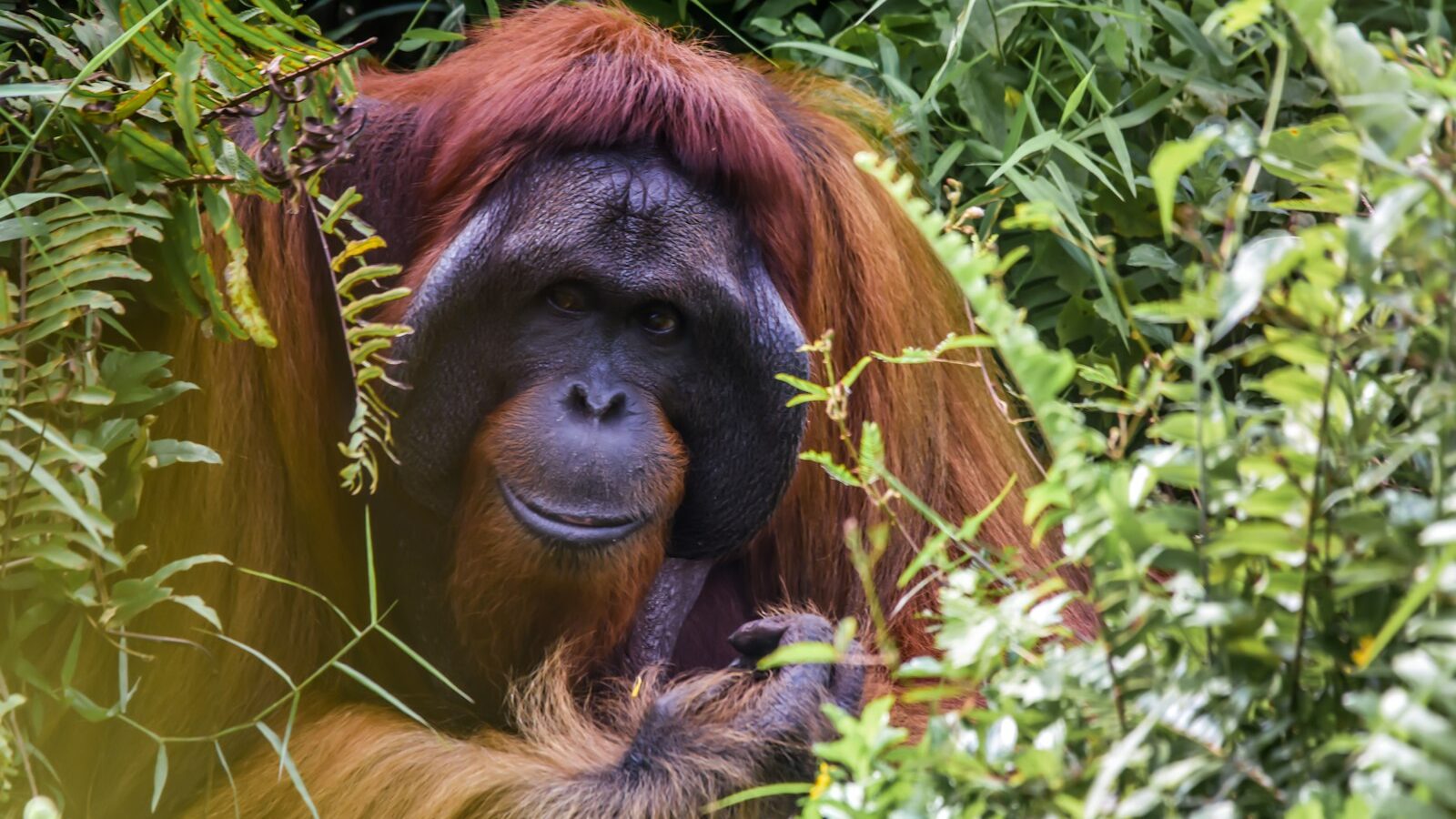
East Sabah is one of the most rewarding wildlife destinations within easy reach of Singapore. A Sepilok orangutan trip combines the famous rehabilitation centre outside Sandakan with a few nights on the Kinabatangan River, where proboscis monkeys, hornbills and, with luck, Bornean pygmy elephants live along the banks. This guide covers how to get there via Kota Kinabalu, what each stop offers, how long to stay and how to visit responsibly.
Getting There: Singapore to Sandakan via Kota Kinabalu
There is no shortage of ways to reach Sandakan, but most Singapore travellers go through Kota Kinabalu (KK), Sabah’s capital on the west coast.
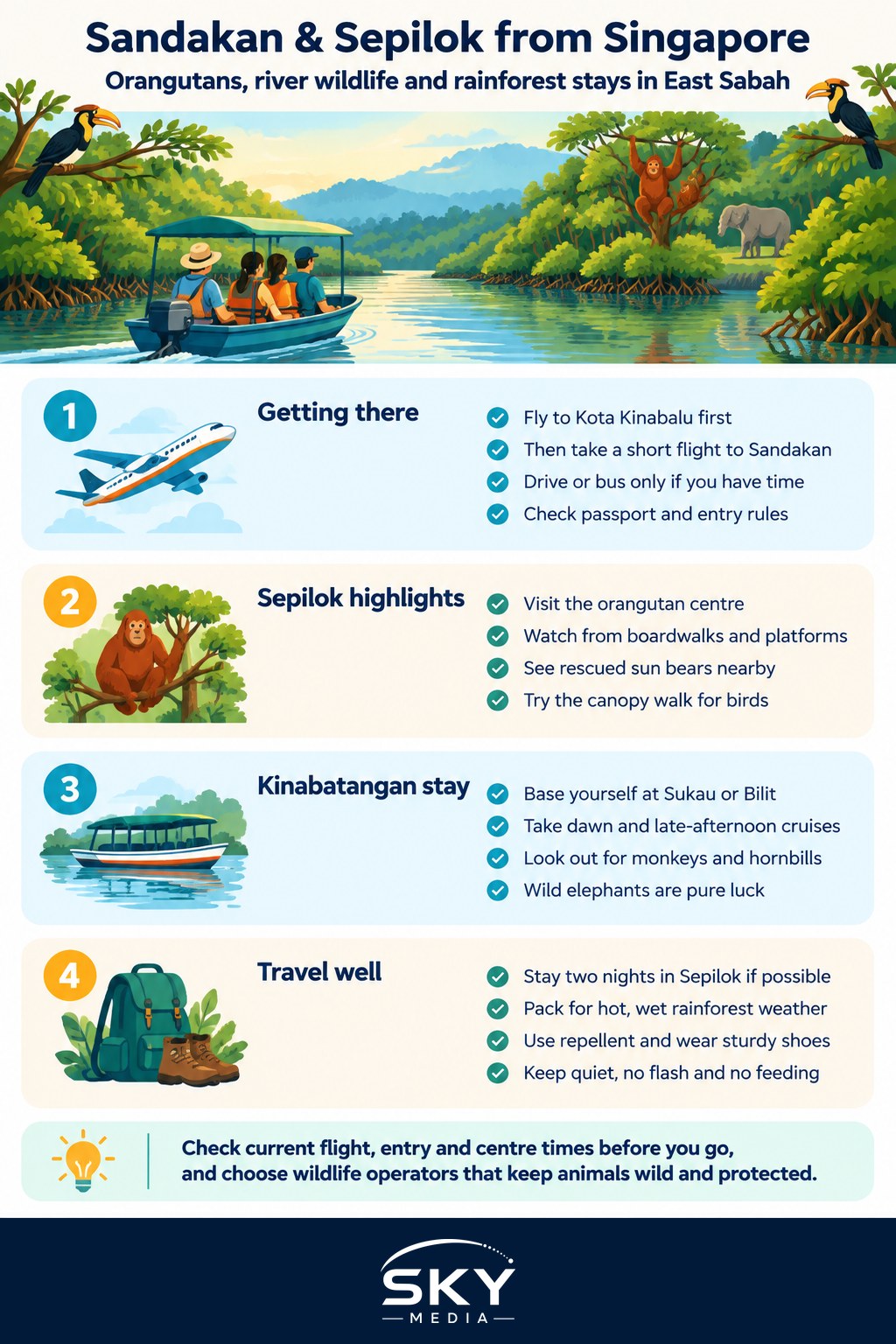
- Fly Singapore to Kota Kinabalu. Direct flights run between Changi and KK. Check current airlines and schedules, as routes change.
- Continue to Sandakan. From KK, a short domestic flight takes you to Sandakan on the east coast. You can also drive or take a long-distance bus across the state, which takes most of a day and passes near Mount Kinabalu, but it eats into wildlife time.
- Alternative routings. Some travellers connect through Kuala Lumpur to Sandakan instead. Compare total travel time, because a single connection with a long layover can end up slower.
Sabah runs its own immigration checks, separate from Peninsular Malaysia, so keep your passport handy on domestic legs too. Singapore citizens can generally visit Malaysia visa-free for short stays, but entry requirements, including any digital arrival card, can change. Confirm the current rules with Malaysia’s immigration department and the Singapore Ministry of Foreign Affairs before you go. Other passport holders, including PRC passport holders living in Singapore, should check their own visa requirements well ahead.
Sepilok: Orangutans, Sun Bears and the Rainforest
Sepilok sits a short drive from Sandakan town and airport, and it packs several attractions into a small area of protected forest.
- Sepilok Orangutan Rehabilitation Centre. Orphaned and rescued orangutans learn the skills to live independently in the forest. Visitors watch from boardwalks and platforms, especially around the scheduled feeding sessions, when semi-wild orangutans may come in for fruit. Sightings are never guaranteed, which is a good sign: it means the animals are finding enough food on their own. Check feeding and opening times directly with the centre or Sabah Wildlife Department, as they change.
- Bornean Sun Bear Conservation Centre. Right next door, this centre cares for rescued sun bears, the smallest bear species. Viewing platforms look into forest enclosures where the bears climb and forage.
- Rainforest Discovery Centre. A short walk away, this has trails and a canopy walkway that puts you level with the treetops. Early mornings are good for birdwatching, including hornbills.
- Proboscis monkey sanctuaries. Privately run sanctuaries near Sandakan offer close views of proboscis monkeys at feeding platforms. Read recent reviews and look for operators that keep animals wild rather than tame.
Two nights near Sepilok lets you catch more than one feeding session and visit the other centres without rushing. Lodges in the area range from simple guesthouses to forest resorts.
The Kinabatangan River: Sabah’s Wildlife Corridor
The lower Kinabatangan is Sabah’s longest river, lined with forest that has become a refuge for wildlife squeezed by surrounding plantations. Villages such as Sukau and Bilit are the usual bases, reached by road from Sandakan or Sepilok, often as part of a package that includes transfers.
A typical stay is two or three nights with boat cruises at dawn and late afternoon, when animals are most active. What you might see:
- Proboscis monkeys gathering in riverside trees to sleep
- Long-tailed and pig-tailed macaques
- Several hornbill species, kingfishers and storm’s storks
- Estuarine crocodiles and monitor lizards on the banks
- Wild orangutans, occasionally, in fruiting trees
- Bornean pygmy elephants, if a herd is passing through the area
Elephants move over large ranges, so a sighting is pure luck. Night walks and night cruises, where permitted, add frogs, owls, sleeping birds and insects. Choose a lodge or operator with trained naturalist guides; a good guide makes the difference between seeing shapes in the trees and understanding what you are watching.
Sample Itineraries
| Trip length | Suggested plan | Best for |
|---|---|---|
| 4 days | Fly to Sandakan via KK, 1 night Sepilok, 2 nights Kinabatangan | Long weekend with leave, focus on highlights |
| 5 to 6 days | 2 nights Sepilok, 2 to 3 nights Kinabatangan, fly home | Most first-time visitors |
| 7 to 9 days | Add Kota Kinabalu, island hopping or Mount Kinabalu area before heading east | Combining wildlife with beaches or highlands |
If you have more time, operators can arrange trips further into Sabah’s interior forest reserves, which need extra planning and budget.
What to Pack and Health Precautions
East Sabah is hot, humid and wet year round. Pack for rainforest conditions rather than a city break.
- Lightweight long-sleeved tops and long trousers in neutral colours
- A rain jacket or poncho and a dry bag for your phone and camera
- Insect repellent and leech socks for forest trails
- Binoculars, which matter more than a big camera lens on river cruises
- Comfortable walking shoes with grip for wet boardwalks
- Any personal medication, plus a basic first aid kit
See a doctor or a travel clinic a few weeks before departure to discuss vaccinations and whether you need any precautions against mosquito-borne illness for the areas you plan to visit. Follow their advice rather than generic online lists.
Responsible Wildlife Watching
The animals here are wild or on their way back to the wild. Your behaviour affects their chances.
- Never feed, touch or call to animals, and keep the distance set by guides and rangers.
- Keep quiet near feeding platforms and on boats.
- Do not visit Sepilok if you have a cold or other illness; orangutans are vulnerable to human diseases. Rehabilitation centres may ask visitors to stay away if unwell.
- Avoid using flash photography on animals.
- Choose lodges and operators that support conservation and employ local guides.
- Do not buy souvenirs made from wildlife parts.
These habits are the same ones we encourage at home in our guide to protecting Singapore’s nature and wildlife.
Photography Tips for Sabah Wildlife
Rainforest light is dim under the canopy and changes fast on the river. A zoom lens in the 300mm range or a bridge camera covers most needs, and a higher ISO is fine for sharp shots of moving animals. Bring spare batteries, because charging opportunities at river lodges can be limited. If you want to practise before the trip, our guide to wildlife photography in Singapore suggests local spots to sharpen your skills.
Explore more: Firefly and Wildlife Spotting in Singapore for night walks closer to home.
Further reading: Taman Negara From Singapore