
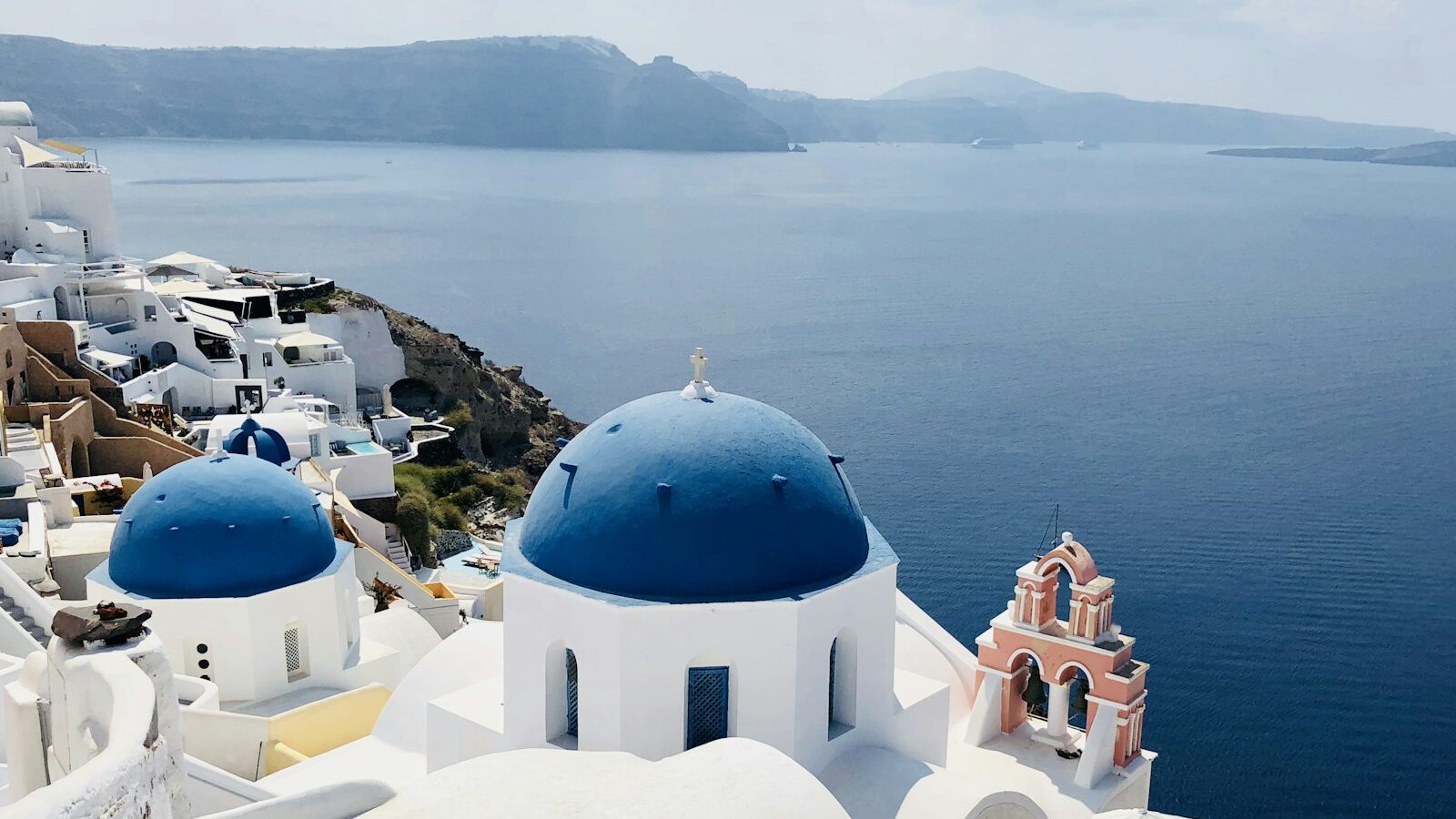
Few places live up to their postcards, but Santorini does. Those whitewashed villages spilling down the cliffs, the blue-domed churches, the sunsets that stop conversation mid-sentence: this Greek island is a bucket-list trip for good reason. Planning Santorini from Singapore takes a little more effort than a weekend in Bali, but the payoff is one of the most beautiful island escapes in the world. This guide walks you through flights, seasons, sights, food and the practical details, all from a Singapore traveller’s point of view.
Santorini sits in the Aegean Sea as part of the Cyclades, shaped by an ancient volcanic eruption that left behind its dramatic crescent shape and the flooded caldera at its heart. It is compact, romantic and easy to fall for, whether you are on a honeymoon, a milestone anniversary trip or simply chasing somewhere unforgettable.
Getting to Santorini from Singapore
There are no direct flights between Changi and Santorini, so you will always connect at least once. Most Singapore travellers fly to a major European or Middle Eastern hub first, then take a short onward flight into Santorini’s small airport (JTR). The whole journey, counting one comfortable transit, typically runs from around 15 to 20 hours of total travel time depending on your routing and layover.
A common approach is to fly into Athens, then take a quick domestic hop of under an hour to Santorini, or ride a high-speed ferry across the Aegean in a few hours if you prefer sea views to another airport. In peak summer, seasonal routes multiply and connections get easier. Booking flights and island transfers together, well in advance, is wise because Santorini is small and fills up fast. Check current fares and schedules directly, as routes shift by season.
Best Time to Visit Santorini
Santorini has a Mediterranean climate: hot dry summers and mild, sometimes wet winters. The island is busiest and most expensive from June to September, when the weather is reliably sunny but the caldera towns get genuinely crowded and midday heat is strong. The shoulder months reward you with softer weather, thinner crowds and better value.
| Season | Months | Weather | What to expect |
|---|---|---|---|
| Spring | Apr to May | Warm, breezy, blooming | Fewer crowds, pleasant walking, some cool evenings |
| Peak summer | Jun to Sep | Hot and dry, busy | Full swing, buzzing nightlife, higher prices |
| Autumn | Oct | Mild, sea still warm | Great value, calm atmosphere, gorgeous light |
| Winter | Nov to Mar | Cool, wet, quiet | Many hotels and tavernas closed, sleepy island |
For most Singaporeans, spring and early autumn hit the sweet spot: warm enough for the sea, kinder on the wallet and far more relaxed for photos at the famous viewpoints.
Top Things to See and Do
The classic Santorini experience centres on its caldera-facing villages. Oia is the icon, its narrow lanes leading to the sunset spot that draws crowds every evening; arrive early to claim a wall. Fira, the island’s capital, offers shops, cafes and a cliff-top promenade, plus a cable car down to the old port. Between them, quieter Imerovigli and Firostefani serve up the same jaw-dropping views with less foot traffic.
Beyond the villages, consider these experiences:
- A caldera boat or catamaran cruise, often stopping at the volcanic hot springs and returning for sunset from the water.
- The Akrotiri archaeological site, a remarkably preserved Bronze Age settlement buried by the ancient eruption.
- Santorini’s distinctive beaches, including the dark volcanic sand of Kamari and Perissa and the striking Red Beach.
- Wine tasting at local wineries, where the island’s crisp Assyrtiko whites grow in low, basket-shaped vines.
- The traditional hilltop village of Pyrgos, a lovely escape from the caldera crowds.
Where to Stay
Where you base yourself shapes the whole trip. The caldera side is where those dreamy cave-style hotels and infinity pools live, and it comes at a premium.
- Oia: the most romantic and photogenic, ideal for couples, and the priciest.
- Fira: central and lively, good for first-timers who want shops, dining and easy bus links.
- Firostefani and Imerovigli: quieter caldera views within walking distance of Fira, popular for honeymooners who still want calm.
- Kamari and Perissa: beach towns on the flatter side of the island with better value, handy for families and budget-conscious travellers.
- Pyrgos and inland villages: authentic, peaceful and cheaper, though you will want a vehicle.
Rooms with caldera views book out months ahead in summer, so reserve early and check current rates directly.
Food and Dining
Greek food is generous, sunny and easy to love. Look for fresh seafood, grilled meats, creamy fava (yellow split pea puree), tomatokeftedes (tomato fritters), Greek salad heavy with local tomatoes and feta, and slow-baked moussaka. Souvlaki and gyros make cheap, satisfying lunches, and the local white wine is a natural pairing.
For halal travellers, Santorini does not have a large certified-halal scene, but the cuisine is friendly to careful diners: abundant grilled fish, fresh salads, vegetable dishes and seafood are widely available. Pork is common in Greek cooking, so ask about ingredients, and self-catering from bakeries and markets is easy. Vegetarians are very well served thanks to the Mediterranean love of vegetables, legumes and cheese.
Getting Around the Island
Santorini is small but hilly, with winding roads. Local buses run from a hub in Fira to the main villages and beaches and are cheap, though they can be packed and infrequent in the off-season. Many visitors rent a car, ATV or scooter for freedom to chase views and reach quieter spots; drive carefully, as roads are narrow and busy in summer. Taxis are limited in number, so pre-book airport and ferry transfers. In Fira, the cable car saves a steep climb from the old port.
Practical Tips for Singapore Travellers
Greece is part of the Schengen Area, and entry rules for Singapore passport holders can change, so check the latest requirements with the Greek embassy and ICA before you book. Consult MFA travel advisories for current safety guidance; Santorini is generally very safe, with the usual caution around crowded viewpoints and cliff edges.
A few more pointers:
- Currency is the euro; card payments are common, but carry some cash for small tavernas and rural spots.
- Greek is the local language, though English is widely spoken in tourism.
- Summer sun is intense, so pack sunscreen, a hat and comfortable shoes for cobbled, uneven streets.
- Sockets differ from Singapore, so bring a European adapter.
- For any health precautions, see a doctor or travel clinic before departure; this is general information, not medical advice.
Santorini is not a budget beach break in the way Phuket or Bali can be, but as a splurge or a special-occasion trip, it delivers something regional getaways cannot. Give yourself three to four unhurried days, watch at least one sunset from a caldera wall, and you will understand exactly why this island keeps its promises.
Explore more
If Santorini has you dreaming of Europe, keep planning with our guides to Rome from Singapore and Barcelona from Singapore, both easy to pair with a Greek island leg. For a romantic city to bookend the trip, our Paris from Singapore guide makes a lovely companion.