
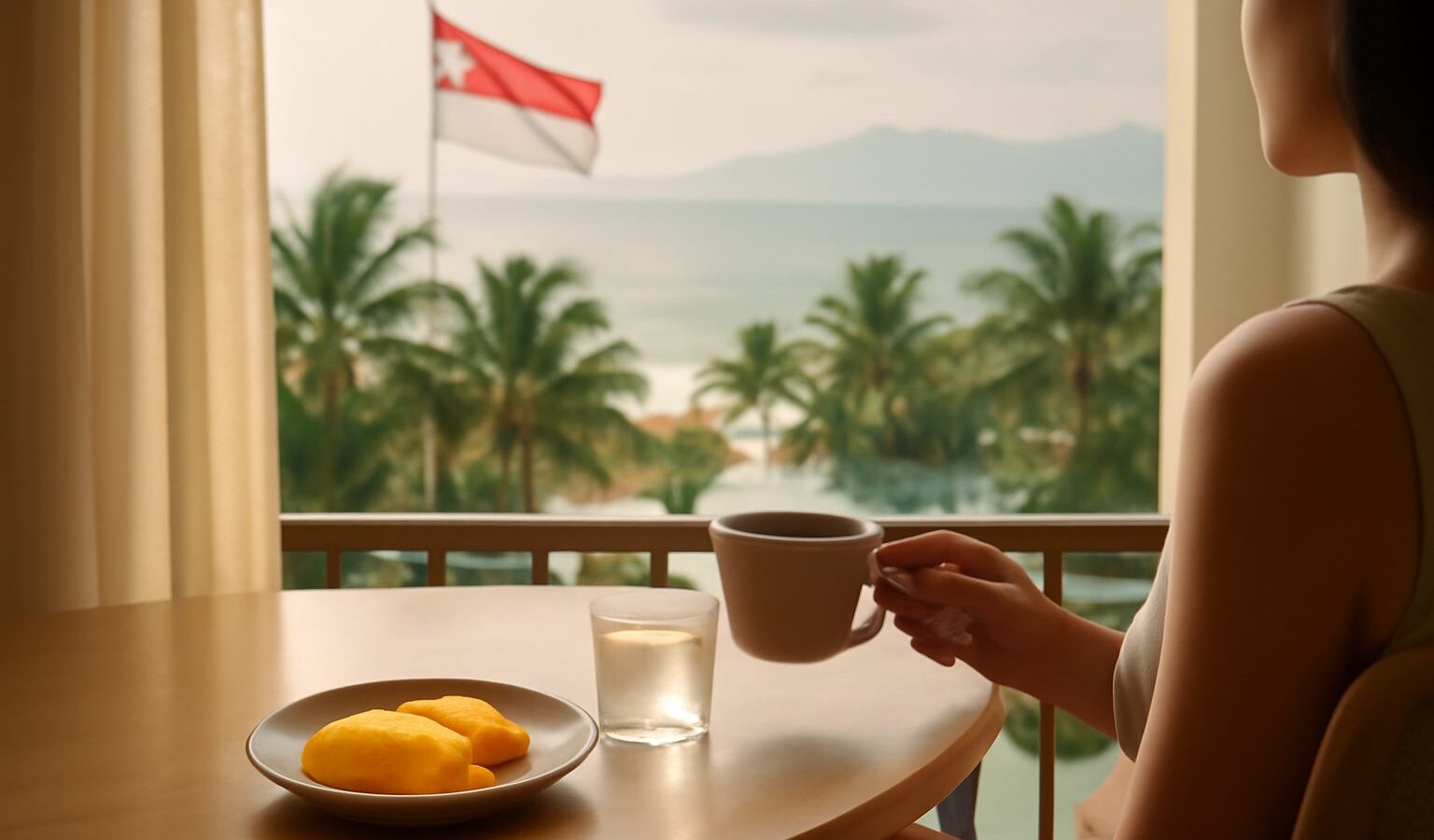
Sanya is China’s tropical playground, sitting at the southern tip of Hainan Island where palm fringed bays, warm seas and big resorts have earned it comparisons to Hawaii. It is where northern Chinese escape the winter cold, and its mix of beach lazing, temples and duty free shopping makes it a straightforward, sun soaked break. For a Singapore traveller, planning a trip to Sanya from Singapore means familiar tropical warmth in a very different setting, with Mandarin signage, Chinese resort culture and a coastline built for relaxing. This guide covers getting there, when to go, the beaches, what to do and eat, and the practical details.
Getting to Sanya From Singapore
Sanya lies in the South China Sea, relatively close to Southeast Asia, so it is one of the more accessible Chinese beach destinations from here. Some seasons offer direct flights between Changi and Sanya Phoenix International Airport, while other itineraries connect through a hub such as Guangzhou, Shenzhen, Hong Kong or another gateway. Direct services come and go with demand, so compare current schedules and fares before booking.
Once on Hainan, Sanya is linked to the island capital Haikou and other towns by a high-speed rail loop, making it easy to combine the beaches with a wider island trip.
On entry, Hainan has at times operated more relaxed visa arrangements than the mainland as a whole, but these policies change and depend heavily on your passport and how you travel. A Singapore passport and a China passport can face very different conditions, so do not rely on old advice. Confirm your own situation with the Chinese embassy or consulate and cross-check ICA for Singapore re-entry before you book.
Best Time to Visit
Unlike most Chinese cities, Sanya is tropical, so the weather feels closer to home than a contrast. The key difference is the seasons of rain and crowds rather than heat and cold.
| Season | Months | What to expect |
|---|---|---|
| Peak | Nov to Feb | Warm, drier and sunny; high season as mainland visitors flee the cold |
| Shoulder | Mar to Apr | Warm and pleasant with thinner crowds; a good value window |
| Summer | May to Aug | Hot, humid and wetter, with a chance of tropical storms |
| Autumn | Sep to Oct | Warm but the wettest stretch, with typhoon season peaking |
The cooler, drier months from around November to February are the classic time to visit, though they are also the busiest and priciest. The shoulder months offer a good balance. In the wetter, storm prone months, keep an eye on the forecast and build in flexibility. Four to five days suits a relaxed beach trip.
The Beaches and Where to Base Yourself
Sanya is defined by its bays, each with a slightly different character:
- Yalong Bay is the upmarket stretch, a long crescent of soft sand backed by high end resorts and calm, clear water, ideal for a pampered beach stay.
- Dadonghai is the most central and lively bay, walkable, busy and close to shops and restaurants, which suits first timers and those without a car.
- Sanya Bay is a very long urban beach lined with palms, good for sunset strolls and more budget friendly stays.
- Haitang Bay is the newest, most exclusive area, home to sprawling resorts and the huge duty free complex.
Where you base yourself shapes the whole trip. Dadonghai is easiest for a first visit, Yalong Bay for a resort escape, and Haitang Bay for luxury and shopping. Pick the bay first, then the accommodation.
Things to Do Beyond the Sand
There is more to Sanya than lying on a beach:
- Visit the Nanshan Cultural Tourism Zone, home to a towering seafront statue of Guanyin, the Buddhist goddess of mercy, and landscaped grounds. Dress modestly and treat the religious site with respect.
- See Tianya Haijiao, the Edge of the World, a scenic coast dotted with inscribed boulders and a famous romantic spot.
- Take a boat to Wuzhizhou Island for snorkelling and water sports in clearer water.
- Ride up Luhuitou Park for a hillside view over the city and coastline.
- Browse the enormous duty free malls, a major draw for domestic shoppers, though allowances and rules depend on your travel status, so check current terms.
Food and Practical Tips
Hainan is the ancestral home of the chicken and rice dish familiar to every Singaporean, here associated with Wenchang chicken, so the island connection is fun to trace. Beyond that, Sanya is all about seafood, sold fresh and cooked to order at bustling markets, alongside tropical fruit, coconut and light southern Chinese flavours. Eat where the crowds are and confirm prices before ordering at seafood markets.
- Currency: the renminbi, or yuan. Mobile payment apps dominate, so set one up before arrival and keep some cash as backup.
- Language: Mandarin, with Hainanese and other local dialects; English is limited, so use translation and offline map apps.
- Connectivity: many familiar apps and sites are restricted in China, so arrange a reliable data or VPN option before flying.
- Money and costs: Sanya spans budget stays to lavish resorts, and peak season pushes prices up sharply. Prices and rates change, so check current figures.
- Health and sun: the tropical sun is strong, so use sunscreen, stay hydrated and mind swimming conditions and flags. For any vaccinations or precautions see a doctor or travel clinic, and buy suitable travel insurance. This is general information, not medical advice.
- Safety: Sanya is broadly considered safe for visitors; take normal precautions and check the latest MFA travel advisory before you go.
Sanya offers Singapore travellers a familiar kind of warmth in an unfamiliar setting, blending resort beaches, temples and shopping with a distinctly Chinese holiday atmosphere. For an easy tropical escape with a twist, it is well worth the short hop.
Explore more
If you are routing through a southern gateway, our Guangzhou from Singapore guide covers a common connection to Hainan. For coastal contrast further north, see our Qingdao from Singapore guide, and to swap beaches for mild mountain air, our Kunming from Singapore guide opens up the southwest. Any of these pairs neatly with a Sanya beach trip.