
Guangzhou is the capital of Guangdong province and the beating heart of Cantonese culture, which means it is also one of the great eating cities of China. For Singaporeans, many of whom trace family roots to this part of southern China, planning a trip to Guangzhou from Singapore feels both familiar and fresh: the yum cha is world class, the Pearl River glitters at night, and the modern skyline sits beside colonial lanes and ancient halls. This guide covers getting there, when to go, what to see, where to eat and the practical details that make a first visit smooth.
Getting to Guangzhou From Singapore
Guangzhou sits in the humid south of China, relatively close to the region by Chinese standards. Direct flights between Changi and Guangzhou Baiyun International Airport are common, and the flying time is usually in the region of four to five hours, one of the shorter hauls into mainland China. Schedules and fares shift with the season and demand, so compare current options before booking, and check whether a direct service or a one-stop routing suits your dates and budget better.
Guangzhou is also a major high-speed rail hub, which makes it easy to combine with neighbouring cities. Fast trains connect it with Shenzhen and the wider Pearl River Delta in well under an hour, so many travellers pair the two. If you plan to hop across the region, our Shenzhen from Singapore and Zhuhai from Singapore guides are worth a look.
On entry requirements, do not rely on old tips. Rules for Singapore passport holders have changed in recent years, and a Singapore passport and a China passport can face very different requirements for the same trip. Confirm your own situation with the Chinese embassy or consulate, and cross-check ICA for Singapore re-entry, before you commit to dates.
When to Go and How Long to Stay
Guangzhou has a humid subtropical climate, so it is warm for much of the year, but it is not the steady tropical heat of Singapore. Summers are hot, sticky and prone to heavy rain, while the cooler, drier months are far more comfortable for walking.
| Season | Months | What to expect |
|---|---|---|
| Spring | Mar to Apr | Mild but damp, with the humid plum-rain season arriving |
| Summer | May to Aug | Hot, very humid and rainy, with the odd typhoon |
| Autumn | Sep to Nov | Warm, drier and clearer; the most pleasant window |
| Winter | Dec to Feb | Cool and comfortable, occasionally chilly, rarely cold |
Autumn and early winter are the sweet spot for sightseeing and eating your way around the city. Three to four days is enough for a focused first visit, and longer if you want to fold in day trips to nearby cities by fast train.
Top Things to See and Do
Guangzhou rewards wandering, mixing gleaming new districts with pockets of deep history:
- Ride up the Canton Tower, the slender landmark on the south bank, for sweeping views over the Pearl River and the Zhujiang New Town skyline, especially after dark.
- Stroll Shamian Island, a leafy former foreign concession with European-style architecture, quiet lanes and cafes, a calm contrast to the busy city.
- Visit the Chen Clan Ancestral Hall, a beautifully preserved Qing-era complex packed with intricate wood, stone and ceramic craftsmanship, now a folk-art museum.
- Take an evening Pearl River cruise to see the bridges, towers and waterfront light up.
- Explore Yuexiu Park, home to the Five Rams statue, the symbol of the city, and wander the pedestrian shopping streets of Beijing Road and Shangxiajiu.
- For a green half day, ride the cable car or hike parts of Baiyun Mountain on the city’s northern edge.
Where and What to Eat
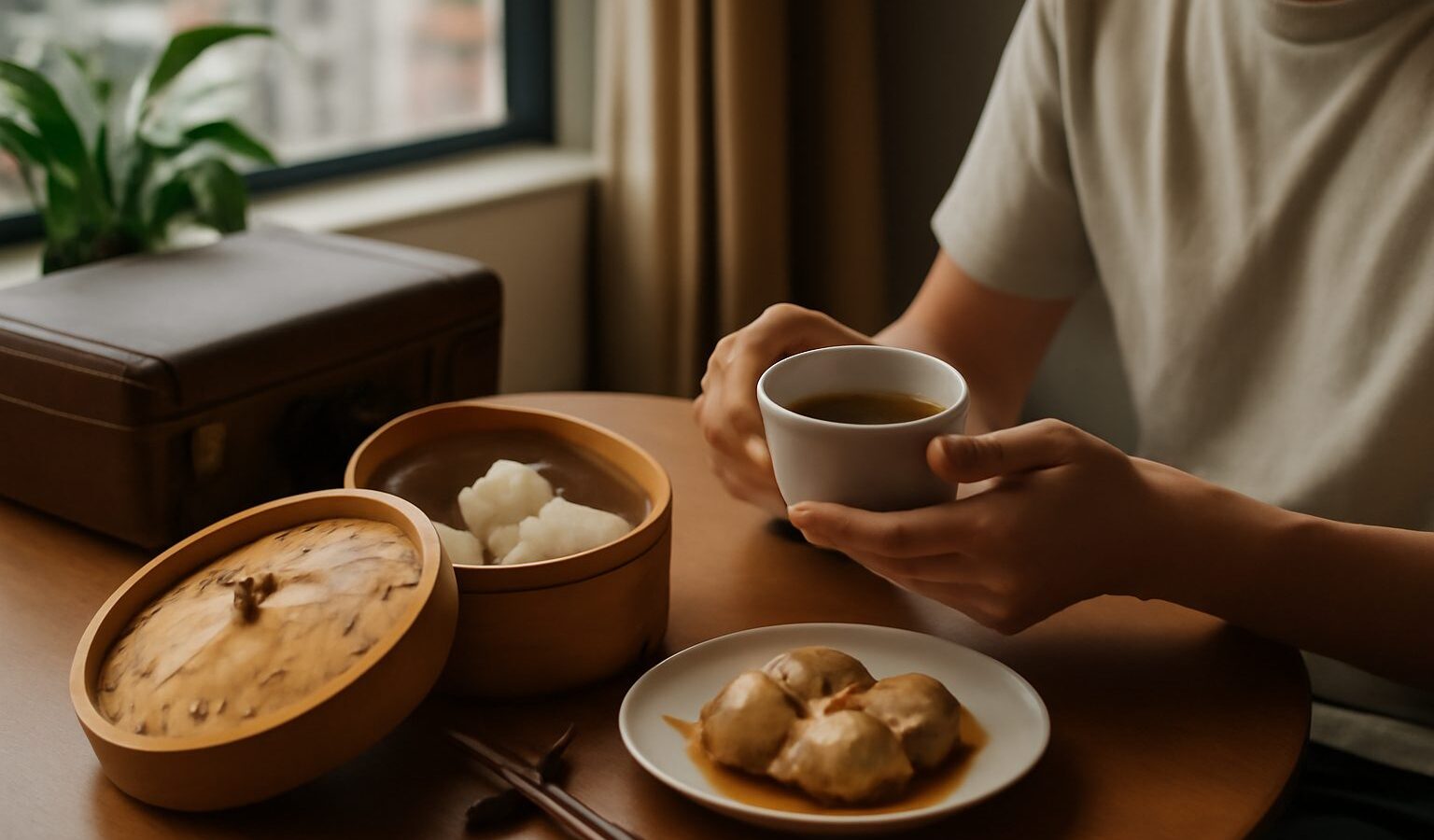
This is the home of Cantonese cuisine, so eating well is effortless. Morning yum cha is a ritual worth building your day around: expect trolleys or menus of dim sum such as har gow (prawn dumplings), siu mai, char siu bao, cheung fun rice rolls and egg tarts, washed down with pots of tea. Beyond dim sum, look for roast goose and char siu, silky steamed fish, white-cut chicken, wonton noodles and slow-cooked congee. The Cantonese respect for fresh ingredients and clean flavours runs through everything.
You will eat brilliantly at every level, from humble noodle shops and old teahouses to smart restaurants in the newer districts. Do not overlook the small local places; some of the best roast meats and dumplings come from unassuming corners. If you keep halal or vegetarian, options exist but are less widespread than in some Chinese cities, so check ingredients and look for suitable restaurants in advance.
Where to Stay
Tianhe, around the Zhujiang New Town central business district, is the modern heart of the city, with the tallest towers, big shopping malls, the opera house and easy metro links; it suits first-timers who want convenience and a polished base. The older core around Yuexiu and Beijing Road puts you closer to historic sights, traditional teahouses and street life, with a more local feel. Areas near Guangzhou South railway station are handy if you plan lots of high-speed rail day trips. Wherever you choose, staying within a short walk of a metro station makes the sprawling city far easier to manage.
Getting Around
Guangzhou has a vast, modern and inexpensive metro that reaches almost everywhere a visitor needs, including airport and rail connections, and it is comfortably the best way to get about. Taxis and ride-hailing are widely available for shorter hops or late nights. As across the mainland, daily payment leans heavily on mobile apps, so set that up before you arrive and keep some cash as backup. Save destinations in Chinese on an offline map, since English signage and spoken English are limited outside major hotels.
Practical Tips
- Currency: the renminbi (yuan). Arrange mobile payment where possible and carry some cash for small vendors.
- Language: Cantonese and Mandarin are both spoken; English is limited, so translation and offline map apps are very useful.
- Connectivity: many familiar apps and sites are restricted in China, so research a reliable data or roaming option before you fly.
- Budget: Guangzhou can be excellent value, with cheap, memorable food and low metro fares, though smart hotels and big attractions cost more.
- Safety: the city is broadly considered safe for visitors; take normal big-city precautions in crowds and check the latest MFA travel advisory before you go.
- Health: for any vaccinations or precautions, see a doctor or travel clinic before departure and buy suitable travel insurance; this is general information, not medical advice.
Guangzhou is one of the easiest and most delicious introductions to mainland China for anyone flying from Singapore, blending serious food, real history and modern comfort in a city that is remarkably close to home.
Explore more
Guangzhou pairs naturally with its Pearl River Delta neighbours, so add the tech-and-shopping energy of Shenzhen from Singapore or the laid-back seaside of Zhuhai from Singapore. For a warm-weather beach finish, see our Sanya from Singapore guide.