
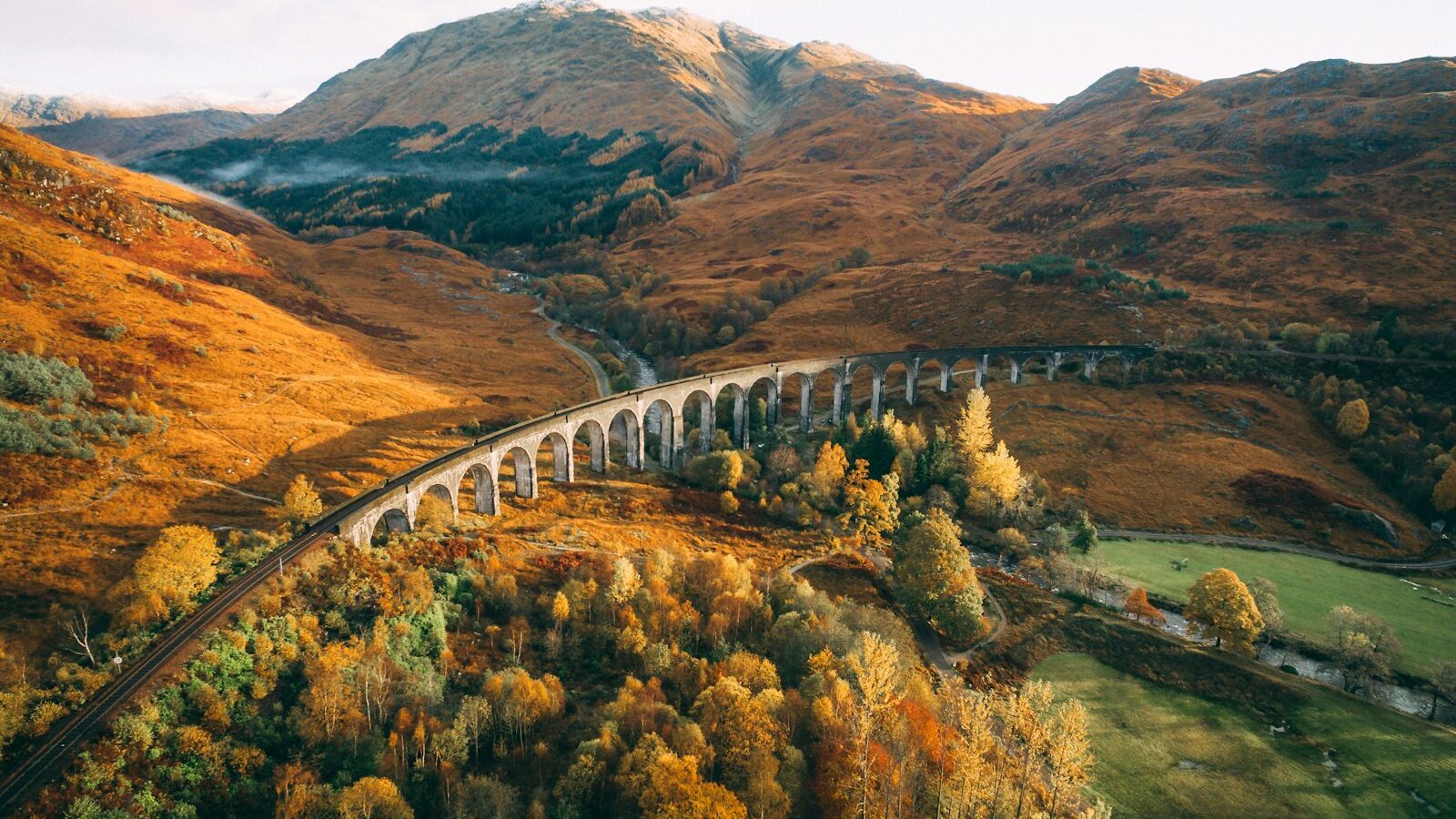
Planning the Scottish Highlands from Singapore is a very different trip from a city break in Edinburgh. The Highlands reward people who hire a car, slow down and accept that the weather will change four times before lunch. This guide focuses on the driving itself: the three classic routes through Glencoe, Loch Ness and the Isle of Skye, how to handle narrow single-track roads that feel nothing like Singapore’s expressways, and how to shape a realistic itinerary after a long-haul flight.
Getting There and Picking Up Your Car
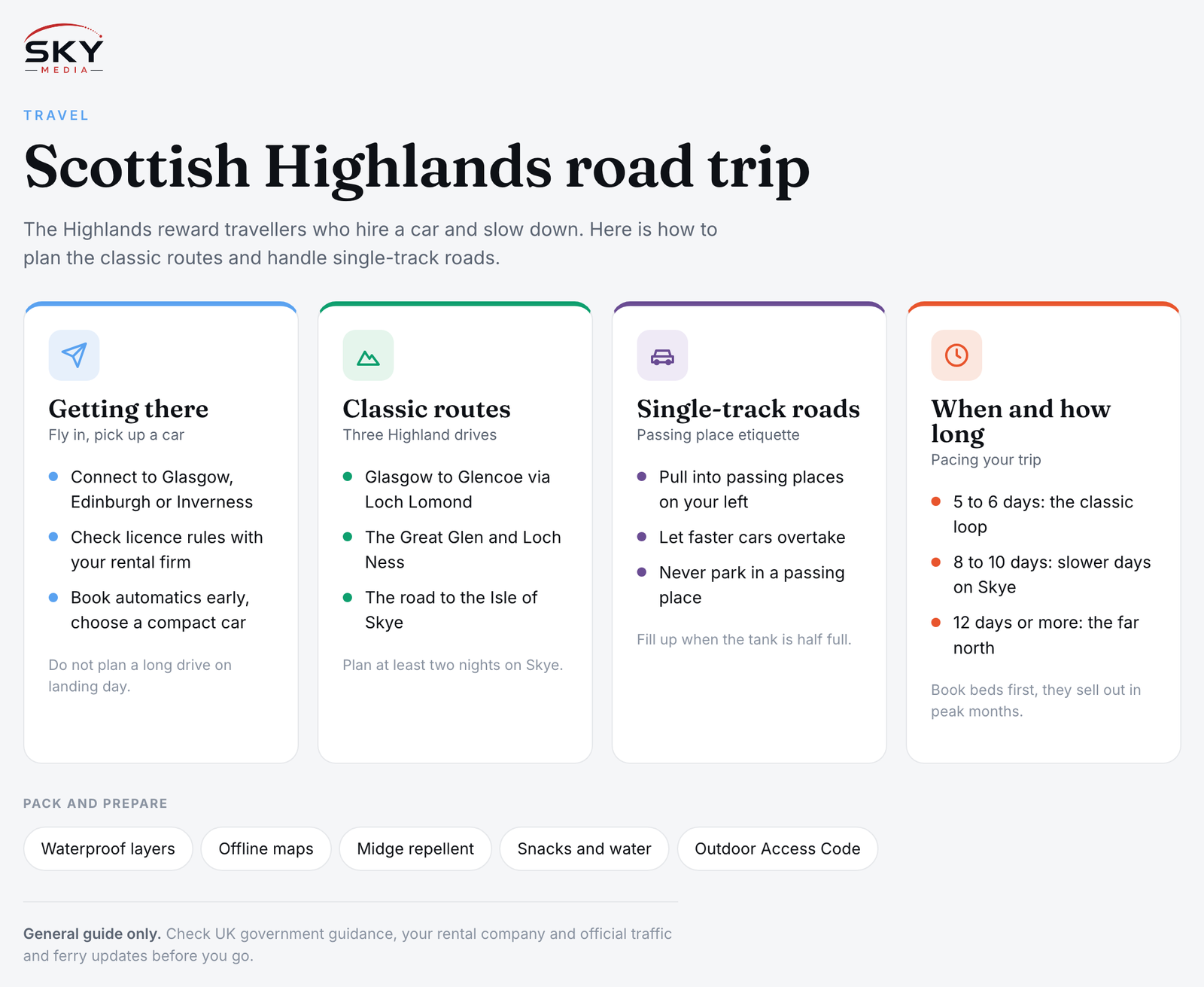
There is no shortcut to the Highlands from Singapore. Most travellers fly into London or a European or Middle Eastern hub, then connect to Glasgow, Edinburgh or Inverness. Glasgow is the natural gateway for a west coast loop through Glencoe and Skye, while Inverness puts you right beside Loch Ness and the far north. Check current routings with airlines, since connections change by season.
A few practical points before you collect the keys:
- Your licence. Visitors can generally drive in the UK on a valid foreign licence for a limited period, but car rental firms set their own rules. Some ask for an International Driving Permit. Confirm the requirements with your rental company and the UK government’s official guidance before you fly.
- Driving side. Scotland drives on the left, just like Singapore, so the bigger adjustment is the roads, not the lane discipline.
- Car size. A compact or mid-sized car is easier on single-track roads and in tight village car parks. Automatic cars are less common in UK rental fleets, so book early if you do not drive manual.
- Jet lag. Do not plan a long drive on the day you land. Spend the first night near the airport or in Glasgow and set off fresh.
The Three Classic Highland Routes
Most first-time road trips string together some or all of these routes. Each has a distinct character, so it helps to know what you are signing up for.
Glasgow to Glencoe via Loch Lomond
Heading north from Glasgow, the main road runs along the western shore of Loch Lomond before climbing onto Rannoch Moor, a wide, empty stretch of bog and lochans. Then the road drops into Glencoe, a dramatic glen framed by steep, dark mountains. This is one of the most photographed drives in Scotland, and the lay-bys fill up quickly in summer. Glencoe is also a good base for short walks, though you should only tackle hill routes that match your fitness and the day’s weather.
The Great Glen and Loch Ness
From Fort William, the road follows the Great Glen, a long natural fault line that links a chain of lochs towards Inverness. Loch Ness is the famous one: long, deep and dark, with castle ruins and small villages along its banks. The drive itself is gentle and straightforward, which makes it a good warm-up day. Consider doing a short stretch on the quieter side of the loch if you want to escape tour coaches.
The Road to the Isle of Skye
Skye is reached by a road bridge on its eastern side, and in some seasons by a short car ferry crossing further south. Book ferries ahead in busy months. The island’s landscapes, from jagged ridges to sea cliffs and rock pinnacles, are the highlight for many visitors, but Skye is also where the roads get narrow and the crowds concentrate. Plan at least two nights on the island so you are not rushing between viewpoints.
Comparing the Routes at a Glance
| Route | Driving style | Best for | Watch out for |
|---|---|---|---|
| Glasgow to Glencoe | Main roads, some winding sections | Big mountain scenery on day one | Busy lay-bys and sudden weather on the moor |
| Great Glen and Loch Ness | Easy main road with lochside views | A relaxed warm-up drive and castles | Coach traffic at the popular stops |
| Isle of Skye | Many single-track roads with passing places | Dramatic coastal and ridge landscapes | Limited parking, slow traffic, ferry bookings |
| Far north loop (optional) | Long, remote, often single-track | Experienced drivers with extra days | Long gaps between fuel and food stops |
Single-Track Roads and Other Driving Tips
Single-track roads are the biggest surprise for Singapore drivers. They are just wide enough for one car, with marked “passing places” every so often. The etiquette is simple but important:
- Pull into a passing place on your left, or wait opposite one on your right, to let oncoming cars through.
- Let faster cars overtake by pulling in. Locals use these roads for work, and holding up a queue is the most common tourist complaint.
- Never park in a passing place, even for a quick photo. Use proper car parks or lay-bys.
- Watch for sheep and deer, which wander onto unfenced roads, especially at dawn and dusk.
- Fill up when you can. Fuel stations thin out in remote areas and some close early. A half-full tank is your cue to top up.
- Allow far more time than the map suggests. Narrow bends, slow tractors and photo stops can easily stretch a drive.
- Check conditions daily. Road closures, high winds and snow in the colder months can affect mountain passes and ferry crossings. Use official Scottish traffic and ferry operator updates.
Mobile signal can disappear in the glens, so download offline maps before you set off and keep a paper backup of your accommodation addresses.
When to Go and How Long You Need
Each season brings a trade-off. Late spring and early autumn are popular with Singapore travellers for longer days, fewer crowds and autumn colours. Summer brings the longest daylight and the busiest roads, along with midges, tiny biting insects that are worst on still, damp evenings near water. Pack repellent and a head net if you are sensitive. Winter is cold, dark early and can close high roads, so it suits flexible travellers who are comfortable with winter driving.
As a rough guide to pacing:
- 5 to 6 days: Glasgow, Glencoe, Fort William, Skye, then back via Loch Ness to Inverness.
- 8 to 10 days: Add slower days on Skye, a night by Loch Ness and time in smaller west coast villages.
- 12 days or more: Consider extending to the remote far north coast, which suits confident drivers who enjoy long empty roads.
Accommodation in small Highland towns is limited and books out in peak months, so lock in your beds before you finalise anything else. Many guesthouses have minimum stays in summer.
Packing for Highland Weather
The Highlands can feel cold and wet even in summer, especially for people used to Singapore’s heat. Layering beats one heavy coat:
- A waterproof jacket and waterproof trousers
- A warm fleece or light down layer
- Comfortable walking shoes with grip
- Gloves and a beanie outside summer
- A reusable bottle and snacks for long stretches without shops
If you are travelling with children, build in short breaks on winding roads. Our tips for managing carsickness on road trips with kids apply just as well on Highland bends.
Respecting the Land and Local Communities
Scotland has a strong tradition of responsible access to the outdoors, set out in the official Scottish Outdoor Access Code. Leave gates as you find them, keep dogs under control around livestock, take all rubbish with you and use proper toilets rather than roadside spots. On popular walks, stay on marked paths to protect fragile ground. Supporting local cafés, shops and guesthouses also keeps small Highland communities going.
If this trip has given you a taste for cooler, hillier escapes, you might also enjoy planning a shorter break closer to home, such as Cameron Highlands from Singapore, or comparing it with the driving routes in our guide to road trips in Malaysia from Singapore.
Further reading: Driving the Great Ocean Road From Singapore