

Many chronic conditions, such as high blood pressure, diabetes and high cholesterol, have no symptoms in their early stages. Some cancers can also be picked up early through regular screening, when they are easier to treat. Screen for Life (SFL) in Singapore is the national programme that makes this kind of recommended screening affordable for eligible residents.
This guide explains who qualifies, which screenings are covered, how costs generally work and how to book. It focuses on the national scheme only. If you are thinking about a broader private health check, see our guide to health screening in Singapore.
This is general information, not medical advice. Your doctor can advise which screenings are right for you, and the official details, including current eligibility and fees, are on HealthHub and the Health Promotion Board (HPB) website.
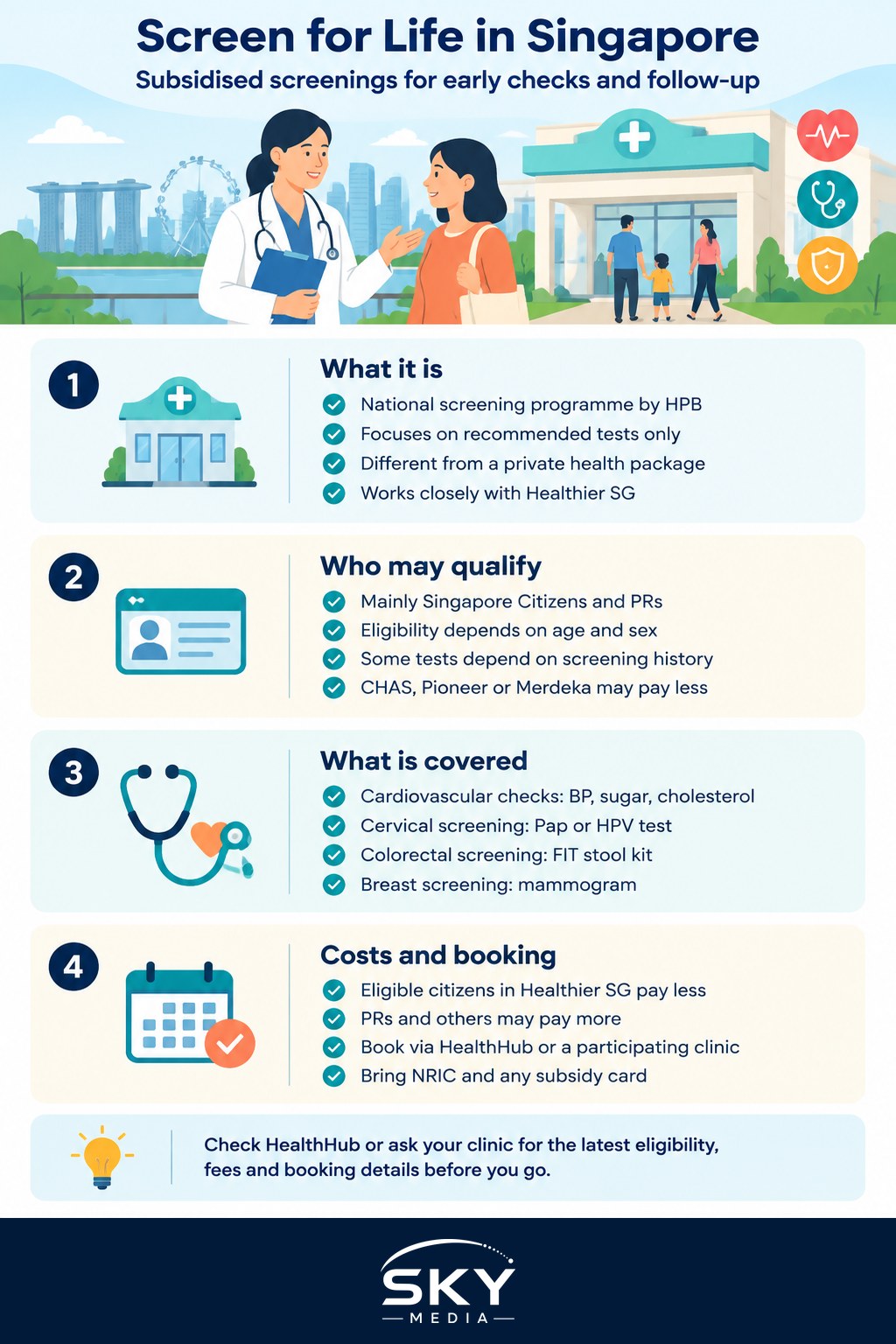
What Screen for Life Is
Screen for Life is a national screening programme run by HPB, the government agency that promotes healthy living, under the Ministry of Health (MOH). It offers subsidised screening for conditions where evidence shows that regular screening of certain age groups helps. It is different from a commercial health screening package: it focuses on a small set of tests recommended nationally rather than a long list of optional tests.
The programme now works closely with Healthier SG, the national initiative where residents enrol with a family doctor for long-term preventive care. Under Healthier SG, enrolled residents are encouraged to get their recommended screenings through their enrolled clinic, and these screenings are heavily subsidised and may be fully subsidised for eligible enrollees. Check HealthHub for the current arrangement, as subsidy rules have changed over the years and may change again.
Who Qualifies
Eligibility depends on your residency status, age and, for some screenings, sex and screening history. In broad terms:
- Singapore Citizens and Permanent Residents are the main groups covered, with the deepest subsidies generally for citizens.
- Age bands apply to each test. Cardiovascular screening is generally for adults from middle age, while cervical cancer screening starts younger for women, and colorectal and breast cancer screening start at older ages.
- Screening intervals matter. Many screenings are recommended every few years rather than annually. You may not qualify for a subsidised repeat until the recommended interval has passed.
- Some people are better served by regular follow-up. If you already have a diagnosed condition such as diabetes, your doctor will usually monitor you through regular reviews rather than screening.
Holders of certain health assistance cards, such as CHAS (Community Health Assist Scheme) cards, or those in the Pioneer or Merdeka Generation, may pay less. Your invitation letter or HealthHub account will often show what you are eligible for.
Which Screenings Are Covered
Screen for Life covers a core set of screenings. The exact age ranges and intervals are set by MOH and may be updated, so treat this as an overview.
- Cardiovascular screening, which checks for obesity (body mass index), high blood pressure, diabetes (blood sugar) and high cholesterol (lipids).
- Cervical cancer screening for women, using a Pap test or HPV test depending on age.
- Colorectal cancer screening, using a home stool test called a FIT (faecal immunochemical test) kit, which checks for hidden blood in the stool.
- Breast cancer screening for women, using a mammogram at designated screening centres or polyclinics.
Some programmes have also included other checks for older adults, such as vision, hearing and oral health screening for seniors through community initiatives. Ask your clinic or check HealthHub for what applies to you.
| Screening | What it looks for | How it is done |
|---|---|---|
| Cardiovascular | Obesity, high blood pressure, diabetes, high cholesterol | Measurements and a blood test at a clinic |
| Cervical cancer | Early cell changes or HPV infection | Pap test or HPV test by a doctor or nurse |
| Colorectal cancer | Hidden blood in the stool | FIT kit done at home and returned for testing |
| Breast cancer | Early signs of breast cancer | Mammogram at a designated centre |
What You Might Pay
The aim of the programme is to make recommended screening affordable. Costs depend on your citizenship status, any subsidy card you hold, whether you are enrolled in Healthier SG, and the specific screening.
General points:
- Recommended screenings for eligible citizens enrolled in Healthier SG are heavily subsidised, with many available at little or no cost.
- Permanent Residents and those not enrolled may pay a higher, but still subsidised, fee.
- The first follow-up consultation after an abnormal result has often been subsidised too, so check whether it is included.
- Mammograms follow their own subsidy and MediSave rules. MediSave is the CPF account for healthcare costs; ask the screening centre how payment works.
Because fees and subsidies are revised from time to time, check HealthHub or call your clinic before your appointment.
How to Book and What to Expect
Booking is straightforward:
- Check your eligibility on HealthHub, or look out for an invitation letter or SMS from HPB.
- Find a participating clinic. Many GP clinics and polyclinics take part. If you are enrolled in Healthier SG, start with your enrolled clinic.
- Book an appointment and ask about preparation. For blood tests, the clinic may ask you to fast for some hours beforehand.
- Attend the screening. Bring your NRIC and any subsidy card.
- Return for results. The doctor will explain your results and recommend next steps.
For the FIT kit, you collect it from a participating clinic, pharmacy or community point, do the test at home following the instructions, and return the samples as directed.
Making Sense of Your Results
A normal result means you should repeat the screening at the recommended interval. An abnormal result does not automatically mean you have a disease; it means you need follow-up, which may include further tests, lifestyle advice or referral to a specialist. Our guide to understanding your health screening results explains common terms and numbers.
Older adults may have extra questions about which tests remain useful as they age. Health screening for seniors covers what to ask your doctor.
Why It Is Worth Doing
Screening only works if you actually go. Many people put it off because they feel fine, or worry about the result. Yet the conditions covered by Screen for Life are common and often silent, and catching them early usually means simpler treatment. Put your next screening date in your calendar, and remind family members who are due as well. For the latest details on eligibility, fees and participating clinics, HealthHub and HPB remain the official sources.
Frequently Asked Questions
How often can I repeat a subsidised Screen for Life test? Many screenings are recommended every few years rather than annually, so you may not qualify for a subsidised repeat until the recommended interval has passed. Check HealthHub for your own eligibility, as MOH may update the age ranges and intervals.
How does the colorectal FIT kit test work? You collect the kit from a participating clinic, pharmacy or community point, do the test at home following the instructions, and return the samples as directed. It checks for hidden blood in the stool, and abnormal results need follow-up with a doctor.
Does an abnormal screening result mean I have cancer or a disease? Not automatically. It means you need follow-up, which may include further tests, lifestyle advice or referral to a specialist. A normal result means you repeat the screening at the recommended interval. Your doctor will explain the results.
Do I need to fast before my Screen for Life blood test? Possibly. For blood tests, the clinic may ask you to fast for some hours beforehand, so ask when booking and follow its preparation instructions. Bring your NRIC and any subsidy card to the appointment.
Can Permanent Residents use Screen for Life, and do they pay more? Citizens and Permanent Residents are the main groups covered, with the deepest subsidies generally for citizens. PRs and those not enrolled in Healthier SG may pay a higher, but still subsidised, fee. Check HealthHub or call your clinic for current fees.
Official sources: HealthHub
Further reading: Tuberculosis Screening and Treatment in Singapore · Hepatitis B Screening, Vaccination and Carrier Care in Singapore · A Practical Guide to Health Checkups for Work Pass Holders