

Good teeth matter more with age. They affect what you can eat, how well you speak and how confident you feel when you smile. Yet dental bills can be a worry for retirees on a fixed income. The good news is that there are several senior dental subsidy Singapore pathways, and many older adults qualify for more help than they realise.
This guide focuses on how to pay for dental care as an older adult: which schemes exist, how they fit together, and the practical steps to actually use them. It is general information. Subsidy amounts, eligible treatments and criteria are set by the Ministry of Health (MOH) and can change, so check the current details on official sources such as the CHAS website, HealthHub or MOH before treatment.
The Main Subsidy Pathways for Older Adults
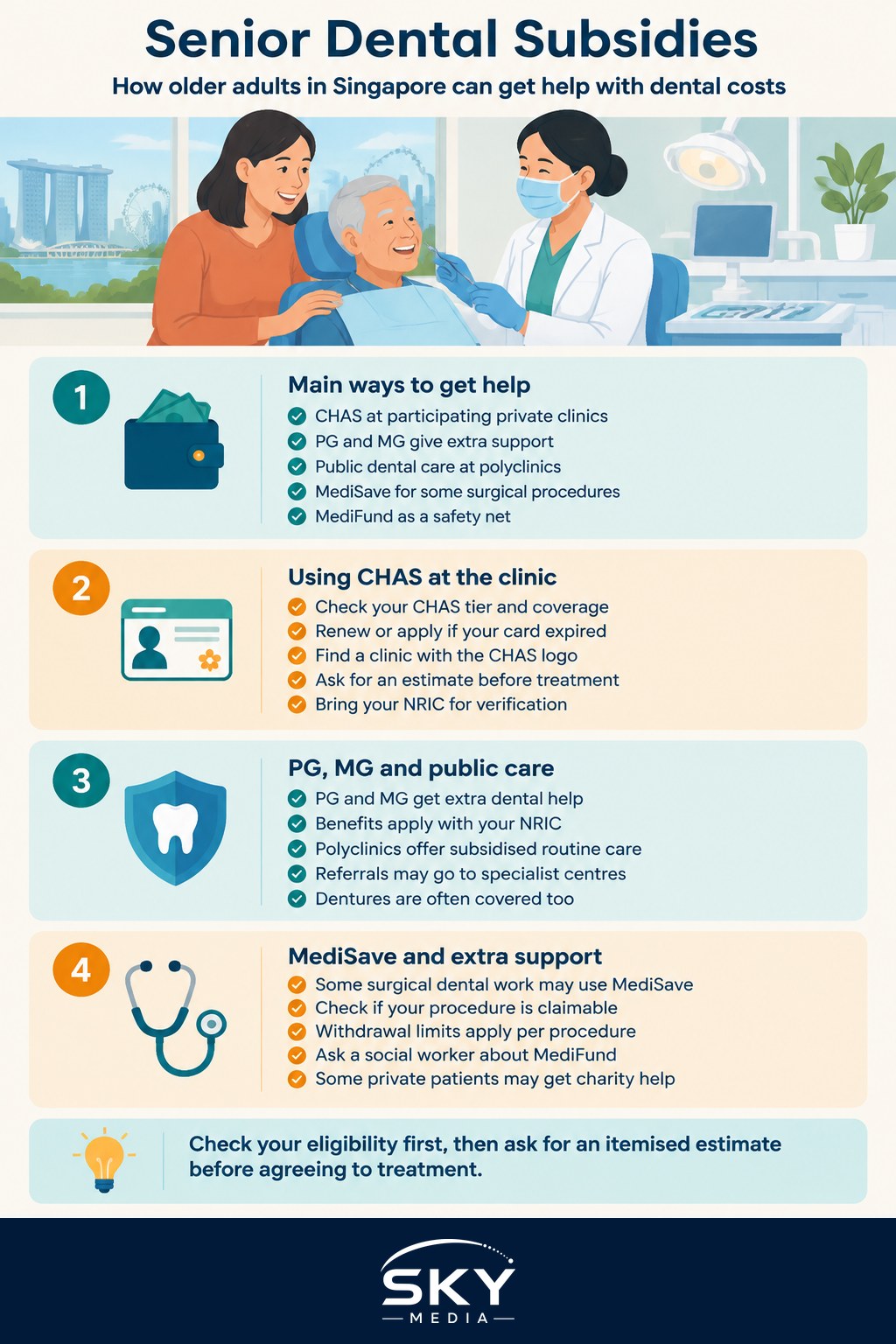
Most seniors who are Singapore Citizens get help through one or more of these routes:
- CHAS (Community Health Assist Scheme). A government scheme that gives subsidies at participating private clinics, including dental clinics. Your CHAS card colour (tier) depends on your household income or the annual value of your home.
- Pioneer Generation (PG) and Merdeka Generation (MG) benefits. Seniors in these groups receive additional subsidies for dental care at CHAS dental clinics and extra support at public clinics.
- Public dental services. Many polyclinics offer subsidised dental care, and public specialist centres such as the National Dental Centre Singapore handle more complex cases, often by referral.
- MediSave. Your CPF MediSave account can be used for certain dental procedures that are classified as surgical, within withdrawal limits.
- MediFund and social support. A safety net for patients who still cannot afford their bills after other subsidies.
Permanent Residents are covered by some of these schemes but not all, and subsidy levels can differ from those for citizens. If you are a PR, check your eligibility for each one separately.
How the Options Compare
Each route suits different needs. This summary helps you see where to start.
| Pathway | Where you use it | Typical use for seniors | What to check first |
|---|---|---|---|
| CHAS dental subsidy | Participating private dental clinics showing the CHAS sign | Check-ups, fillings, extractions, scaling and dentures | Your CHAS tier and the list of subsidised treatments |
| Pioneer or Merdeka Generation benefits | CHAS dental clinics and public clinics | Extra subsidy on top of CHAS for common treatments | Whether you are in the PG or MG cohort |
| Polyclinic dental services | Polyclinics that have a dental clinic | Subsidised routine care and referrals | Waiting times and whether you need an appointment |
| MediSave | Clinics and hospitals approved for MediSave claims | Selected surgical dental procedures | Whether your procedure qualifies and the withdrawal limit |
| MediFund | Public healthcare institutions | Help with remaining bills when other support is not enough | Speak to the medical social worker at the institution |
The schemes can sometimes be combined. For example, a Pioneer Generation senior may receive CHAS subsidy plus PG benefits at the same visit. The clinic will apply what you are eligible for.
Using Your CHAS Card at a Dental Clinic
CHAS is often the easiest way for a senior to get subsidised dental care close to home. Here is how to make it work:
- Check your status. Look up whether you have a CHAS card and which tier it is through the CHAS website or HealthHub, the government health information portal and app. Note that not every CHAS tier includes dental subsidies, so confirm what your tier covers.
- Apply or renew if needed. CHAS cards have a validity period. If yours has expired or you have never applied, you can apply online or with help at a community centre or Silver Generation Office.
- Find a participating clinic. Not all dental clinics are on CHAS. Use the clinic locator on the CHAS website and look for the CHAS logo at the clinic.
- Ask before treatment. Tell the clinic you are a CHAS cardholder and ask for an estimate showing the full fee, the subsidy and what you will pay. Subsidies cover specific treatments up to set amounts, and clinics set their own fees.
- Bring your NRIC. The clinic will verify your eligibility at the visit.
For a detailed look at how CHAS dental pricing works in general, see our guide to dental care costs and CHAS subsidies.
Extra Help for Pioneer and Merdeka Generation Seniors
If you were born in the years covered by the Pioneer Generation or Merdeka Generation packages, you receive additional healthcare benefits for life, including dental subsidies. You should have received a card or letter when the package started. If you are not sure whether you qualify, check with the Silver Generation Office or the official PG and MG information pages.
In practice, this means:
- At CHAS dental clinics, your subsidy is usually higher than the standard CHAS amount for the same treatment.
- At polyclinics, you may receive an additional discount on subsidised services.
- Benefits apply automatically when you show your NRIC, but it is still worth asking the clinic to confirm.
Dentures are a common need for seniors in these groups, and they are among the treatments covered by subsidies at participating clinics. Ask the dentist to explain the options and the subsidised price before you agree.
When MediSave and MediFund Come In
Some dental work goes beyond routine care. Surgical extractions, including impacted teeth, and some procedures related to implants may count as surgical, which means MediSave may help pay. There are limits on how much you can withdraw per procedure, and not every clinic is approved to make MediSave claims. Ask the clinic whether your treatment is MediSave-claimable before you start. Our article on dental implants and bridges for seniors explains those treatments in more detail.
If you have used available subsidies and still cannot afford necessary treatment at a public institution, ask to see a medical social worker. They can assess whether MediFund or other assistance may help. For seniors receiving treatment at private clinics, a Social Service Office or community organisation may be able to point you to charity dental programmes, including some that serve homebound or low-income older adults.
Practical Tips to Make Subsidies Go Further
A few habits help you get the most from the support available:
- Go for regular check-ups. Catching problems early is usually cheaper and more comfortable than treating them later. Our guide to dental care for seniors covers daily care and warning signs.
- Keep your documents in one place. NRIC, CHAS card details and any PG or MG letters should be easy to find before each visit.
- Ask for itemised estimates. Compare the full fee, the subsidy and your share. You are allowed to take time to think before agreeing to costly treatment.
- Bring a family member if helpful. Adult children or caregivers can help ask questions and keep track of appointments and payments.
- Ask about wait times. Polyclinic and public dental services may have waiting lists, while CHAS clinics may be quicker but cost more out of pocket. Weigh time against cost.
Dental care should not be something seniors put off because of cost. Between CHAS, generation-based benefits, public clinics and safety nets such as MediFund, most older Singaporeans have a route to affordable treatment. Start by checking your eligibility, then ask your dentist to explain the subsidised options before every major treatment.
Frequently Asked Questions
Do I need a referral to see a dentist at a polyclinic? Many polyclinics with a dental clinic offer subsidised routine care, while more complex cases at public specialist centres are often by referral. Waiting times and appointment rules differ, so check with the polyclinic or HealthHub before you go.
Are dentures covered by senior dental subsidies? Dentures are among the treatments covered by subsidies at participating CHAS clinics, up to set amounts, and clinics set their own fees. Ask the dentist to explain the options and the subsidised price before you agree to treatment.
Can PRs use the same dental subsidies as citizens? Permanent Residents are covered by some of these schemes but not all, and subsidy levels can differ from those for citizens. Check your eligibility for each scheme separately on the CHAS website or HealthHub, or with MOH.
How do I know if my dental treatment can be paid with MediSave? Surgical extractions, including impacted teeth, and some procedures related to implants may count as surgical. There are withdrawal limits, and not every clinic is approved for MediSave claims, so ask the clinic before starting treatment.
What can I do if I still cannot afford dental treatment after subsidies? At a public institution, ask to see a medical social worker, who can assess whether MediFund or other assistance may help. For private clinic patients, a Social Service Office or community organisation may point you to charity dental programmes.
Official sources: Ministry of Health (MOH)