
Losing a tooth or two is common with age, and it can affect how you chew, speak, and smile. If you are weighing your options, this is a plain, practical guide to dental implants for seniors in Singapore, and how they compare with bridges. It is general information to help you have a good conversation with your dentist, not dental advice for your own mouth. Your dentist is the right person to examine you and recommend what suits your teeth, gums, and health.
Implants and bridges, in plain words
When a tooth is missing, there are a few common ways to fill the gap. Two options often discussed are implants and bridges.
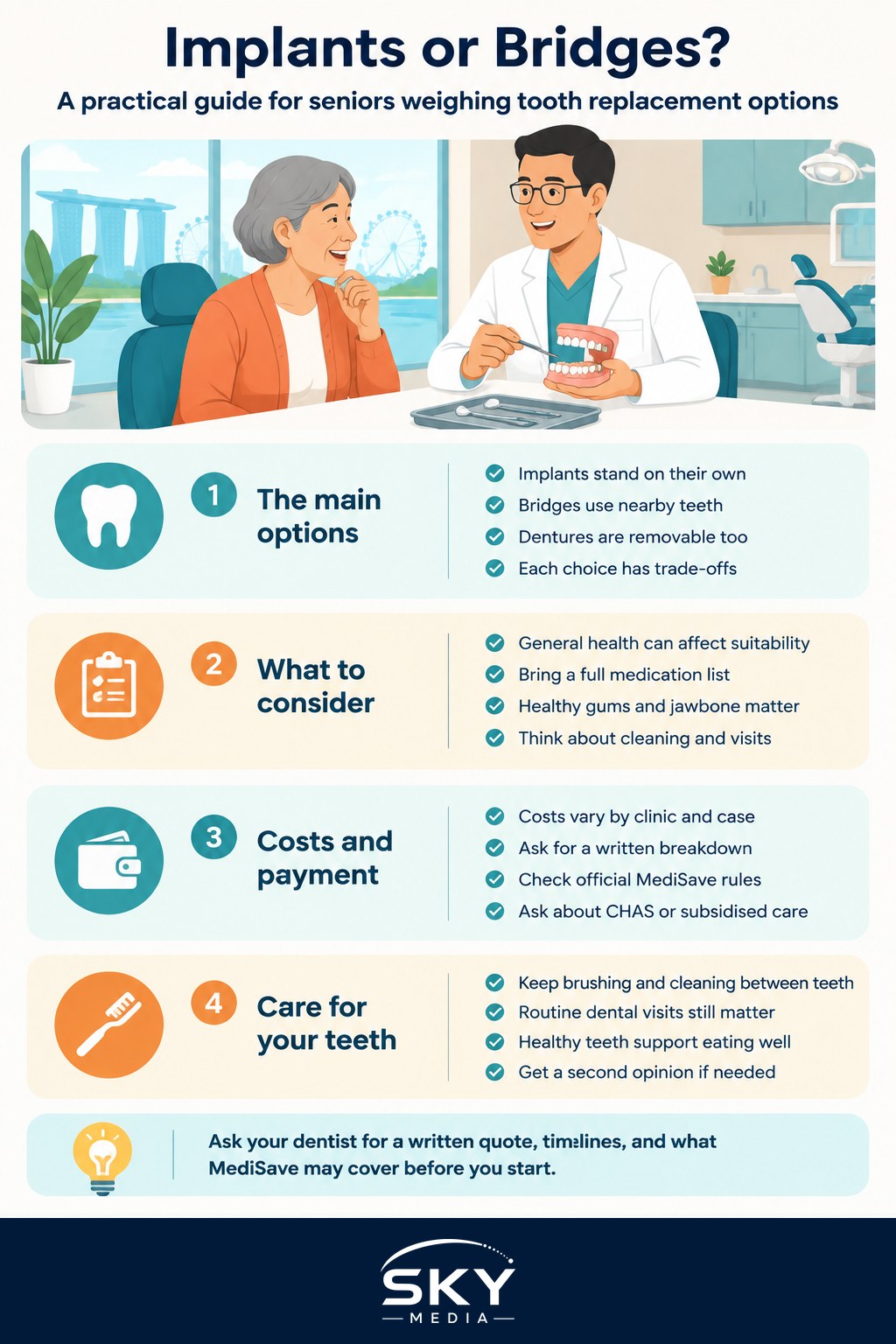
A dental implant is a small post placed into the jawbone to act like a tooth root, with a crown fitted on top. It stands on its own without relying on the neighbouring teeth. A bridge, as the name suggests, spans the gap by anchoring an artificial tooth to the teeth on either side, which are shaped to hold it. Dentures, whether partial or full, are a separate removable option that some seniors prefer or find more affordable.
Each approach has trade-offs in comfort, cost, how long treatment takes, and how they affect nearby teeth. Implants usually involve more steps and healing time, while bridges are often quicker but involve the neighbouring teeth. There is no single best answer for everyone. What matters is your own dental health, the condition of your gums and jawbone, and your general medical situation, which your dentist will assess.
What to think about as a senior
A few things become more relevant with age, and are worth raising with your dentist:
- General health and medications. Conditions such as diabetes, or medicines that affect healing and bleeding, can influence what is suitable. Bring your full medication list.
- Gum and bone health. Implants in particular depend on healthy gums and enough jawbone, which the dentist will check.
- Daily cleaning. Ask how to keep each option clean, especially if hand strength or eyesight makes brushing harder.
- Time and visits. Some treatments need several appointments over weeks or months. Consider transport and who can accompany you.
It is also fine to take your time and get a second opinion. A good dentist will explain the options, the pros and cons, and let you decide without pressure.
Costs and MediSave, handled carefully
Costs vary widely depending on the treatment, the clinic, and your specific situation, so it is best to ask your own dental clinic for a written quotation and breakdown before you commit. Avoid comparing your case to a friend’s, since the details differ.
On paying for care, MediSave can be used for certain surgical dental procedures, but the rules, limits, and which procedures qualify are set by the authorities and change over time. Do not assume a particular treatment is covered. Ask your dental clinic and check current details with the CPF Board or the Ministry of Health, and confirm before treatment begins. For lower-cost routine care, some seniors also use community dental services or subsidised clinics, and CHAS cardholders may get help with certain treatments, so it is worth asking. Our guide to CHAS cards for seniors explains that scheme in general terms.
Keeping your natural teeth healthy too
Whatever you choose, looking after your remaining teeth and gums pays off. Regular brushing, cleaning between teeth, and routine dental visits help prevent further loss. Our guides to dental care for seniors and dentures and oral care for seniors cover everyday habits and other tooth-replacement choices. Good oral health also supports eating well, which matters for overall strength.
A sensible next step
If a missing tooth is bothering you, book a dental check and ask your dentist to walk you through your options, including implants, bridges, and dentures, with costs in writing. It is perfectly reasonable to ask how long the treatment will take, how many visits are involved, what the recovery is like, and what happens if something needs adjusting later. When you understand dental implants for seniors in Singapore alongside the alternatives, you can choose with confidence and at a pace that suits you. For scheme and payment rules, rely on the official channels rather than guesswork, and let your dentist and the clinic confirm what applies to you before any treatment begins.
Frequently Asked Questions
Am I too old to get dental implants? Age alone is not the deciding factor. Your dentist looks at your gums, jawbone and general health, including conditions like diabetes and medicines that affect healing. Ask for a full assessment before ruling anything in or out.
How long does the implant process take compared with a bridge? Implants usually involve more steps and healing time, while bridges are often quicker. Exact timing depends on your mouth and the clinic, so ask for a treatment timeline and the number of visits before you commit.
Why do bridges involve the teeth next to the gap? A bridge anchors the artificial tooth to the teeth on either side, and those teeth are shaped to hold it. An implant stands on its own in the jawbone instead. Your dentist can explain the effect of each choice on neighbouring teeth.
Can I use MediSave for dental implants? Do not assume so. MediSave can be used for certain surgical dental procedures, but which ones qualify and the limits change over time. Ask your clinic, and confirm current rules with the CPF Board or the Ministry of Health before treatment.
When are dentures a better choice than implants? Some seniors prefer dentures, which are removable, or find them more affordable. Whether they suit you depends on your gums, bone, health and budget. Ask your dentist to compare all options, with costs in writing, and take time to decide.
Further reading: Senior Dental Subsidies in Singapore and How to Use Them