
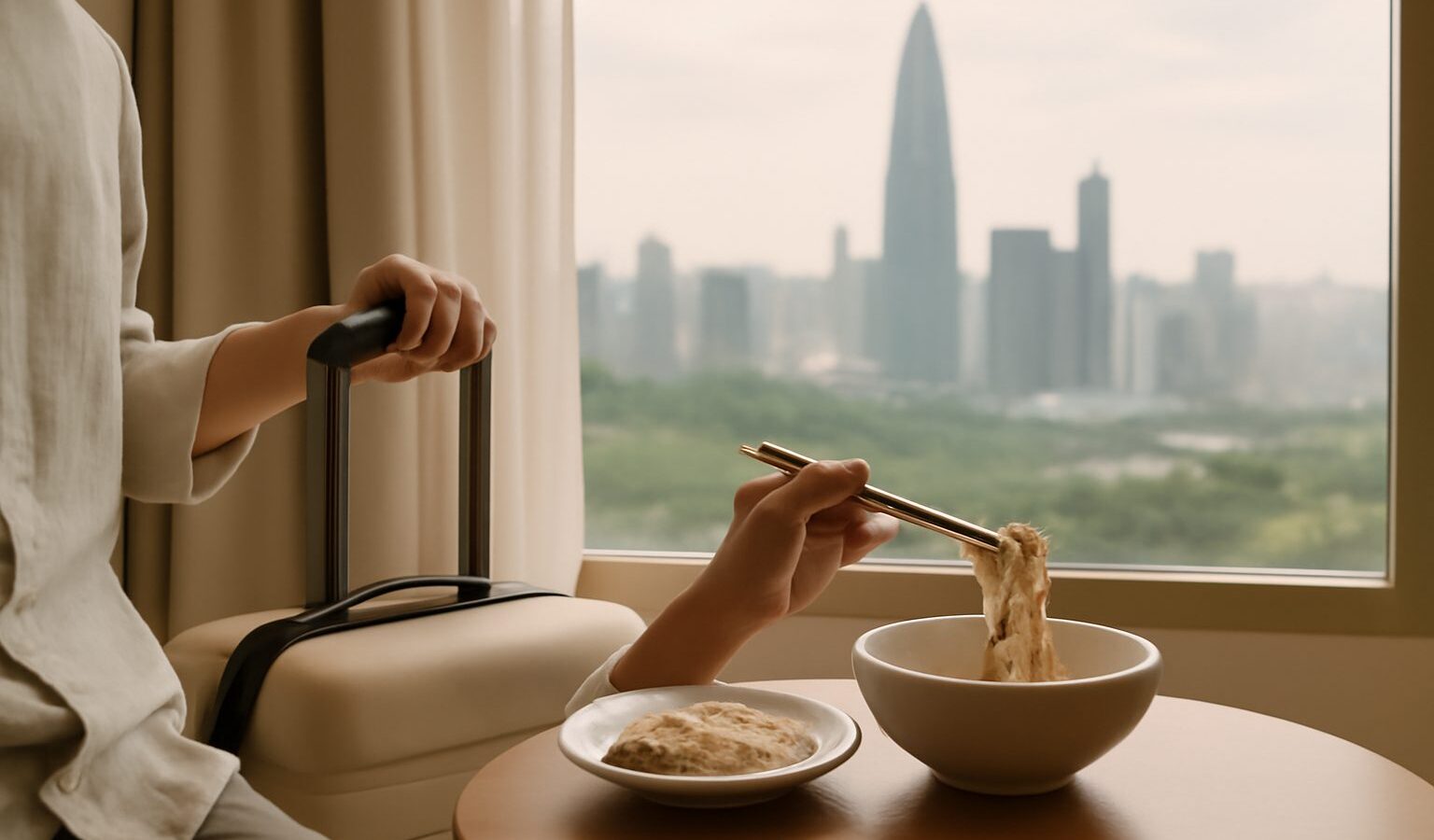
Shenzhen is modern China at full speed. Barely more than a fishing region a few decades ago, it is now a gleaming megacity of skyscrapers, tech campuses, design studios and parks, sitting right beside Hong Kong in Guangdong province. For Singaporeans, a trip to Shenzhen from Singapore offers a fascinating look at how quickly a city can be built, plus superb food from every corner of China, huge electronics markets and easy links to the wider Pearl River Delta. This guide covers getting there, the best areas, what to see, where to eat and the practical basics.
Getting to Shenzhen From Singapore
Shenzhen lies in the humid south of China, close by mainland standards. Direct flights between Changi and Shenzhen Bao’an International Airport are common, with a flying time usually in the region of four to five hours. Fares and schedules move with the season, so compare current options, and weigh a direct service against a one-stop routing.
Because Shenzhen borders Hong Kong and connects to the region by fast train, many travellers combine it with neighbouring cities. High-speed rail links it with Guangzhou in well under an hour, so the two make a natural pair; see our Guangzhou from Singapore guide, and the seaside Zhuhai from Singapore guide across the delta.
On entry, do not rely on old advice. Rules for Singapore passport holders have shifted in recent years, and a Singapore passport and a China passport can face very different requirements for the same trip. Confirm your own case with the Chinese embassy or consulate, and cross-check ICA for Singapore re-entry, before you book.
When to Go and How Long to Stay
Shenzhen shares the humid subtropical climate of the far south, so it is warm most of the year but not identical to Singapore’s steady tropics. The wet summer is hot and rainy with the odd typhoon, while the cooler months are far more comfortable for walking and beaches.
| Season | Months | What to expect |
|---|---|---|
| Spring | Mar to Apr | Mild, humid and often overcast, with rising rainfall |
| Summer | May to Aug | Hot, very humid and wet, with occasional typhoons |
| Autumn | Sep to Nov | Warm, drier and clearer; the most pleasant window |
| Winter | Dec to Feb | Cool and comfortable, occasionally chilly but rarely cold |
Autumn into early winter is the best time to visit. Two to three days covers the highlights, and longer if you want beach time or day trips to Guangzhou and beyond by train.
Getting Around and the Best Districts
Shenzhen has a huge, clean and inexpensive metro that reaches the airport, rail stations and nearly every district a visitor needs, and it is by far the easiest way to travel. Knowing the main areas helps you plan:
- Futian: the central business district, home to soaring towers, the civic centre, Lianhuashan Park (for skyline views) and plenty of hotels and dining.
- Luohu: the older commercial core beside the Hong Kong border crossing, dense with shopping, markets and value hotels.
- Nanshan: the tech and creative west, with company campuses, universities, Shenzhen Bay Park along the water and the OCT arts and leisure area.
- Bao’an: the airport side, useful for early flights and increasingly lively in its own right.
Top Things to See and Do
Shenzhen leans modern, but there is plenty to fill a couple of days:
- Ride to the observation deck of the Ping An Finance Centre, one of the tallest buildings in the world, for vast city views.
- Wander OCT Loft, a former factory zone reborn as a creative district of galleries, design shops and cafes, and the nearby theme parks such as Window of the World and Splendid China.
- Browse the enormous Huaqiangbei electronics markets, a maze of stalls selling components, gadgets and everything tech, a genuine spectacle even if you buy nothing.
- Relax along Shenzhen Bay Park or head out to the Dameisha and Xiaomeisha beaches on the eastern coast on a fine day.
- See Dafen, the oil-painting village where artists reproduce and create works on every corner.
Where and What to Eat
Shenzhen is a city of migrants from all over China, so its food scene is a nationwide sampler. You will find excellent Cantonese cooking and dim sum thanks to its Guangdong setting, alongside fiery Sichuan and Hunan restaurants, northern noodles and dumplings, hotpot of every style and fresh seafood. The city’s youth and wealth also mean a strong cafe and dessert culture and plenty of polished modern dining. Eat where the queues are, from food courts in the malls to buzzing neighbourhood streets. If you keep halal or vegetarian, options exist in a city this large, but check ingredients and seek out suitable restaurants in advance.
Where to Stay
Futian is the most convenient all-round base, central, well connected and packed with hotels and food. Luohu suits shoppers and those crossing to or from Hong Kong, with good-value rooms near the border. Nanshan appeals if you want the tech, waterfront and creative side, plus proximity to the beaches and theme parks. Wherever you land, staying within a short walk of a metro station makes this spread-out city far easier to handle.
Practical Tips
- Currency: the renminbi (yuan). Arrange mobile payment where possible and keep some cash as backup.
- Language: Mandarin and Cantonese are both spoken; English is limited, so translation and offline map apps help a lot.
- Connectivity: many familiar apps and sites are restricted in China, so sort a reliable data or roaming option before you fly.
- Budget: Shenzhen ranges from cheap street eats and low metro fares to pricey towers and smart hotels, so it flexes to your style.
- Safety: the city is broadly considered safe for visitors; take normal big-city precautions in crowds and check the latest MFA travel advisory before you go.
- Health: for any vaccinations or precautions, see a doctor or travel clinic before departure and buy suitable travel insurance; this is general information, not medical advice.
Shenzhen is a compelling, easy first taste of ultramodern China from Singapore, fast, futuristic and endlessly energetic, with the food and shopping to match and the whole Pearl River Delta on its doorstep.
Explore more
Shenzhen sits at the centre of a rich region, so pair it with the Cantonese classics of Guangzhou from Singapore or the relaxed coast of Zhuhai from Singapore. For a Fujian coastal contrast further up, see our Xiamen from Singapore guide.