
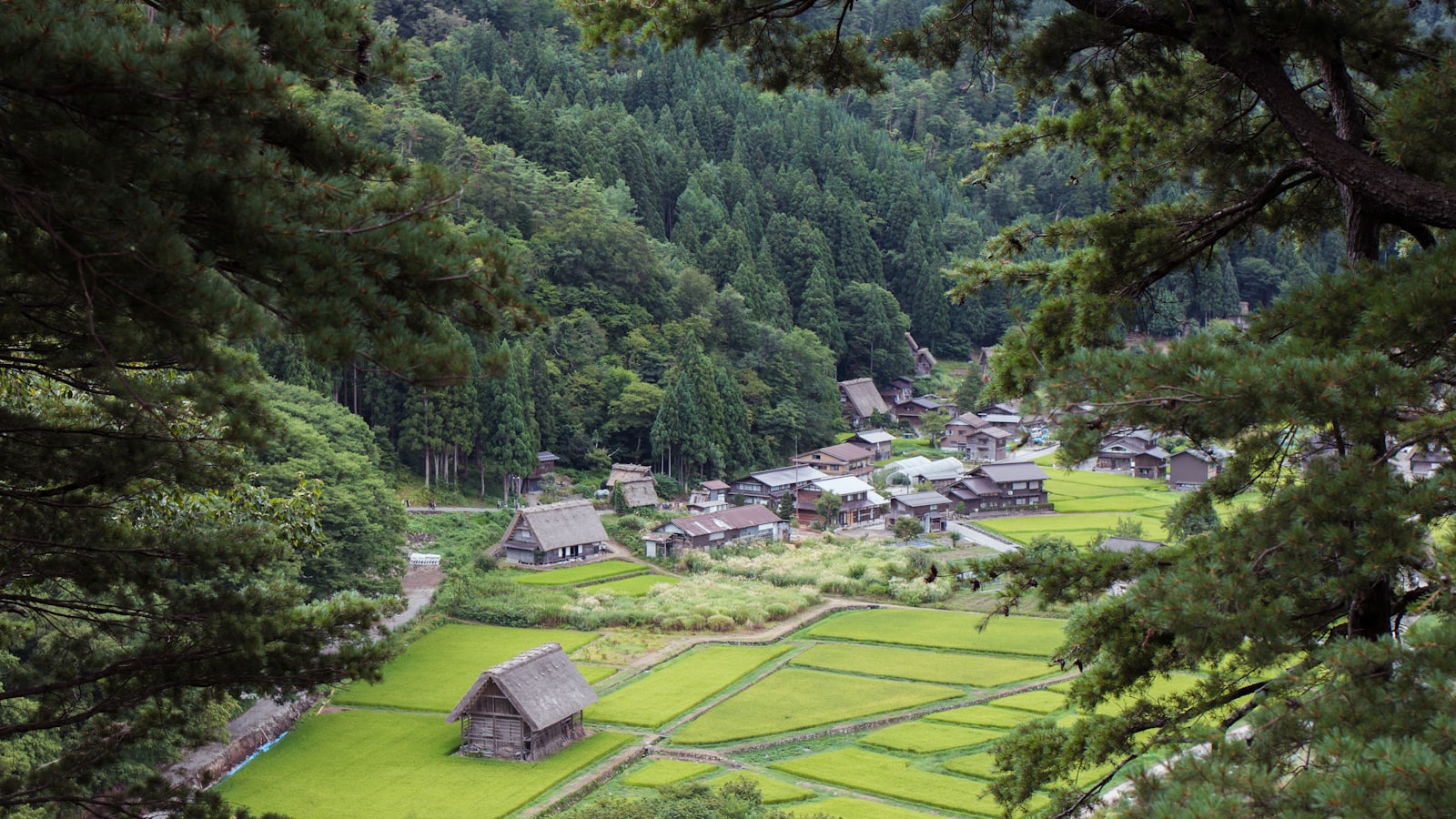
Reaching Shirakawa-go from Singapore takes a little planning, but the reward is one of Japan’s most photographed and most atmospheric places: a valley of steep-roofed thatched farmhouses set among rice paddies and mountains, unchanged in form for generations. This UNESCO World Heritage village is famous for its gassho-zukuri houses, whose distinctive triangular roofs are built to shed heavy winter snow. It is beautiful in every season, but it is also a living village where people still farm and go about their daily lives, so visiting with care matters as much as visiting at all. This guide covers why to go, when, what to see, how to get there, and how to be a respectful guest.
Why go to Shirakawa-go
Shirakawa-go, together with the nearby Gokayama villages, preserves a way of building and living that has almost vanished elsewhere. The gassho-zukuri farmhouses take their name from the way their steep thatched roofs resemble hands joined in prayer. Constructed without nails and designed to withstand the deep snows of this mountain valley, some of these houses are more than two centuries old, and a number are open to visitors as museums or as family-run inns.
What makes the village special is not just the architecture but the setting: paddies and vegetable plots between the houses, wooded hills rising on every side, and a river running through. It feels like stepping into an older, quieter Japan. For Singaporean travellers, it offers a striking contrast to the cities and a genuine sense of rural heritage.
When to visit
Each season transforms the valley. Winter is the most famous, when snow blankets the roofs and, on select evenings, the houses are lit up for a magical scene, though these illumination events are limited and extremely popular, so they require advance planning. Spring brings fresh green paddies and blossom. Summer is lush and warm, with the fields at their most vivid. Autumn sets the surrounding hills alight with colour and is wonderfully comfortable for walking.
| Season | What you see | Note |
|---|---|---|
| Winter | Snow-covered roofs, evening light-ups | Illumination dates limited; book far ahead |
| Spring | Green paddies, blossom | Mild, fewer crowds than winter |
| Summer | Lush fields, warm days | Humid but scenic |
| Autumn | Autumn foliage, clear air | Comfortable walking, lovely colour |
Whichever season you choose, mornings and late afternoons are quieter and more photogenic than the midday coach-tour rush.
What to see and do
The classic view is from the hillside observation point above the village, reached on foot or by a short shuttle, where the whole cluster of thatched roofs spreads out below with the mountains behind. It is the postcard shot, and for good reason.
Down in the village, several gassho houses are open as museums, where you can step inside to see the vast timber roof structures, the raised hearth, and the tools of mountain farm life. The open-air museum area gathers relocated farmhouses in a parklike setting and is a good way to understand the construction. Beyond that, the pleasure is simply walking the lanes, watching the light on the roofs, and pausing at a small cafe or craft shop.
Staying overnight in one of the family-run thatched inns is a special experience, letting you enjoy the village once the day visitors have left. Rooms are limited and book out early, so plan ahead.
Visiting respectfully
This is the part that matters most. Shirakawa-go is a real, inhabited village, not a theme park. The houses you photograph are people’s homes, and the paddies are their livelihood. Stay on public paths and roads, and do not enter gardens, fields or private property to get a photo. Do not peer into or point cameras through windows. Keep noise down, take your rubbish with you, and do not fly drones unless expressly permitted. Follow the guidance of signs and local staff, and support the community by shopping and eating locally. Visiting thoughtfully is what keeps this fragile place welcoming to travellers, and it is the least a guest can do.
How to get there and get around
There are no guaranteed direct flights, and routes change, so the practical approach is to fly into a major gateway such as Tokyo, Osaka or the Nagoya area, then travel overland. Shirakawa-go has no train station of its own and is reached by highway bus, most commonly from the castle town of Takayama or from Kanazawa, both of which are well connected by rail. Many visitors pair it with one or both of those towns to make an easy loop. Buses are the main way in, and popular services can fill up, so reserve seats in advance where possible. Check current flight options and bus schedules close to your dates, and confirm entry requirements through official channels, including Singapore’s MFA advisories, before you go.
The village itself is small and entirely walkable, so once you arrive you will not need any transport beyond your own feet, plus the occasional shuttle up to the viewpoint. Wear sturdy shoes, especially in snow or after rain, when paths can be slippery.
Who it suits and budget
Shirakawa-go suits travellers who love history, culture, photography and rural landscapes, and anyone happy to slow down and soak up atmosphere rather than tick off attractions. It works well as a day trip from Takayama or Kanazawa, or as an overnight stay for a deeper experience. It is not ideal for those seeking nightlife or big-city buzz.
Budget is generally mid-range. A day visit costs little beyond bus fares and small purchases, while an overnight in a thatched inn is more of a splurge and books out early. Prices vary, so check live rates when you plan. Above all, come with respect, and this remarkable village will reward you with one of the most memorable stops in Japan.