
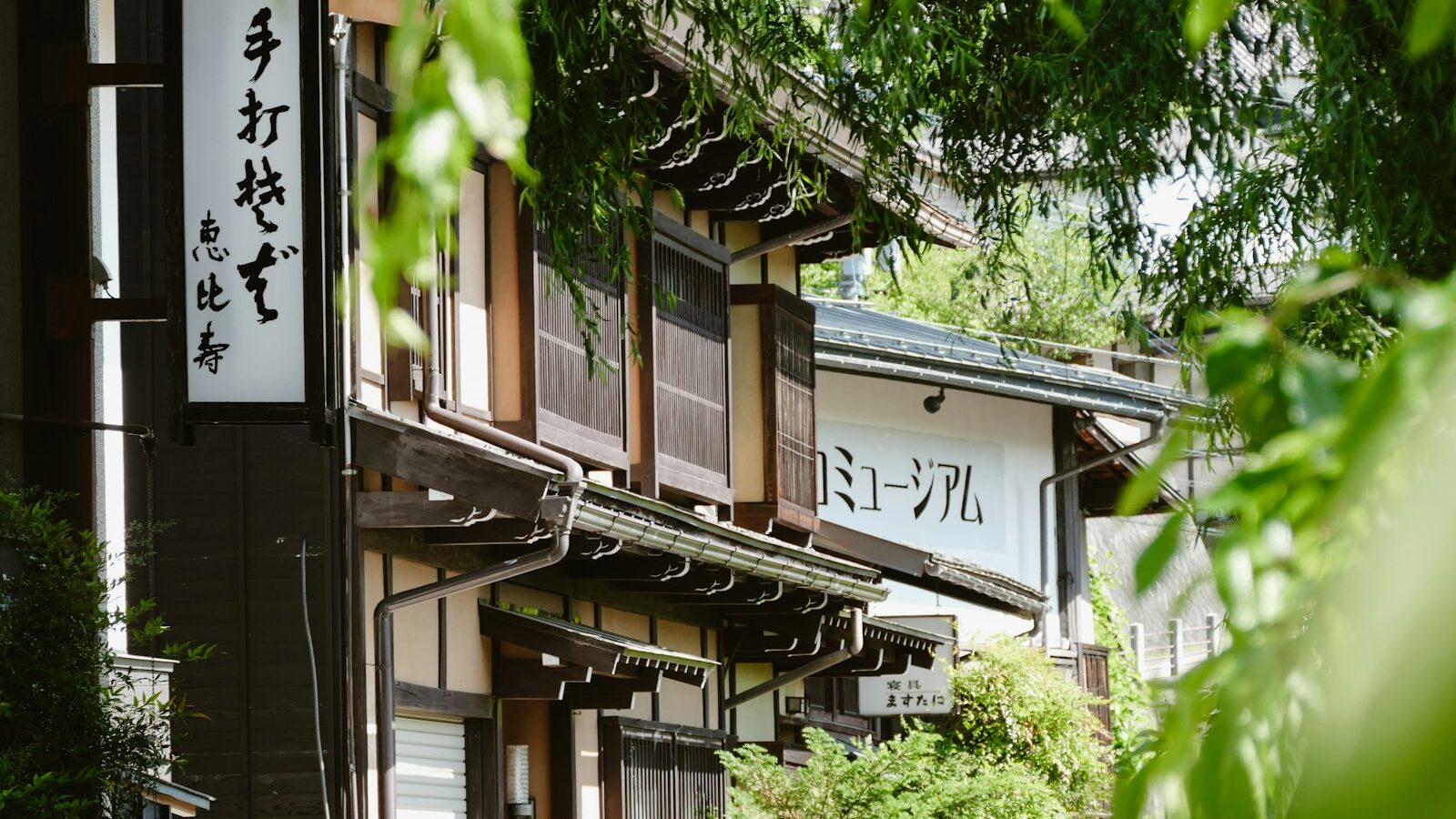
Reaching Takayama from Singapore is a two-step journey into the mountains, and the effort is the whole point. Tucked in the Hida region of Gifu Prefecture, high in the Japanese Alps, Takayama is a small town of dark timber merchant houses, sake breweries, morning markets and some of the best beef in Japan. It offers the slow, old-Japan atmosphere that big cities cannot, and it is the gateway to the storybook farmhouses of Shirakawa-go. This guide explains how to connect from Changi, when to go, and how to make the most of a mountain trip.
Getting to Takayama From Singapore
There are no direct flights to Takayama, so you fly to a larger Japanese gateway first and then continue by train or bus. The two natural choices from Changi are Nagoya, served by Chubu Centrair airport, and Tokyo, served by Narita or Haneda. Both are common long-haul routes, so compare fares and timings.
Nagoya is the shorter onward leg. From Nagoya station, a limited-express train runs up through the mountains to Takayama in roughly two and a half hours, following a scenic river valley. From Tokyo you would typically take a fast train to Nagoya, or to Toyama on the far side, and then connect inward, which makes a longer but perfectly doable day. If a rail pass suits your wider plans, price it against point-to-point tickets.
Once in the region, Takayama pairs well with other northern and mountain destinations, so travellers sometimes combine it with Kamakura from Singapore near Tokyo or a northern leg like Sendai from Singapore.
On entry, check the current rules for your passport rather than assuming, as requirements and permitted stays change and differ by nationality. Confirm through Japan’s official channels, and ICA for Singapore re-entry, before you book.
When to Go and How Many Days
Takayama has a proper four-season mountain climate, a striking change from Singapore’s steady warmth. Winters are cold and snowy, springs are cool with blossom, summers are pleasantly mild by lowland standards, and autumn brings vivid foliage. Each season has its own festival mood and scenery.
Two to three days is a good fit, enough for the old town, the morning markets, a museum and a day trip to Shirakawa-go. Whatever the month, pack real cold-weather layers if you visit outside high summer, because evenings in the hills get chilly even when Singapore is sweltering.
| Season | Months | What to expect |
|---|---|---|
| Spring | Mar to May | Cool, blossom, the famed spring festival |
| Summer | Jun to Aug | Mild days, green hills, rainy spells |
| Autumn | Sep to Nov | Crisp air, strong foliage, the autumn festival |
| Winter | Dec to Feb | Cold and snowy, atmospheric, dress warmly |
Getting Around
Central Takayama is small and made for walking; the old town, markets and river are all within easy strolling distance of the station. That compactness is a big part of the charm, and you will not need transport for most of a day.
For Shirakawa-go and other outlying spots, buses are the standard option and worth booking ahead in peak periods, as seats fill. Trains handle the longer regional hops. Japan runs on punctual public transport, so plan around timetables and you will rarely wait long.
What to See and Do
The heart of the town is the beautifully preserved old merchant quarter, Sanmachi Suji, where lattice-fronted wooden houses now hold sake brewers, craft shops and cafes. Wandering these lanes, especially early before the day-trippers arrive, is the essential Takayama experience.
The morning markets, held daily by the river and near a historic hall, sell local produce, pickles and crafts and are a lovely way to start the day. The town’s grand festival floats, among the finest in Japan, can be seen at a dedicated exhibition hall when the festivals themselves are not on. An open-air folk village gathers traditional Hida farmhouses for an easy glimpse of old rural life. The unmissable side trip is Shirakawa-go, whose steep-thatched farmhouses form a UNESCO-listed landscape that is magical under snow.
What and Where to Eat
Hida beef is the star, a prized local wagyu served grilled, as sushi, in hearty hot pots or skewered as street snacks in the old town. Even a modest portion is a treat, and sampling it in a few forms is half the fun of a visit.
Beyond beef, the mountains bring river fish, wild vegetables, hearty miso dishes cooked on a leaf, and buckwheat soba. Takayama is also sake country, and several old breweries in the centre open for tastings in the cooler months. Graze the old-town stalls by day and settle into a small local restaurant in the evening for the fuller regional spread.
Where to Base Yourself
Most visitors stay near the station or within walking distance of the old town, which keeps everything at your feet. For a more memorable night, a traditional inn with tatami rooms and a shared bath gives you the classic Japanese-mountain experience, and some include elaborate local dinners.
Takayama also works as a base for the wider Hida area, but keeping close to the centre suits a short trip best. Book early for festival dates and peak foliage, when the small stock of rooms disappears fast.
Costs, Money and Practical Tips
Japan is not a budget destination, and a mountain town with limited supply can run higher in peak weeks, though everyday food and transport offer fair value. Any prices you see online are only a guide, since rates and fares change.
Keep these in mind:
- Carry some cash, as smaller shops, markets and inns in rural Japan may not take cards, even where cities are increasingly cashless.
- Book Shirakawa-go buses and festival-period lodging well ahead, since capacity is tight.
- Pack proper layers and grippy footwear for cold, and possibly snowy, conditions outside summer.
- Buy suitable travel insurance and check MOH for current health advice before you fly.
- Learn a few polite Japanese phrases; English is limited in a small town, and courtesy goes a long way.
Takayama rewards travellers who slow down. Sort the two-leg journey from Changi, choose a season that matches the mood you want, and let the mountains do the rest.
Explore more: Kamakura from Singapore, Sendai from Singapore and Hakodate from Singapore.