
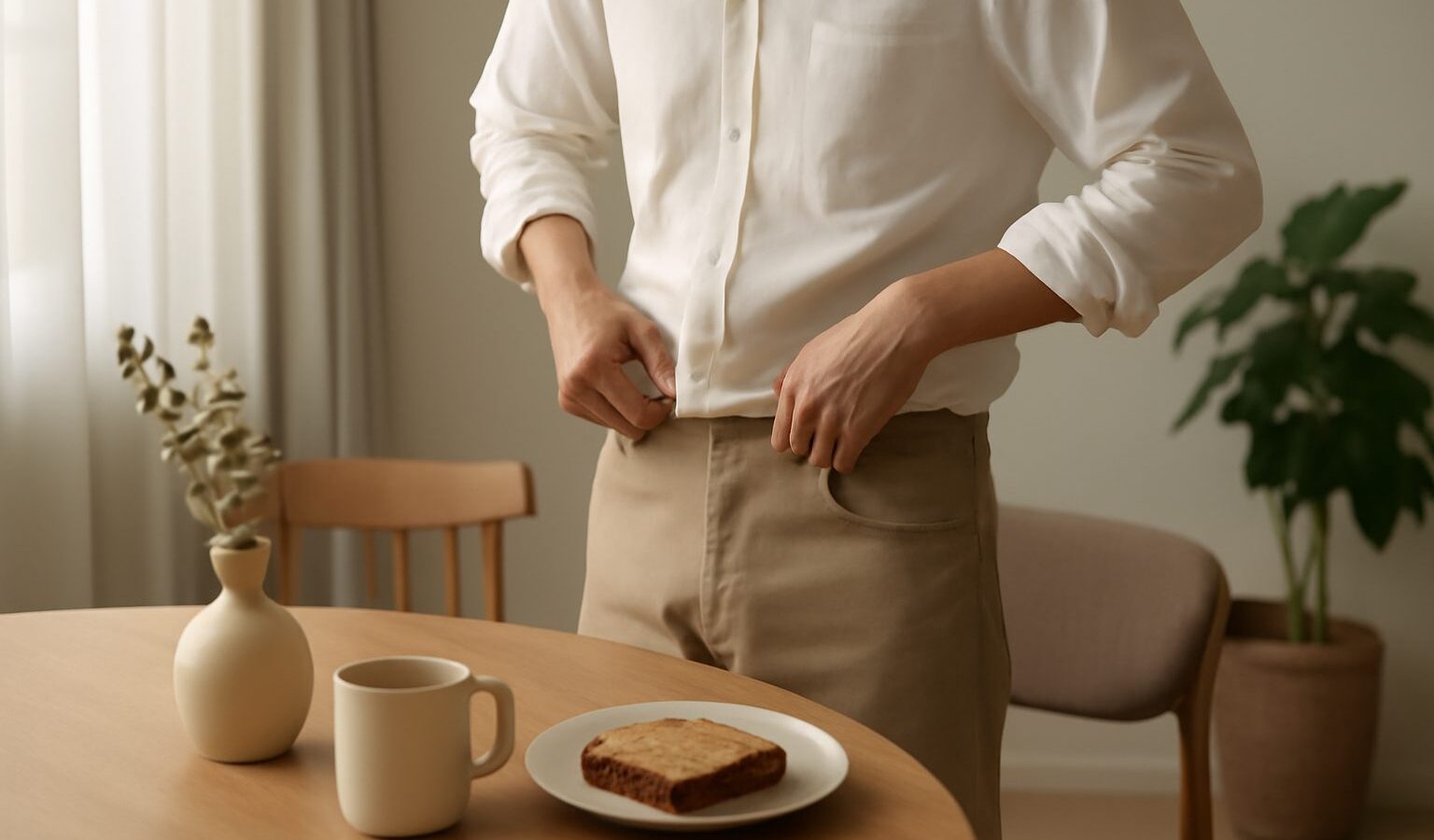
Whether or not you tuck your shirt changes an outfit more than almost any other small decision. It can shift a look from sloppy to sharp, from casual to smart, and from shapeless to defined, all without changing a single garment. Yet many people only know one way to do it, or avoid tucking altogether because it feels stiff. With a handful of shirt tucking techniques in your toolkit, you gain a set of free styling options you can reach for depending on the shirt, the occasion and how you want the outfit to sit. This guide explains the main methods, when to use each and how to make them look effortless.
None of this is about a right or wrong body. Tucking is simply a way to control where an outfit sits and how it frames you, so use whichever version helps you feel comfortable and confident on the day.
The Full Tuck for a Clean, Sharp Line
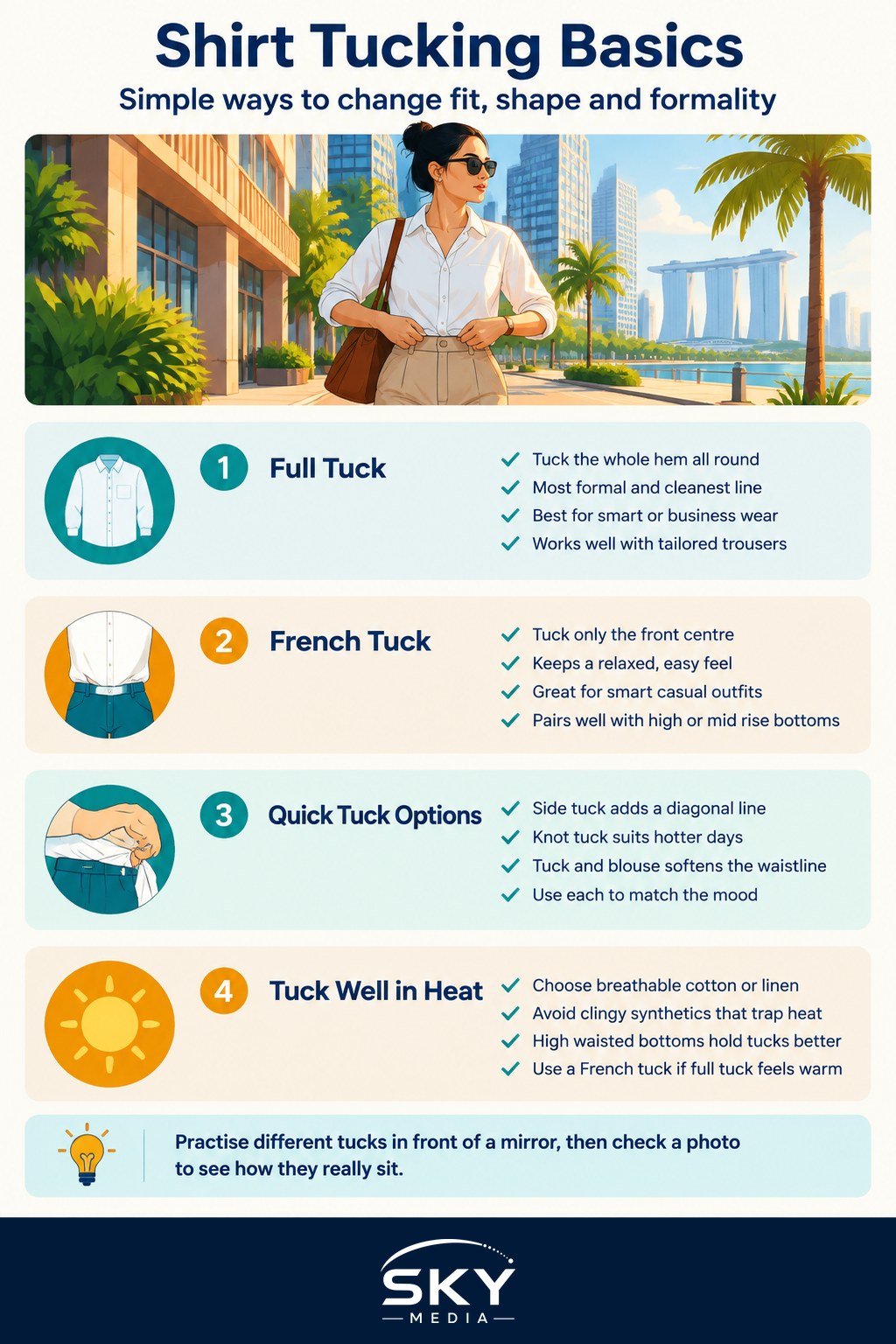
The full tuck is the most formal option and the one most people picture. You tuck the entire hem of the shirt into your trousers or skirt, all the way around, for a crisp, deliberate finish. It suits smart and business settings, works beautifully with tailored trousers, and gives the neatest silhouette because there is no loose fabric breaking the line.
To keep a full tuck tidy through the day, make sure the shirt is long enough not to pop out when you move, and smooth the fabric so it lies flat with no bunching at the sides. Some people find a lightweight shirt tucks more cleanly than a thick one, which is handy in our climate. If the shirt billows, a slim belt or a shirt with a little shape through the body will hold the look together.
The French Tuck and Front Tuck for Everyday Ease
The French tuck, sometimes called the half tuck, is the relaxed hero of casual dressing. You tuck in only the front portion of the shirt at the centre and leave the back and sides loose. The result defines your waist and shows the top of your trousers or skirt while keeping the easy feel of an untucked shirt. It flatters almost everyone because it draws a gentle line without clinging, and it instantly makes a plain tee and jeans look considered rather than thrown on.
A front tuck is a close cousin where you tuck a slightly wider section across the front. Both work best with high or mid rise bottoms so there is enough fabric to anchor the tuck. To style it, tuck a small amount, then tug gently to create a soft, natural drape rather than a tight pull. If it looks too neat, loosen it; if it looks messy, tuck a touch more. It is meant to look casual, so do not overthink the symmetry.
- Use it when you want smart casual with minimum effort.
- Pair it with high waisted jeans, trousers or a midi skirt.
- Avoid tucking too much fabric, which bulks up the front.
- Adjust the amount to suit how fitted the shirt is.
The Side Tuck and Other Quick Options
Beyond the big three there are smaller tricks worth knowing. A side tuck, where you tuck in just one hip, adds a diagonal line and a bit of attitude, and it works well over dresses worn as layering pieces. Knotting the hem of a longer shirt at the front is another no tuck way to define your waist, popular in the heat because it keeps fabric off your stomach while still shaping the outfit. There is also the tuck and blouse, where you tuck fully then pull a little fabric back out over the waistband to soften the line, ideal if a full tuck feels too severe.
Here is a quick comparison to help you match the method to the moment.
| Technique | Best for | Formality | Effort |
|---|---|---|---|
| Full tuck | Office, smart events, tailoring | High | Medium |
| French tuck | Everyday smart casual | Medium | Low |
| Side tuck | Relaxed, playful looks | Casual | Low |
| Knot tuck | Hot days, cropped effect | Casual | Low |
| Tuck and blouse | Softening a formal tuck | Medium | Medium |
Making Tucks Work in Singapore’s Heat
Our humidity is the real test of any tuck. A shirt pressed flat against your body all day can feel warm and untuck itself the moment you sit down, so a few adjustments help. Choose breathable cotton, linen or a linen blend, which tuck neatly and let air move, rather than clingy synthetics that trap heat. A slightly looser shirt in a light fabric gives you the neat waist of a tuck without the sticky feeling of a tight one.
Practical fixes go a long way. High waisted bottoms hold a tuck far better than low rise ones, since there is more waistband to grip the fabric. If a full tuck feels too warm for the day, switch to a French tuck so most of the shirt hangs free and lets air circulate. For work, remember that offices here run cold, so a crisp full tuck under strong air conditioning is comfortable even when the street outside is sweltering. You can shop suitable shirts across budget, mid range and premium bands at fast fashion chains, department stores, local boutiques or an online marketplace like Carousell, so choose fabric and length over any particular label and check the current price with the retailer.
Cultural and occasion dressing has its own tucking sense. Smart events and more formal gatherings usually call for a full, tidy tuck, while relaxed festive meals and casual outings happily accept a French tuck or an untucked shirt. When in doubt about a dress code, ask the host or lean towards the neater option.
Building the Tuck Into Your Routine
The best way to get comfortable is to practise in front of a mirror before you need to look polished. Try the same shirt three ways, fully tucked, French tucked and untucked, and notice how each changes the outfit. Photograph yourself to see how the tuck truly reads, because a mirror can flatter a lopsided front tuck that a photo will expose. Over time you will develop an instinct for which method suits which shirt.
Ultimately, shirt tucking techniques are tools, not obligations. Some days you will want the discipline of a full tuck, other days the ease of a half tuck, and sometimes nothing tucked at all. The point is that you now have the choice, and that choice is what lets one shirt serve many different moods.
Explore more
A tuck is really about shaping a silhouette, so read our guide to proportion and balance to see how waist placement affects the whole outfit. Once your shirt sits right, finish the look with our advice on how to accessorise an outfit, and if you love a sleek, single colour result, our monochrome and tonal dressing guide pairs perfectly with a clean tuck.
Frequently Asked Questions
Which tuck is best for a hot day? A French tuck is a good choice, since most of the shirt hangs free and lets air circulate. Breathable cotton, linen or a linen blend also tuck neatly. Choose a slightly looser shirt in a light fabric to avoid the sticky feeling.
Why does my shirt keep coming untucked? The shirt may not be long enough, or the bottoms may be low rise. High-waisted bottoms give the waistband more to grip. A slim belt, or a shirt with a little shape through the body, also helps hold a full tuck.
Should I tuck a shirt for a casual weekend outing? Not necessarily. A French tuck or an untucked shirt suits relaxed outings and festive meals. Tuck more neatly if the event is smart. When unsure about a dress code, ask the host or lean towards the neater option.
How do I tuck a shirt without making my waist bulky? Tuck only a small amount at the front and tug gently for a soft drape. Avoid tucking too much fabric, which bulks up the front. A lightweight shirt tucks more cleanly than a thick one.
What is the knot tuck and when should I use it? It means knotting the hem of a longer shirt at the front, which defines the waist while keeping fabric off your stomach. It is a casual, no-tuck option popular on hot days. It suits relaxed looks, not formal ones.
Further reading: Dress Shirt Fits Explained: Slim, Tailored and Regular, Collars and Cuffs