

Sahur, the meal eaten before dawn during Ramadan, has a tough job. It needs to be quick enough to prepare when you are half asleep, filling enough to carry you through a long working day, and gentle enough to eat at an hour when your appetite is still waking up. On top of that, many Singapore households are juggling office hours, school runs and late Terawih prayers.
This guide shares practical sahur meal ideas and a simple make-ahead system for weekdays. It is general food and planning advice. If you have diabetes, kidney issues, are pregnant, or take regular medication, speak to your doctor about fasting and meals before Ramadan begins.
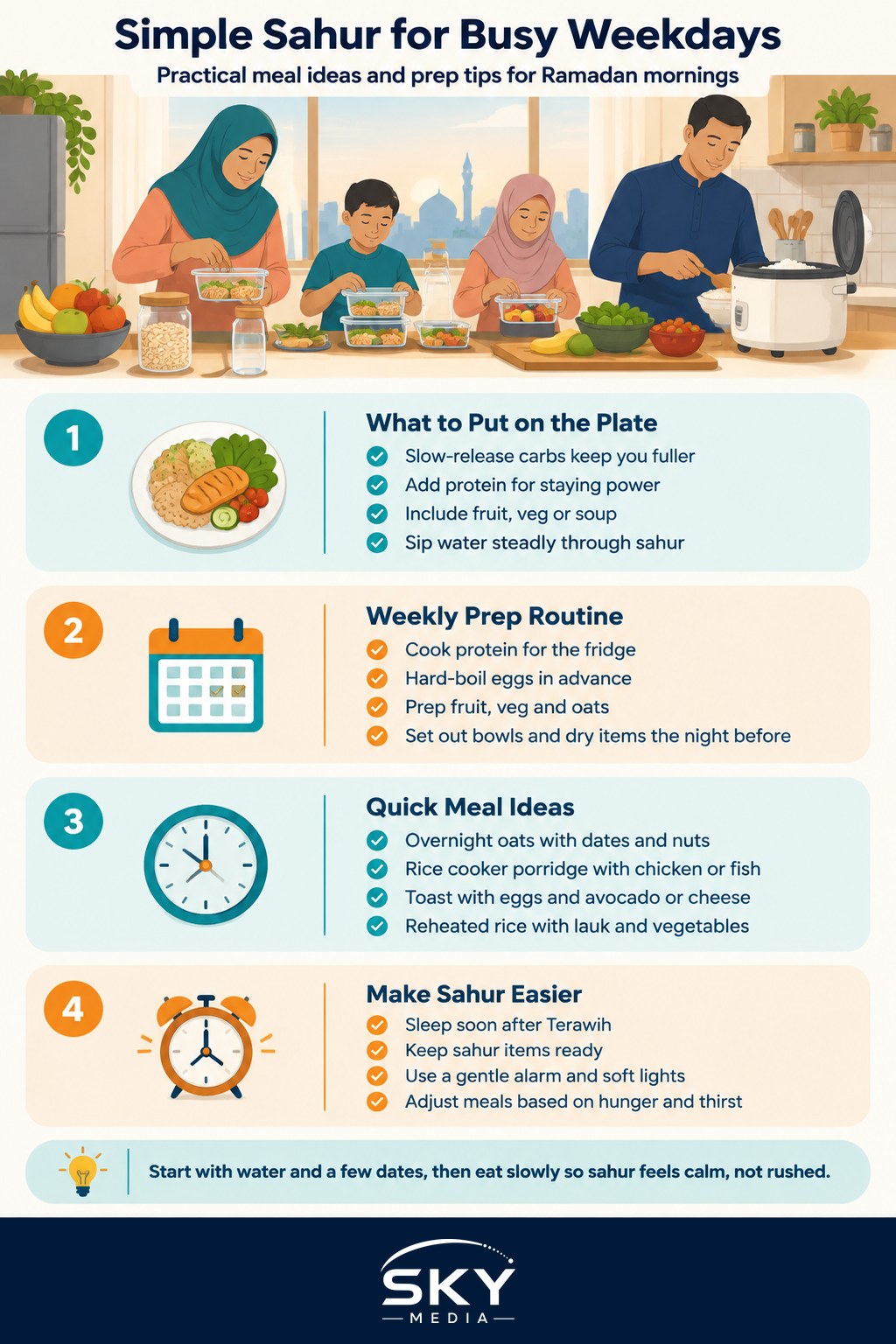
What a Good Sahur Plate Usually Includes
You do not need a complicated menu. A practical sahur often combines:
- Slow-release carbohydrates, such as oats, wholemeal bread, brown or mixed rice, or wholegrain noodles, which tend to keep you fuller for longer than white bread or sugary cereal
- Protein, such as eggs, chicken, fish, tofu, tempeh, beans or yoghurt
- Fibre and fluid-rich foods, such as vegetables, fruit like watermelon or papaya, and soups
- Water, sipped steadily rather than gulped all at once
- Dates, which many people enjoy at sahur as well as at iftar
Go easy on very salty foods like salted fish, instant noodles and heavily seasoned sauces, which can make you thirsty later in the day. Very oily or spicy dishes can also sit heavily on an empty stomach for some people.
Build a Weekly Prep Routine
The key to a calm sahur is doing most of the work earlier. A simple rhythm that suits many households:
Weekend prep session (about an hour or two):
- Cook a batch of a protein that keeps well in the fridge, such as chicken in a mild sauce, a lentil curry or a tofu stir-fry
- Hard-boil a tray of eggs and store them unpeeled in the fridge
- Wash and cut sturdy vegetables and fruit into containers
- Portion oats, nuts and seeds into jars for overnight oats
- Cook a pot of rice or grains, cool it quickly, and refrigerate or freeze in single portions
Midweek top-up (after iftar or Terawih, around 20 minutes):
- Cook a second simple protein or soup
- Refill fruit and vegetable containers
- Set out bowls, cutlery and any dry items on the counter for the morning
Each night before bed (about 5 minutes):
- Assemble overnight oats or move frozen portions to the fridge
- Fill a large water bottle and set it out
- If you have a rice cooker with a timer, set it for porridge so it is ready when you wake
If you already batch cook for busy weeks, our guides to healthy meal ideas for busy people and slow cooker meals for busy families adapt well to Ramadan with a few halal swaps.
Quick Sahur Meal Ideas by Preparation Style
Here is how common options compare when time is tight:
| Sahur idea | Prep the night before | Time at sahur | Good to know |
|---|---|---|---|
| Overnight oats with milk or yoghurt, dates and nuts | Mix in a jar and refrigerate | About 2 minutes | Easy to vary with fruit; keep it cold until eating |
| Rice cooker porridge with chicken or fish | Add rice, water and protein, set the timer | About 5 minutes | Warm and gentle; season lightly to avoid thirst |
| Wholemeal toast with eggs and avocado or cheese | Hard-boil eggs in advance | About 5 minutes | Quick protein, good for small appetites |
| Reheated rice with batch-cooked lauk and vegetables | Portion into containers | About 5 minutes | Closest to a regular home meal; reheat until steaming hot |
| Roti or chapati with dhal | Cook dhal in a batch, freeze flatbreads | About 10 minutes | Filling and fibre-rich; good for families |
| Smoothie with banana, oats, yoghurt and dates | Pre-portion ingredients in the fridge or freezer | About 3 minutes | Useful if you cannot face solid food early |
“Lauk” here means the side dishes, such as meat, fish or vegetables, that are typically eaten with rice in many Malay households.
Planning for Different Household Needs
Most homes are not cooking for one identical eater. A few ways to keep things simple:
- Working adults with long commutes may prefer something filling and portable, like a wrap or sandwich they can eat at the table quickly before Subuh.
- Teenagers who are fasting often need more food than they think. Offer a solid base like rice or oats plus protein, and keep water close.
- Older family members may prefer soft foods like porridge, steamed fish or soups. If anyone has swallowing difficulties, follow their doctor or therapist’s advice on textures.
- Young children who are not fasting can eat a normal breakfast later, so there is no need to wake them for sahur unless that is your family’s practice.
Write a simple rotation of four or five sahur meals on a sheet stuck to the fridge. Repeating meals is fine. It removes decisions at an hour when your brain is not ready for them.
Food Safety for Make-Ahead Sahur
Cooking in advance in a warm, humid climate like Singapore’s means food safety deserves attention.
- Cool cooked food quickly. Spread it into shallow containers and refrigerate it soon after cooking, rather than leaving pots on the stove overnight.
- Take extra care with rice. Cooked rice should not sit at room temperature for long. Refrigerate leftovers promptly and reheat until steaming hot.
- Use fridge food within a few days. Freeze anything you will not eat soon, and label containers with dates.
- Reheat once only. Take out only the portion you need rather than reheating a whole batch repeatedly.
- Mind the timer. If you set a rice cooker the night before, avoid adding raw meat or seafood that will sit at room temperature for many hours before cooking starts. Add these just before bed and set a shorter delay, or use cooked protein instead.
The Singapore Food Agency (SFA) publishes general food safety advice for homes, which is worth a quick read if you meal prep often.
Making Sahur Easier to Wake Up For
The best plan fails if getting up feels impossible. Small habits help:
- Go to bed as soon as you reasonably can after Terawih
- Keep your sahur area tidy and set out before sleeping
- Use a gentle alarm and keep lights soft for the first few minutes
- Start with water and a few dates while the rest warms up
- Eat slowly, and leave enough time to finish before Subuh without rushing
On days when you have barely slept, a simple smoothie or overnight oats is still far better than skipping sahur entirely.
Keep It Flexible
Your first week of Ramadan will show you what works. If you are hungry by mid-morning, add more protein or slow-release carbohydrates. If you are thirsty, cut back on salty dishes and add fruit or soup. Adjust your weekend prep based on what actually got eaten.
With a few good sahur meal ideas, a short weekend prep session and some smart night-before habits, sahur can become one of the calmest moments of a busy weekday rather than the most rushed. For more quick weeknight cooking that doubles as prep, see our ideas for easy one-pan meals for busy weeknights.
Frequently Asked Questions
Is it okay to skip sahur if I oversleep? It is better to have something, even a small amount. A quick smoothie, overnight oats or a few dates with water is far better than nothing, especially before a working day. Whether to fast without sahur is a question for your religious teacher.
How do I stop feeling thirsty at work after sahur? Go easy on salty foods such as salted fish, instant noodles and heavily seasoned sauces, which can make you thirstier later. Add fruit, soup and vegetables, and sip water steadily at sahur instead of gulping it all at once.
Can people with diabetes follow the same sahur ideas? Not necessarily. People with diabetes, kidney problems or who take regular medication should speak to their doctor before Ramadan about fasting and meal planning. General ideas like slow-release carbohydrates are useful, but personal medical advice comes first.
What are good sahur options for kids or teenagers who are fasting? Teenagers often need more food than they think, so offer a solid base such as rice or oats with protein and keep water nearby. Young children who are not fasting can eat a normal breakfast later, with no need to wake them unless it is your family’s practice.
How long can cooked rice sit out when I prepare sahur ahead? Not for long. Cool cooked rice quickly, refrigerate leftovers promptly and reheat until steaming hot, using each portion only once. The Singapore Food Agency (SFA) publishes general home food safety advice that is worth a quick read.