
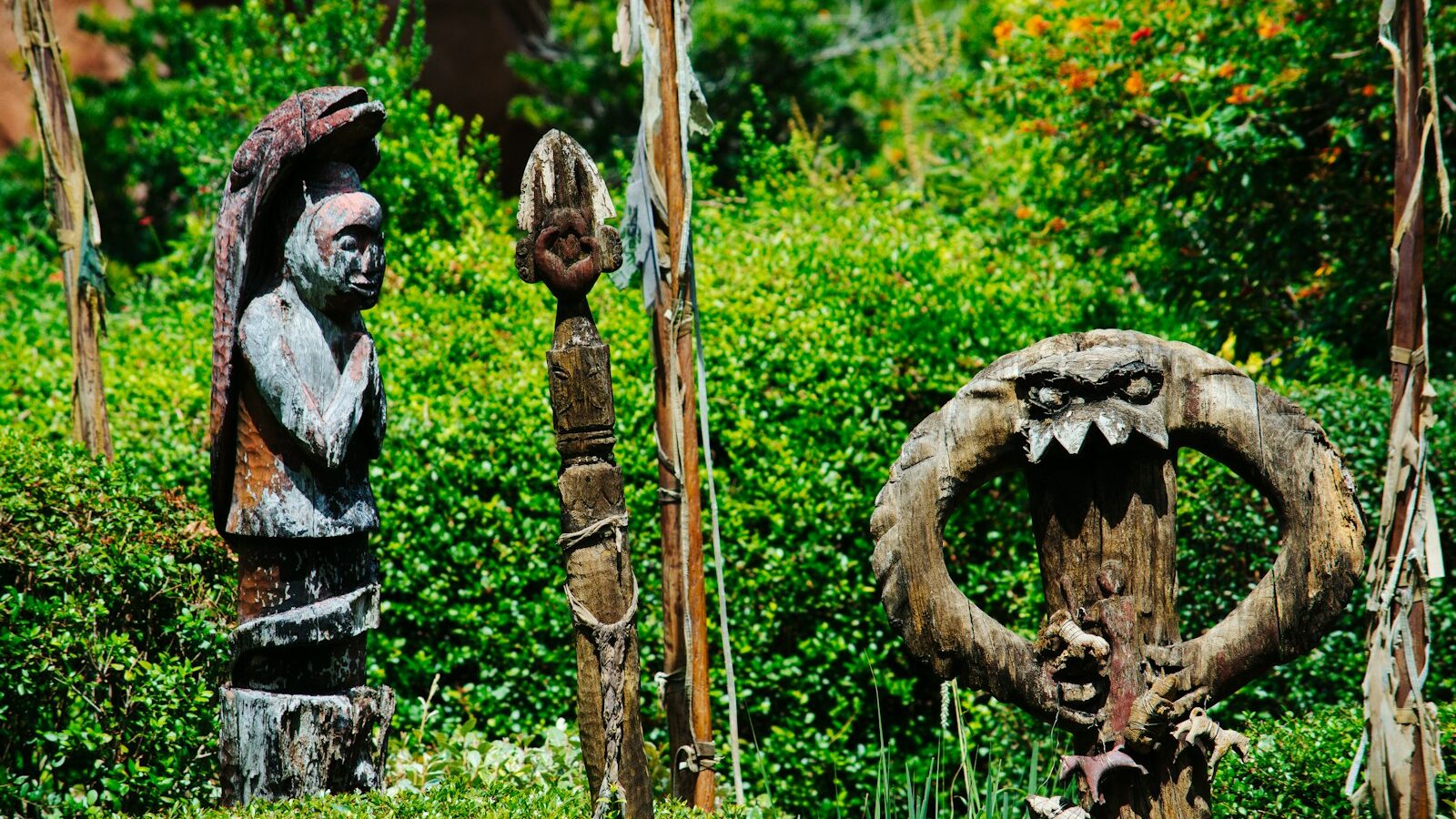
Behind Singapore’s modern skyline lies a rich heritage of folklore and legends, from the myth behind the nation’s name to tales of places and creatures. This guide explores Singapore folklore and legends and the stories that colour the nation’s heritage.
A rich oral heritage
Singapore, like the wider region, has a rich heritage of folklore, legends and stories passed down through generations, colouring the nation’s history and cultural imagination. These tales encompass myths about the origins of places and names, legends of figures and creatures, and stories rooted in the diverse cultures of the region. Folklore reflects the beliefs, values, imagination and heritage of the people who told these stories, offering a window into the cultural and historical imagination of old Singapore and the region. While modernisation has transformed the nation, these legends and stories remain a fascinating and evocative part of its heritage. Exploring Singapore’s folklore and legends offers a charming and meaningful glimpse into the myths, beliefs and storytelling traditions that colour the nation’s rich cultural heritage.
The legend of the name
| Element | The legend |
|---|---|
| The name | Associated with a “Lion City” legend |
| The tale | A story of an early sighting and naming |
| Heritage | A foundational myth of the island’s identity |
| Symbolism | The lion as an enduring symbol |
Among the most well-known pieces of Singapore folklore is the legend behind the nation’s name, traditionally associated with the meaning “Lion City.” According to legend, an early figure sighted a creature believed to be a lion upon arriving at the island, leading to the naming of the place. Though the historical accuracy of the tale is debated and lions are not native to the region, the legend has become a foundational myth of the island’s identity, and the lion endures as a symbol of Singapore. This legend, blending history and myth, is a charming and evocative origin story woven into the nation’s heritage. It reflects how folklore and legend colour the understanding of a place’s identity and origins, and it remains a cherished part of Singapore’s cultural imagination.
The Merlion and symbols
The Merlion, the iconic half-lion, half-fish creature, is a famous symbol of Singapore, blending the “Lion City” legend with the island’s maritime heritage as a fishing and port settlement. Though a relatively modern creation as an emblem, the Merlion has become deeply associated with Singapore’s identity and is a beloved icon and landmark. It exemplifies how myth, symbolism and heritage intertwine, drawing on the lion legend and the sea to create a distinctive emblem. Other symbols and motifs also feature in the nation’s cultural imagination. The Merlion, in particular, illustrates how folklore and symbolism shape a place’s identity and image, blending legend, history and meaning into an enduring icon that represents Singapore at home and around the world.
Tales of places and creatures
Beyond the origin legend, Singapore and the region have various folk tales and legends associated with places, natural features and creatures, rooted in the diverse cultures and storytelling traditions of the area. Such tales might explain the names or origins of places, tell of legendary figures or events, or feature mythical creatures and supernatural beliefs. These stories, drawn from the different cultural traditions present in Singapore, reflect the imagination, beliefs and heritage of the storytellers. While many of these tales are less widely known today, they form part of the rich tapestry of regional folklore and offer intriguing glimpses into the cultural imagination of the past. Exploring these stories of places and creatures reveals a colourful, evocative dimension of Singapore’s and the region’s folkloric heritage.
Why folklore matters
Folklore and legends matter because they are a meaningful part of cultural heritage, reflecting the beliefs, values, imagination and history of a people. These stories connect us to the past, to the ways earlier generations understood and imagined their world, and to the cultural traditions of the region. Folklore adds colour, meaning and identity to a place, as the “Lion City” legend and the Merlion do for Singapore. Preserving and appreciating folklore keeps these stories and the heritage they represent alive, enriching understanding of the nation’s cultural imagination. In a modern, fast-changing society, folklore offers a charming and evocative link to heritage and imagination. Appreciating Singapore’s folklore and legends deepens understanding of its cultural roots and the stories that colour its identity.
The takeaway
Behind Singapore’s modern skyline lies a rich heritage of folklore and legends, from the “Lion City” myth behind the nation’s name and the iconic Merlion to tales of places, figures and creatures rooted in the diverse cultures of the region. This oral heritage reflects the beliefs, values, imagination and history of earlier generations, offering an evocative window into the cultural imagination of old Singapore and the region. Folklore adds colour, meaning and identity to a place, and preserving and appreciating it keeps these stories and their heritage alive. Exploring Singapore’s folklore and legends is a charming and meaningful way to deepen understanding of the nation’s cultural roots and the enduring stories that colour its identity.
Well-loved local legends worth knowing
Beyond the origin myth, several specific tales have long been part of Singapore’s storytelling tradition, many of them tied to actual place names you can still find on the map today. Getting to know a few of them makes a walk through the island feel richer, as ordinary spots reveal a layer of legend beneath the everyday.
- The swordfish and Bukit Merah: One of the best-known Malay legends tells of a coastal settlement plagued by attacking swordfish, and a clever boy whose idea of a banana-stem barrier saved the villagers. The story is often linked in folk memory to the area now known as Bukit Merah, or Redhill, and remains a favourite example of local legend woven into a modern place name.
- Radin Mas Ayu: The name Radin Mas, used for an area and a constituency, is associated with the legend of a devoted princess. Retellings vary, as oral tales tend to, but the story of loyalty and sacrifice has kept her name alive in the neighbourhood’s identity.
- Kusu Island and the tortoise: Kusu, meaning tortoise, carries legends of a magical tortoise said to have saved shipwrecked sailors. The island remains a place of pilgrimage, showing how folklore and living tradition can sit side by side.
- Pulau Ubin and rural tales: Ubin, one of the last rustic corners of Singapore, has its own collection of stories tied to shrines, spirits and the island’s kampung past.
As with all folklore, these tales exist in many versions, and the details shift from one teller to the next. That fluidity is part of their charm, and it is worth treating any single retelling as one voice in a long tradition rather than a fixed historical record.
How to explore Singapore’s folklore today
If these stories spark your curiosity, there are accessible and reliable ways to dig deeper without relying on hearsay. Approaching folklore thoughtfully helps you appreciate the tales while keeping a clear sense of what is legend and what is documented history.
- Start with trusted collections: Public library resources and heritage institutions gather regional folk tales and background material. Check with the National Library Board and the National Heritage Board for their current collections, exhibitions and programmes.
- Visit the places themselves: Walking through areas such as Bukit Merah, Radin Mas or the offshore islands lets the stories connect to real geography, which is often how folklore was meant to be experienced.
- Read across cultures: Singapore’s folklore draws on Malay, Chinese, Indian, Peranakan and other traditions, so seeking out tales from different communities gives a fuller, more balanced picture.
- Share the stories: Folklore survives by being retold. Passing these tales on to younger family members keeps the oral heritage alive for the next generation.
Explored with curiosity and a little care, Singapore’s legends become more than quaint stories. They turn familiar streets and islands into places layered with meaning, connecting the modern city back to the imagination of the generations who first told these tales.
Explore more: Dragon playgrounds and old Singapore nostalgia · Traditional trades of Singapore · Chinatown heritage guide