
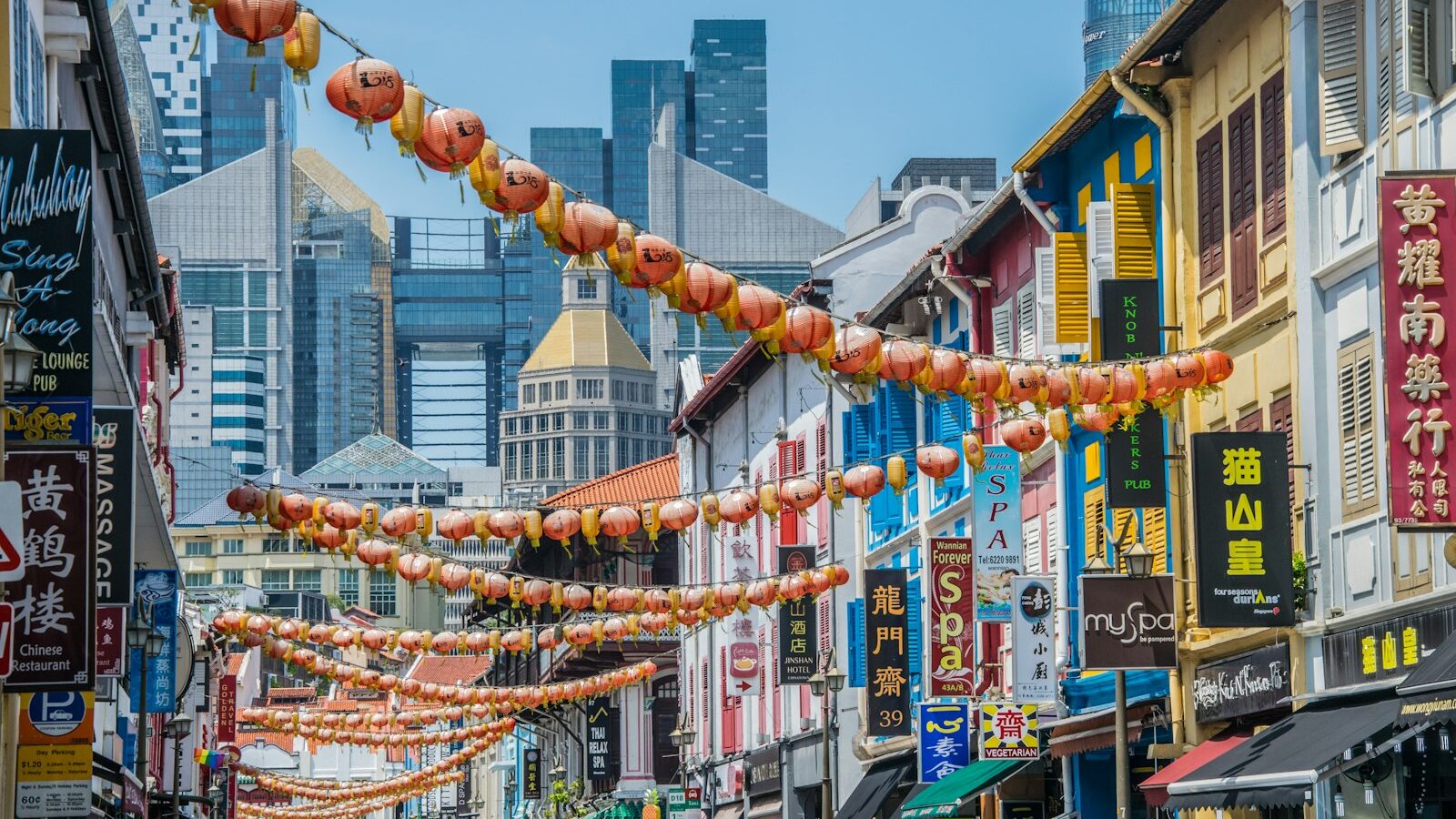
One of Singapore’s most historic and characterful districts, Chinatown is a vibrant blend of heritage and modernity, where colourful shophouses, temples, markets and food tell the story of the early Chinese community. This guide explores the heritage of Chinatown and what makes it special.
The history of Chinatown
Chinatown developed as the historic enclave of Singapore’s early Chinese immigrant community, and it remains rich with the heritage of those origins. Its streets tell the story of the migrants who settled, worked and built lives here, and the district retains much of its historic character amid modern development. Once a bustling hub of trade, community and daily life for the Chinese population, Chinatown today balances its living heritage with contemporary appeal, drawing both those seeking history and culture and those enjoying its food and atmosphere. Understanding this history enriches a visit, revealing the layers of heritage beneath the vibrant present-day district.
Shophouses and architecture
A defining feature of Chinatown is its beautifully preserved shophouses, the distinctive terraced buildings with shops below and living quarters above that characterise historic Singapore. These colourful, architecturally rich buildings, many conserved, give Chinatown its visual identity and a strong sense of the past. Their ornate facades, five-foot ways and varied styles reflect the district’s heritage and the eras of its development. Wandering the streets to admire the shophouses is one of the pleasures of Chinatown, offering a tangible connection to old Singapore. The conservation of these buildings has preserved the district’s historic character even as their uses have evolved to house shops, eateries and businesses.
Temples and places of worship
| Site | Significance |
|---|---|
| Chinese temples | Historic temples central to the community |
| Other faiths | Notably, places of worship of other religions too |
| Living heritage | Active sites of worship and tradition |
Chinatown is home to significant places of worship, reflecting both its Chinese heritage and Singapore’s multicultural fabric. Historic Chinese temples are central to the district, serving as active sites of worship and repositories of tradition and craftsmanship. Notably, Chinatown also contains important places of worship of other faiths, a reminder of Singapore’s religious diversity even within this historically Chinese enclave. These temples and religious sites are not just tourist attractions but living heritage, where traditions continue. Visiting them respectfully offers insight into the spiritual and cultural life that has long been part of the district.
Food and markets
Chinatown is a paradise for food and market lovers, central to its living heritage. The district is famed for its food, from historic hawker fare and traditional dishes to bustling food streets and markets, offering an authentic taste of Chinese culinary heritage. Markets sell everything from traditional goods and foods to souvenirs, especially lively during festive periods like Chinese New Year, when the district comes alive with decorations and celebration. Exploring the food and markets is essential to experiencing Chinatown, connecting the heritage to the vibrant, everyday life that continues in the district. The food in particular is a delicious link to the community’s traditions.
Experiencing Chinatown today
Today’s Chinatown blends its rich heritage with contemporary life, offering historic sites and traditional culture alongside modern cafes, bars, shops and a lively atmosphere. This mix makes it appealing to a wide range of visitors, from those seeking history and heritage to those enjoying the food, shopping and nightlife. Exploring on foot, admiring the shophouses, visiting the temples, sampling the food, and browsing the markets lets you experience both the historic and the living district. Festive periods, especially Chinese New Year, are a particularly vibrant time to visit. Chinatown rewards curious exploration, revealing its layers of heritage and its dynamic present in equal measure.
The takeaway
Chinatown is one of Singapore’s most historic and characterful districts, a living blend of heritage and modernity where preserved shophouses, significant temples, vibrant markets and celebrated food tell the story of the early Chinese community and the nation’s multicultural fabric. Exploring its architecture, places of worship, food and markets offers a rich, tangible connection to the past alongside a dynamic present. Whether you come for history, culture, food or atmosphere, Chinatown rewards unhurried exploration, especially during festive periods. A district where heritage lives on amid contemporary life, Chinatown is an essential part of understanding and experiencing Singapore’s story.
Getting there and planning your visit
Chinatown is one of the easiest heritage districts in Singapore to reach, which makes it a natural half-day or full-day outing. The area is served directly by the MRT, and the station exits bring you into the heart of the district within a short walk of the shophouses, temples and food streets. If you are travelling from further afield, buses also stop nearby, and there are public car parks in the vicinity, though driving is rarely necessary given how walkable the district is. For the most current train lines, operating hours and fare information, check with LTA or the public transport operators before you set off, as routes and timings can change.
A little planning goes a long way here. Because Chinatown packs so much into a compact area, it helps to decide in advance whether your focus is heritage, food, shopping or a mix of all three. A sensible approach is to start early to beat the midday heat and the busiest crowds, then work through the district on foot in loose loops rather than trying to cover everything in a straight line. Consider these practical pointers:
- Wear comfortable footwear: the five-foot ways and older pavements are best explored slowly and on foot, so shoes you can walk in for hours matter more than anything else.
- Come prepared for the weather: Singapore’s heat and sudden showers are a given, so carry water and a small umbrella, and duck into a shophouse cafe when you need a break.
- Bring some cash: many hawker stalls and small traditional shops still prefer cash, even as more accept cashless payment, so it is worth having small notes on hand.
- Allow for festive crowds: during Chinese New Year the district is at its most atmospheric but also its most packed, so plan for slower going if you visit then.
Respecting the living heritage: etiquette and common pitfalls
Because Chinatown’s temples and markets are working parts of a living community rather than staged attractions, a respectful approach makes for a richer visit and avoids common missteps. At places of worship, dress modestly with shoulders and knees covered, remove your shoes where signs ask you to, keep your voice low, and always check whether photography is permitted before raising your camera, as some inner halls and altars are off limits. Worshippers come to pray, so give them space and avoid stepping in front of anyone mid-ritual.
A few other pitfalls catch visitors out. Rushing through in an hour is the most common, as the district rewards unhurried wandering down its side lanes far more than a quick tick-list dash. Some assume everything is aimed at tourists, when in fact many shops serve long-standing local needs, from medicinal halls to provision stores, and are best browsed with genuine curiosity rather than treated as photo backdrops. Others visit only at peak times and miss the quieter charm of early mornings or weekday afternoons. If you plan to buy traditional foods, herbs or remedies, ask the shopkeeper about what you are getting, and for anything health related, follow professional or official guidance such as MOH or HSA advice rather than assumptions. Approached with a bit of patience and courtesy, Chinatown opens up as a place where heritage is not just preserved but genuinely lived.
Explore more: Singapore ethnic enclaves · Singapore shophouses architecture · Little India heritage guide