

The Singapore Indoor Stadium is the arena where many K-pop tours, Mandopop and Cantopop stars, rock bands and comedy shows land when a show is too big for a theatre but not quite a National Stadium event. A Singapore Indoor Stadium concert feels very different from a stadium show: the roof keeps out the rain, the sound is more contained, and even the upper tiers feel reasonably close to the stage. This guide covers how to choose seats, what to expect at the bag check and how to get home without spending an hour in the MRT queue.
Understanding the Seating Layout
The venue sits beside the National Stadium in the Kallang area, part of the wider Sports Hub. Inside, the layout is a classic arena bowl: a flat floor in the middle, surrounded by tiered seating on several levels. How it is used depends on the show.
- End-stage set-ups are the most common for concerts. The stage sits at one end, so seats directly behind it are either closed or sold as restricted or “side view” tickets.
- Centre or in-the-round stages appear for some tours and sports-style events, putting every seat at a similar distance.
- Floor areas may be standing pens or rows of numbered seats on the floor, depending on the promoter. Standing pens are often split into zones with separate entry gates.
The seating map on the official ticketing page for your specific event is the only reliable guide, because sections and categories are redrawn for every show. Check it carefully before you pay, including whether your ticket is seated or free standing.
Choosing Seats: Sightlines and Trade-Offs
Because the bowl is relatively compact, a cheaper ticket can still give a decent view. Here is how the main options generally compare.
| Seat type | Typical experience | Watch out for |
|---|---|---|
| Floor standing pen | Closest to the artist, high energy, everyone on their feet | Long waits to enter, hard to see if you are short, no seat to rest |
| Floor seated rows | Close and comfortable | Flat floor means heads in front can block the view |
| Lower tier, facing the stage | Raised, clear view of stage and screens, many fans’ favourite | Usually priced higher |
| Lower tier, side sections | Close to the stage edge, good for seeing performers up close | Angled view of the screens, parts of the stage set may be hidden |
| Upper tier | Full view of lighting and staging, cheaper | Performers look small, steep stairs, you rely on screens |
A few practical points:
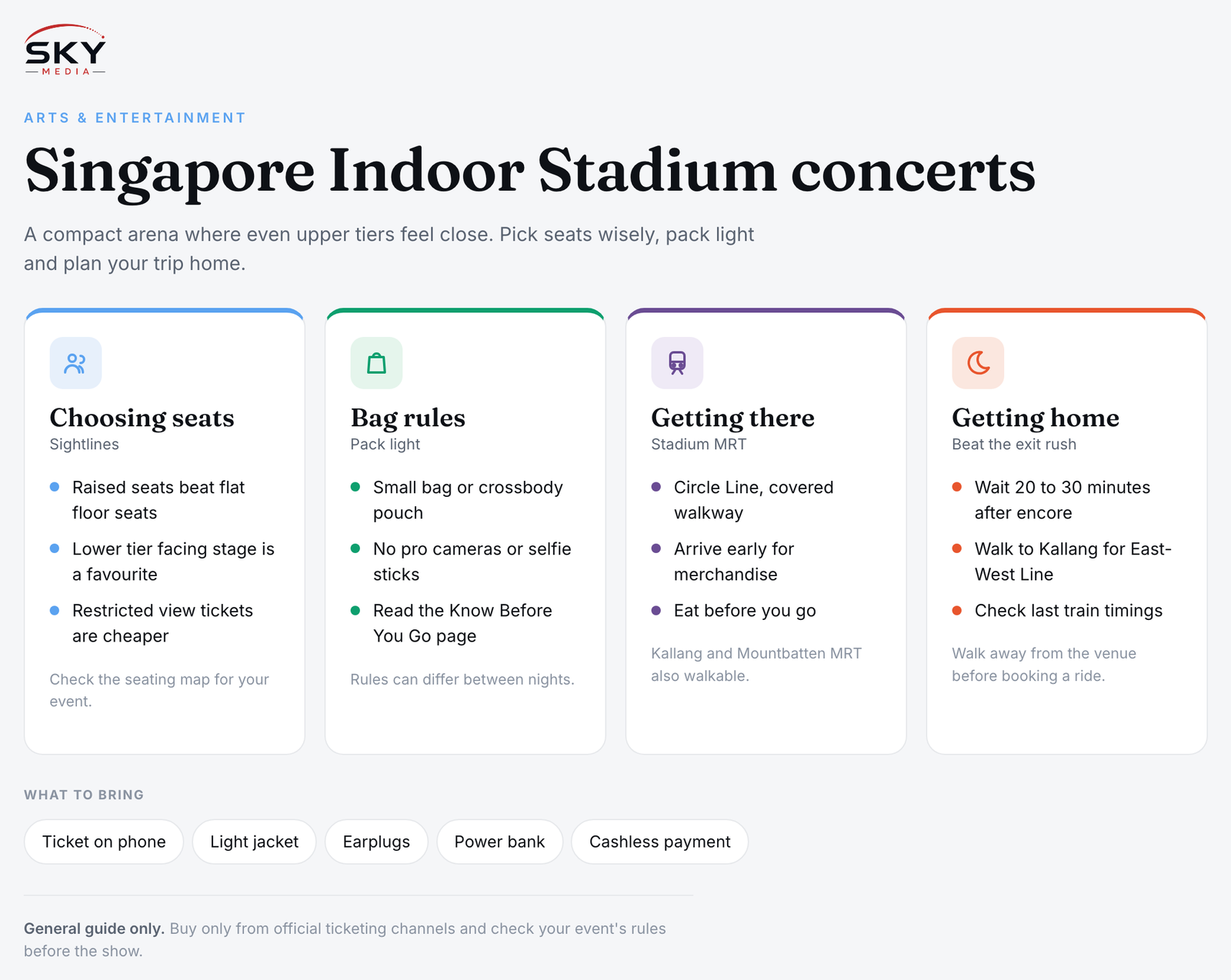
- Raised seats beat flat floor seats for anyone shorter than average. On a flat floor you will mostly see the backs of phones.
- Side seats close to the stage can feel intimate, but check whether the screens face you or not.
- Restricted view tickets are sold at a lower price because part of the stage is blocked. Read the description before buying.
- For accessible seating, contact the ticketing agent or promoter directly. Wheelchair spaces are usually a separate ticket category with companion seats.
Only buy from the official ticketing platform or authorised resale channels named by the promoter. Tickets sold through social media posts or chat groups are a common route for scams, and there is no way to verify them before the gate.
Bag Rules and What to Bring
Security checks happen at the entrances, and rules are set per event by the venue and promoter. Rules commonly include:
- Bags may be checked and some events limit bag size. A small bag or crossbody pouch gets you through faster.
- Professional cameras, detachable lenses, recording equipment, tripods and selfie sticks are usually not allowed.
- Outside food and drinks are generally restricted, though an empty water bottle is sometimes allowed. Check the event page.
- Light sticks are part of the fun at many shows. Some events only allow official ones, and some ban banners above a certain size.
- Items like umbrellas, power banks and lasers may be subject to specific rules.
Read the event’s “Know Before You Go” or FAQ page in the days before the show, because rules can differ even between two nights at the same venue. There may or may not be a bag deposit counter, so do not count on one.
What to bring:
- Your ticket, ready on your phone with brightness up, plus your ID if the event asks for it.
- A charged phone and a small power bank if allowed.
- A light jacket. The air conditioning inside can be very cold, especially in the seated areas.
- Earplugs. Arena shows are loud, and musicians’ earplugs keep the music clear while lowering the volume. Our guide to concert earplugs in Singapore explains the options.
- A card or phone wallet. Food and merchandise stalls tend to be cashless.
Getting There: Arriving at Stadium MRT
The nearest station is Stadium MRT on the Circle Line, a short walk from the venue under covered walkways. Before big shows, trains get crowded from early evening, especially if another event is happening at the National Stadium the same night.
Tips for arriving:
- Arrive early for merchandise. Merchandise queues often open hours before the doors, and popular items sell out.
- Eat beforehand. There are food options around the Sports Hub, including the nearby mall, but they get packed before shows. Some fans eat at Kallang or Tanjong Rhu areas first.
- Check the gate on your ticket. Different seating categories may use different entrances.
- Consider alternatives. Mountbatten MRT on the Circle Line and Kallang MRT on the East-West Line are also within walking distance for many people, though the walk is longer.
Getting Home After the Show
The exit rush is where most people lose time. When thousands of people leave at once, Stadium MRT uses queue control and crowd marshals, and you may wait a while before reaching the platform.
Ways to make it easier:
- Leave during the final song if you do not mind missing the last few minutes, or wait 20 to 30 minutes after the encore for the crowd to thin.
- Walk to another station. Kallang MRT gives direct access to the East-West Line, which can be faster if you live in the east or west. Mountbatten is another option. Check walking routes on a map app beforehand.
- Check last train timings. Late shows can run close to the last train, especially for transfers. Check the operator’s website or a journey planner app for the day.
- Ride-hailing and taxis get expensive and slow right after a show due to surge pricing and congested roads. Walking a few hundred metres away from the venue before booking can help.
- Buses run along nearby roads and can be quieter than the MRT. Plan your route before the show starts.
If you are going to a show at the bigger venue next door, our guide to National Stadium concert transport covers the much larger crowds there.
Making the Most of the Night
- Charge everything and screenshot your ticket in case of poor mobile signal inside.
- Agree on a meeting point with friends in case you get separated. Phones often struggle in packed arenas.
- Respect the people behind you. Holding up a phone or tablet for the whole show blocks views.
- Stay hydrated, particularly in standing pens where it gets hot near the stage.
- Look after your hearing, and take breaks from the loudest spots if you feel ringing in your ears.
For a wider look at Singapore’s live music scene, from small gigs to arena tours, see our concerts and gigs guide.
Further reading: Going to a Concert Alone in Singapore: How to Enjoy It · Christmas Concerts and Festive Performances in Singapore · How Concert Presales and Online Ticket Queues Work in Singapore