
Picking the esplanade best seats is less about paying the most and more about matching the seat to the show. Different shows reward different parts of the house. The two big rooms at Esplanade, Theatres on the Bay, the Concert Hall and the Theatre, are built for different jobs, so the same row number can feel very different in each.
This guide explains how the sections in both venues behave for sound, sightlines and value. It does not cover how to buy tickets; it is about which seat to click once you are there.
How the Two Main Esplanade Venues Differ
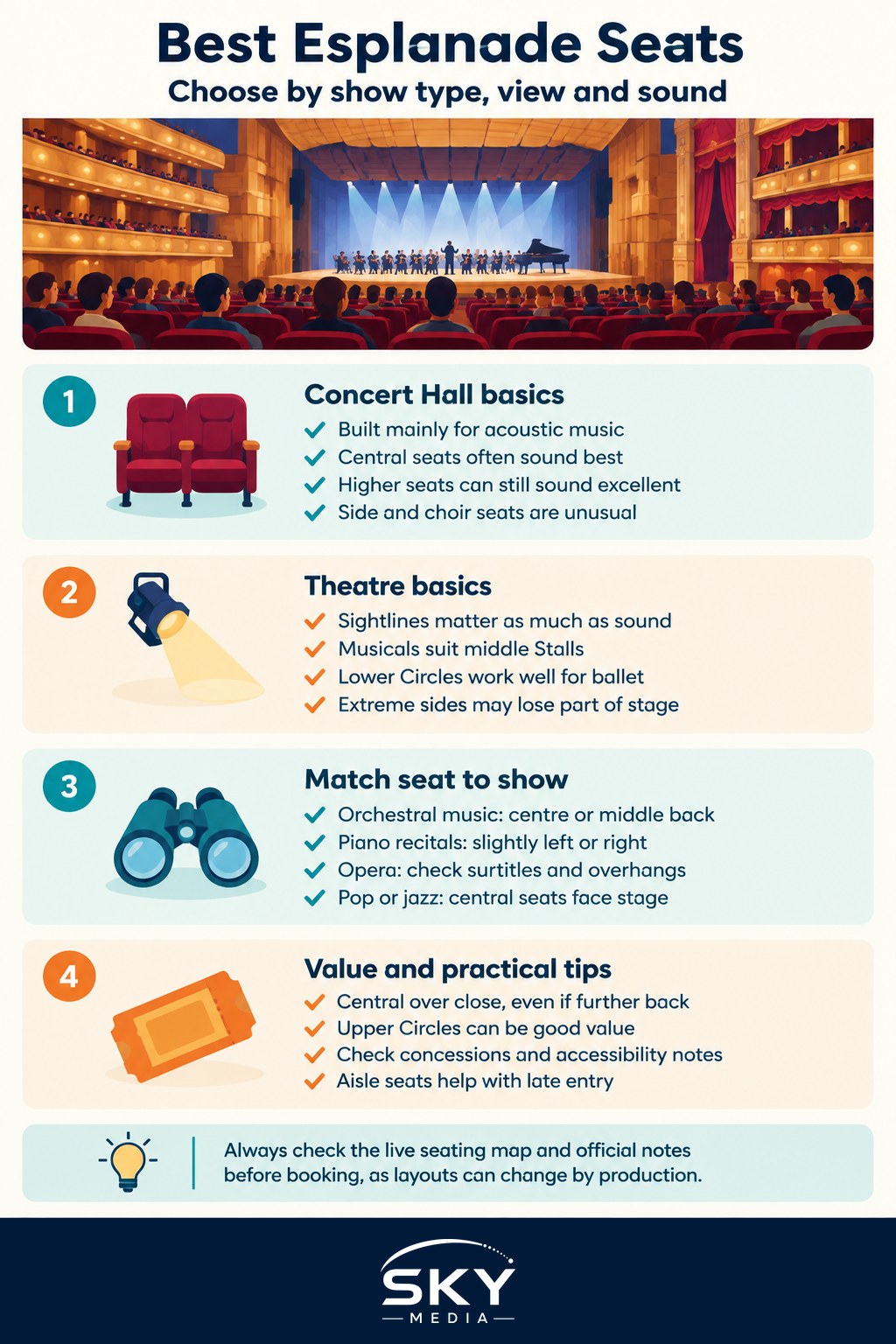
The Concert Hall is designed primarily for acoustic music: orchestras, choirs, chamber groups and recitals. It is a tall room with seating on several levels wrapping around the platform, including seats behind and beside the stage. The ceiling has an adjustable acoustic canopy, and the hall uses movable elements to tune how much the sound lingers. In practical terms, that means good sound is spread more evenly through this room than you might expect, and a higher, cheaper seat can still sound excellent.
The Theatre is a horseshoe-shaped lyric theatre used for ballet, opera, musicals, large dance productions and many touring shows. Here, what you see matters as much as what you hear. Sound is usually amplified for musicals and concerts, so the speaker system does a lot of the work, while sightlines to the stage, and to any surtitle screens, decide how good your night feels.
Seating levels in both venues are typically labelled as Stalls (the ground level) and numbered Circles above. Always check the live seating plan shown at booking, because layouts can be adjusted for a particular production, for example when an orchestra pit is opened or a section is held back for cameras.
Esplanade Best Seats Compared by Section
Use this as a rough starting point. Exact pricing tiers are set by each promoter, so the cheapest and most expensive zones can shift from show to show.
| Section | Concert Hall: what to expect | Theatre: what to expect | Usually good for |
|---|---|---|---|
| Front Stalls | Very close to performers, sound can feel unblended and lopsided | Great for facial expression; you may look up at the stage and miss floor patterns | Recitals, drama, fans who want proximity |
| Middle and rear Stalls | Balanced, warm sound and a clear full view | Strong all-round view and good speaker coverage | First-time visitors, musicals, most concerts |
| Lower Circles, centre | Often among the best-balanced sound in the hall | Excellent overview of choreography and staging | Orchestral music, ballet, dance |
| Upper Circles | Further away, but sound often stays clear; steep rake | Distant view, may need binoculars; good value | Budget seats, students, sound-focused listeners |
| Side and choir seats | Unusual angle; you may face conductor or hear sections unevenly | Side boxes and edges can clip part of the stage | Watching the conductor, experienced concert-goers |
Choosing Seats in the Concert Hall
For orchestral concerts, many regulars aim for the centre of the lower Circles or the middle to rear Stalls. From these areas, the strings, winds, brass and percussion arrive at your ears blended rather than one section at a time. Very front rows can be thrilling for a soloist, but you will hear the nearest players loudest and may miss the overall shape of the music.
Things to weigh up:
- Piano recitals: a seat slightly to the left of centre (as you face the stage) lets you see the pianist’s hands on the keyboard. A seat on the right gives a view of the pianist’s face instead.
- Choral works: sitting a little further back helps a large choir and orchestra combine into one sound.
- Choir or platform seats: when sold, these sit behind or beside the performers. They are usually cheaper and give a rare view of the conductor’s face and gestures, but the balance is skewed because instruments project forward, away from you.
- Upper levels: do not dismiss them. In a hall designed for acoustic music, a higher central seat often sounds better than an expensive side seat lower down. Expect steep stairs and a narrower view of the stage floor.
For pop, jazz or amplified concerts in the Concert Hall, sound comes mostly from speakers, so central seats facing the stage matter more than height.
Choosing Seats in the Theatre
In the Theatre, sightlines lead your decision.
- Musicals: middle Stalls and the front of the lower Circles usually give the best mix of view and immersion. Very front rows can strain your neck and put you too close to see the full set.
- Ballet and contemporary dance: choose a slightly raised seat. From the Circles you see formations, footwork and the patterns the choreographer designed, which are partly lost from low in the Stalls.
- Opera and foreign-language productions: check where surtitles are displayed. Some seats near the front or under an overhang can make it awkward to glance between the stage and the text.
- Overhangs: rear Stalls rows sit beneath the Circle above. This can cut off the top of tall sets or projections, and sometimes makes amplified sound feel slightly boxed in. If the top of the set matters, look a few rows further forward.
- Side sections and boxes: the horseshoe shape keeps most seats facing inwards, but the extreme sides can lose part of the stage, especially the near wing. Promoters sometimes mark these as restricted or partial view and price them lower, which can be a good deal for a show you mainly want to hear.
Getting the Best Value for Your Budget
The most expensive tier is not always the best seat. A few habits help:
- Compare the map, not just the price. The edge of a top-price zone may be worse than the centre of the next tier down.
- Go central over close. A central seat a few rows further back nearly always beats a far-side seat nearer the stage.
- Consider the upper Circles for music. If the performance is mainly about listening, these offer some of the best sound per dollar.
- Look for concessions. Students, seniors and other groups may be offered discounted tickets for certain shows. Terms vary, so read the concession conditions and bring any required ID.
- Book early for central seats, check late for released seats. Promoters sometimes release held-back seats closer to the date.
- Read the notes on the seating plan. Restricted view, wheelchair spaces, companion seats and seats with stairs are often marked there.
Accessibility details, such as wheelchair spaces and step-free routes, are listed on the official Esplanade website. If you have specific needs, contact the venue or ticketing agent before booking rather than assuming a seat will work.
Small Details That Change Your Night
- Late arrivals: latecomers are usually admitted only at a suitable break. Aisle and end seats make discreet entry easier.
- Children: for family shows, a slightly raised seat helps smaller children see over the row in front. Check the age guidance for each production.
- Hearing protection: for loud amplified concerts, earplugs can make a close seat more comfortable.
If you want more background before your visit, read our Esplanade visitor guide for getting there and what else is on site, and the Victoria Theatre and Concert Hall heritage guide to compare the experience at another classic venue nearby. For amplified shows, our guide to concert earplugs in Singapore is worth a look.
Quick Checklist Before You Click
- Identify the venue: Concert Hall (sound first) or Theatre (sightlines first).
- Decide what matters most: hearing the music, seeing faces, or seeing the whole stage picture.
- Prefer central seats over close side seats.
- Check for overhangs, restricted-view notes and surtitle positions.
- Compare the boundary seats of each price tier.
- Confirm concession and accessibility terms with the official seller.
Seat plans, price zones and venue arrangements can change for each production, so always rely on the live seating map and the official Esplanade website for current details.
Explore more: Concerts and Gigs: A Guide
Further reading: Getting Into Live Theatre in Singapore · What to Wear to the Theatre, Ballet or Opera in Singapore · Watching a Show at The Star Theatre: Seats, Food and Getting There