
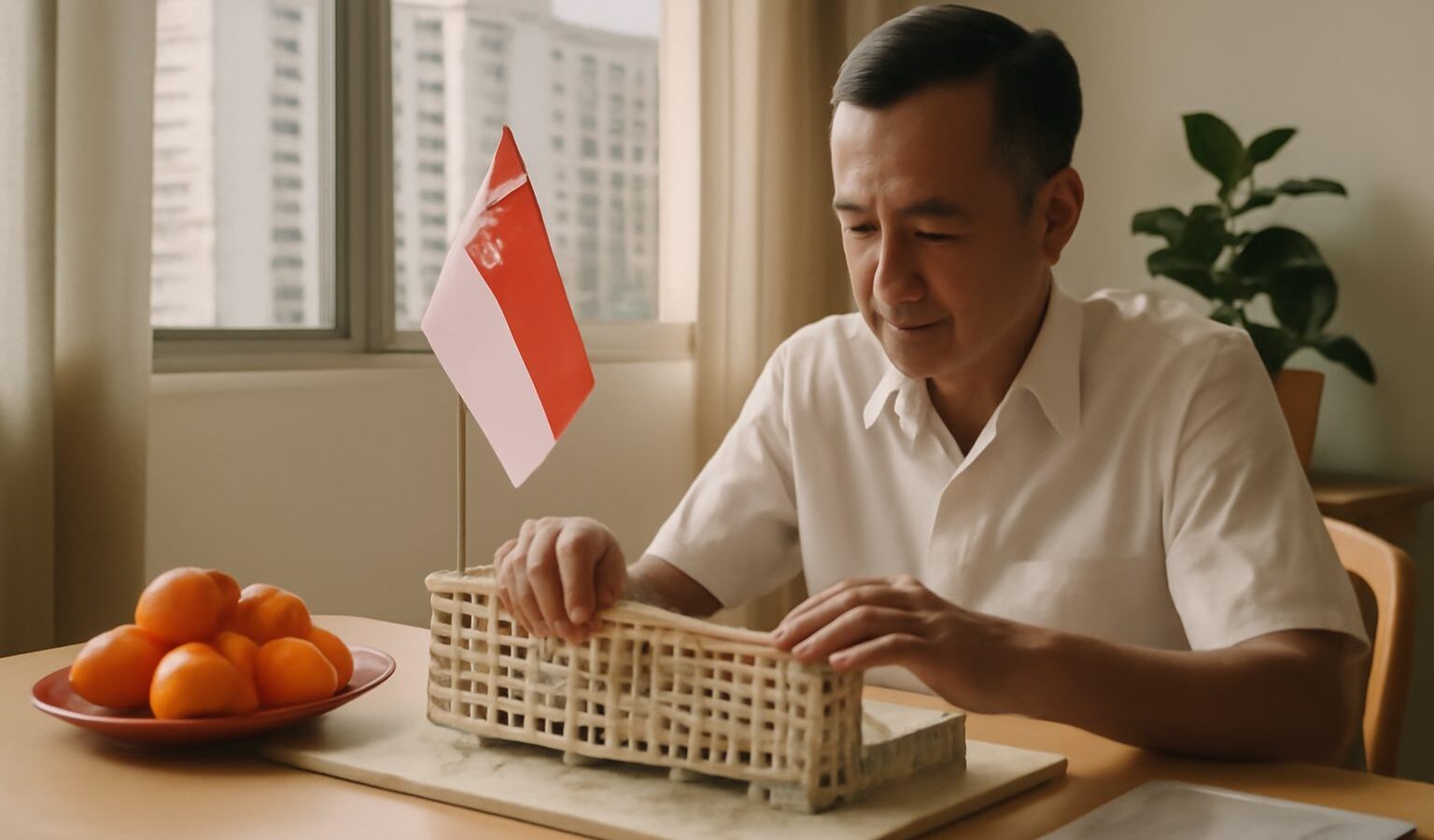
The story of nation building in 1960s Singapore is the story of a small island learning to stand on its own. Within a single turbulent decade the country moved through self-government, a brief union and full independence, then set about the urgent work of housing, jobs and unity. It remains one of the most formative chapters in the nation’s heritage.
A decade of dramatic change
The 1960s opened with Singapore governing much of its own affairs while still tied to the wider region and its colonial past. Over the following years the political map shifted rapidly. The island joined a larger federation, then separated from it and became a fully independent republic. For many citizens, these were bewildering years of uncertainty, but also years of hope.
Independence brought freedom and responsibility in equal measure. A crowded port city with few natural resources now had to secure its own survival. Leaders and citizens alike understood that the ordinary tools of nationhood, a strong economy, decent homes, reliable services and a shared sense of belonging, would have to be built almost from scratch.
Housing a growing population
Few challenges were as visible as housing. Large numbers of people lived in overcrowded shophouses and sprawling squatter settlements, often without proper sanitation or safe construction. The newly energised public housing programme set out to change this at remarkable speed.
New estates rose across the island, offering flats with piped water, electricity and modern amenities. Families who had known only cramped or makeshift homes moved into planned neighbourhoods with schools, markets and clinics within reach. The scale of the effort was ambitious, and it quickly became one of the clearest symbols of what the young nation could achieve.
Why housing was central to nation building
Housing was never only about shelter. Moving diverse communities into shared estates helped mix people of different backgrounds, encouraged common civic habits and gave citizens a tangible stake in the country’s progress. A home in a new town was, in a very real sense, a home in a new nation.
Building an economy from scratch
Alongside housing came the drive to create jobs. The old economy leaned heavily on trade passing through the port, which left the country vulnerable. To broaden its footing, Singapore pushed into industrialisation, encouraging factories and manufacturing that could employ a fast-growing workforce.
Industrial estates were developed, investment was courted, and workers were trained for new kinds of employment. The aim was simple but demanding: to give people steady livelihoods and to make the economy resilient enough to weather an uncertain region. This period laid foundations that later decades would build upon.
The many strands of nation building
Nation building in the 1960s ran along several strands at once. The table below sets out the main areas of effort and what each was trying to achieve.
| Strand | Main focus | Purpose |
|---|---|---|
| Political | Self-government to independence | Secure the right to chart the nation’s own course |
| Housing | Public housing estates | Rehouse families in safe, modern homes |
| Economic | Industrialisation and trade | Create jobs and reduce vulnerability |
| Social | Education and services | Raise skills and improve daily life |
| Identity | Shared symbols and language | Forge a common sense of belonging |
Forging a shared identity
Perhaps the hardest task of all was the one that could not be built with concrete. Singapore was home to people of many origins, faiths and languages. Nation building meant knitting these communities into a single citizenry that could see itself as one people.
Efforts to nurture a shared identity took many forms, from national symbols and a common working language to campaigns encouraging civic pride and mutual respect. Schools played a vital part, teaching a rising generation to think of themselves first as Singaporeans. This was slow, patient work, and it did not happen overnight, but its beginnings can be traced clearly to this decade.
Everyday life in a changing nation
For ordinary families, the 1960s were felt in small, concrete ways. A move to a new flat. A first factory job. Children walking to a newly built school. Neighbours from different communities meeting at the void deck or the market. These everyday moments, repeated across the island, were nation building in its most human form.
There were hardships too. Adjusting to new homes, new work and new expectations was not easy, and not everyone found the transition smooth. Yet the broad direction was unmistakable, and a sense of momentum carried much of the population forward.
A foundation for what came after
By the close of the decade, Singapore had taken on the essential shape of a modern nation. It had a government responsible for its own destiny, a housing programme rehousing its people, an economy pivoting towards industry, and the early scaffolding of a shared national identity. None of this was finished, but the foundations were firmly in place.
The achievements of nation building in 1960s Singapore did not arrive by accident. They came from urgent necessity, hard choices and the daily effort of countless citizens. Understanding this decade helps explain how a small and vulnerable island grew into a confident nation, and why so much of what Singaporeans value today can be traced back to those formative years.
Leadership and citizen effort
Nation building in this decade was never the work of leaders alone. Government set the direction, but the results depended on the willingness of ordinary citizens to adapt, to learn new skills and to place trust in an uncertain future. Workers took up factory jobs, families embraced life in unfamiliar estates, and communities accepted the compromises that living together required. This partnership between an ambitious leadership and a hardworking population was the engine that turned plans into reality.
It is also worth remembering that progress was uneven and hard won. Setbacks and disappointments were part of the journey, and confidence had to be rebuilt after every stumble. That the nation kept moving forward through such pressures is itself a measure of the determination of the age.
Remembering this period is a way of honouring the pioneer generation who lived it. Their patience, sacrifice and resolve gave later generations a country to inherit, and a heritage worth cherishing.
Explore more: The Singapore Independence Story · Pioneer Generation of Singapore · Singapore History Timeline