
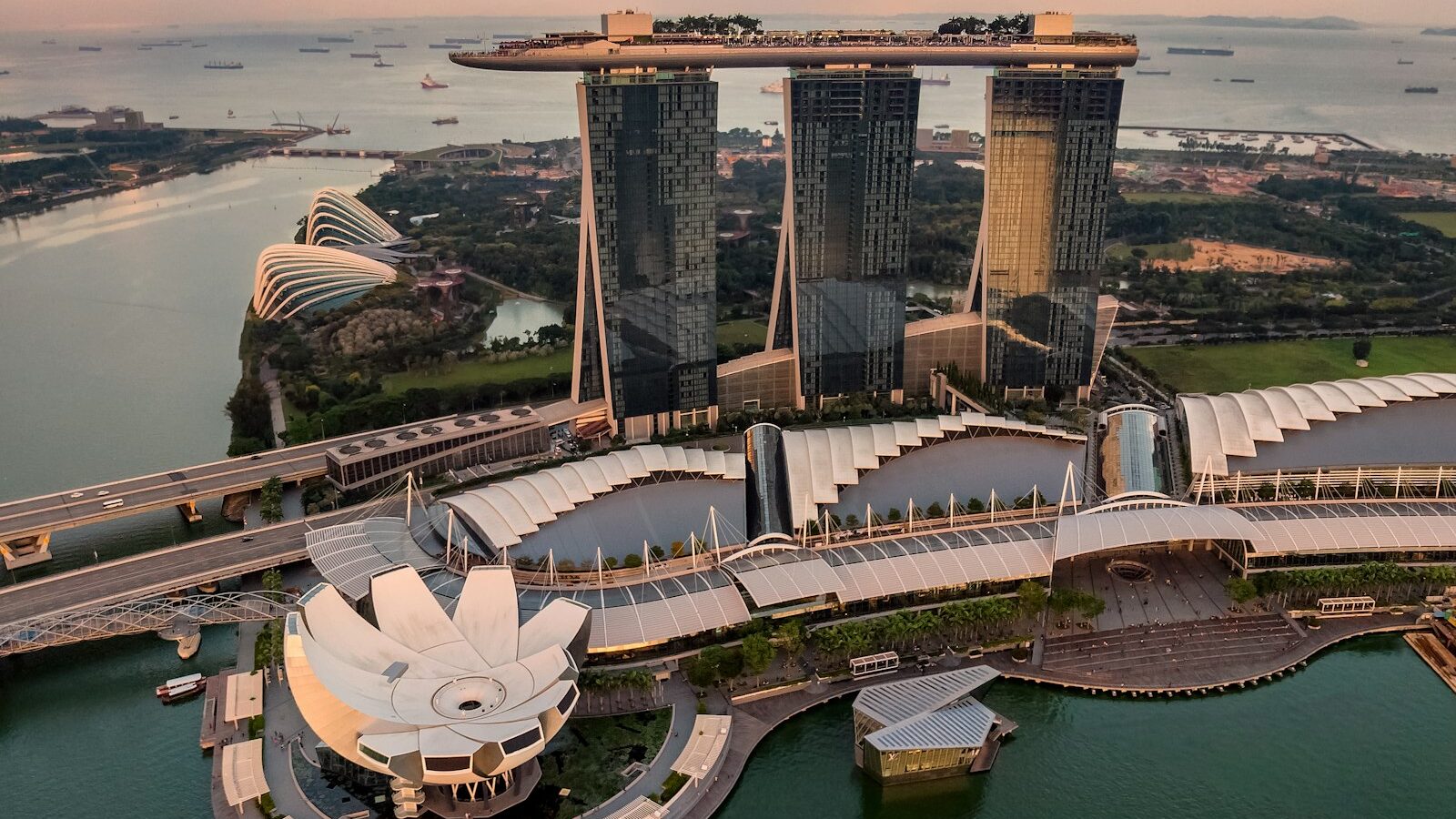
If you want the story of this island in one sitting, this short singapore history guide is for you. The history of Singapore runs from an early trading settlement to a British colonial port, through a hard wartime occupation, and on to a modern city-state. It is a lot of change for a small place, so here is the arc, kept factual and in order, with the dates that matter.
Early Temasek and Singapura
Long before the modern city, the island was known as Temasek, a name that points to its role as a “sea town.” By around the 14th century it was a small but active trading settlement, linked to the wider maritime world of the Malay Archipelago. Chinese and regional traders passed through, drawn by its position along busy sea routes.
Over time the island also came to be called Singapura, often translated as “Lion City.” Later legend ties the name to a sighting of a lion-like beast, though no lions were native here. What is clear is that the settlement rose, faded, and shifted hands among regional powers over the following centuries, and by the early 1800s it was a modest place under the Johor-Riau sultanate.
1819: Raffles and the British trading port
The turning point most people remember is 1819. In that year Sir Stamford Raffles, an official of the British East India Company, landed on the island and moved to establish a British trading post. He negotiated with local rulers to secure the settlement, seeing its harbour and location as ideal for a free port that could challenge Dutch dominance in the region.
The choice of a free port, where goods could be traded without heavy duties, proved decisive. Ships arrived in growing numbers, and a small settlement quickly became a busy entrepot. In the decades that followed, Singapore was drawn fully into the British colonial system.
A free port with a deep, sheltered harbour, sitting on the route between the Indian Ocean and the South China Sea: that combination did more to shape early modern Singapore than any single ruler.
The colonial era and immigration
By 1867 Singapore had become a Crown Colony, governed directly from Britain as part of the Straits Settlements. Trade in goods such as tin and, later, rubber flowed through the port, and the town grew around the river and its warehouses.
This growth was built on people who came from across the region and beyond. Migrants arrived in large numbers, and the population became a mix of communities:
- Chinese migrants from southern China, who came to form the largest community
- Malays from the peninsula and the wider archipelago
- Indians, many from the south, including labourers, traders, and later civil servants
- Smaller communities including Arabs, Eurasians, Armenians, and Europeans
Different groups settled in and around distinct districts, a pattern you can still trace in the city today. The mix of languages, faiths, and food that resulted is a defining feature of the history of Singapore, and of daily life now.
The Japanese Occupation, 1942 to 1945
The Second World War reached Singapore with force. In February 1942, Japanese forces captured the island after advancing down the Malay Peninsula, and the British garrison surrendered. The occupiers renamed the island Syonan-to, sometimes written Syonan.
The occupation lasted until 1945 and was a period of great hardship. Food was scarce, currency lost value, and civilians lived under harsh rule. It remains one of the most painful chapters in the country’s past, and it reshaped how many residents viewed colonial protection and their own future. When the war ended in 1945, British administration returned, but the old confidence in empire had been shaken on both sides.
The road to self-government
The post-war years brought rising calls for a greater say in local affairs. Political parties formed, elections were held under gradually widening rules, and step by step the colony moved toward governing itself.
A major milestone came in 1959, when Singapore achieved self-government in internal matters, with Lee Kuan Yew becoming the first Prime Minister. Britain still handled areas such as external defence and foreign affairs, but domestic government was now in local hands. The focus turned to pressing needs: jobs, housing, and education for a fast-growing population.
Merger with, and separation from, Malaysia
Many leaders of the time believed Singapore’s future lay in joining a larger federation. In 1963 Singapore became part of the new Federation of Malaysia, together with Malaya, Sabah, and Sarawak. The hope was that a shared market and common ground would give the small island economic security.
The union proved short and difficult. Political and economic differences, along with tensions over how the different communities would be represented, strained the partnership. After roughly two years, the arrangement could not hold.
Independence in 1965
On 9 August 1965, Singapore separated from Malaysia and became an independent nation. Independence in 1965 did not arrive as a triumphant choice so much as a separation the young state had to accept, and it left a small island with few natural resources to secure its own future.
What followed is often described as a transformation. Over the following decades, Singapore built up its industry, developed its port into one of the world’s busiest, invested heavily in education and public housing, and grew into a modern, high-income city-state. The details of that rise are a story in themselves, but the foundation was laid in those uncertain first years after 1965.
Quick timeline to remember
- 14th century: Temasek and Singapura, an early trading settlement
- 1819: Raffles establishes a British trading port
- 1867: Singapore becomes a Crown Colony
- 1942 to 1945: Japanese Occupation
- 1959: internal self-government; Lee Kuan Yew becomes Prime Minister
- 1963: merger with Malaysia
- 1965: separation and independence on 9 August
Why this history still shows up today
You do not have to look far to see the past in the present. The colonial free port explains why Singapore still leans on trade and openness. The waves of migration explain the languages you hear and the festivals on the calendar. Even the compact districts where early communities settled remain part of the city’s texture.
Understanding this arc, from Temasek through Raffles, the Occupation, merger, and independence, makes the modern city easier to read. It is a young nation with a long back story, and both halves are worth knowing.
Explore more: Singapore’s ethnic enclaves and a guide to Singapore’s festivals.