
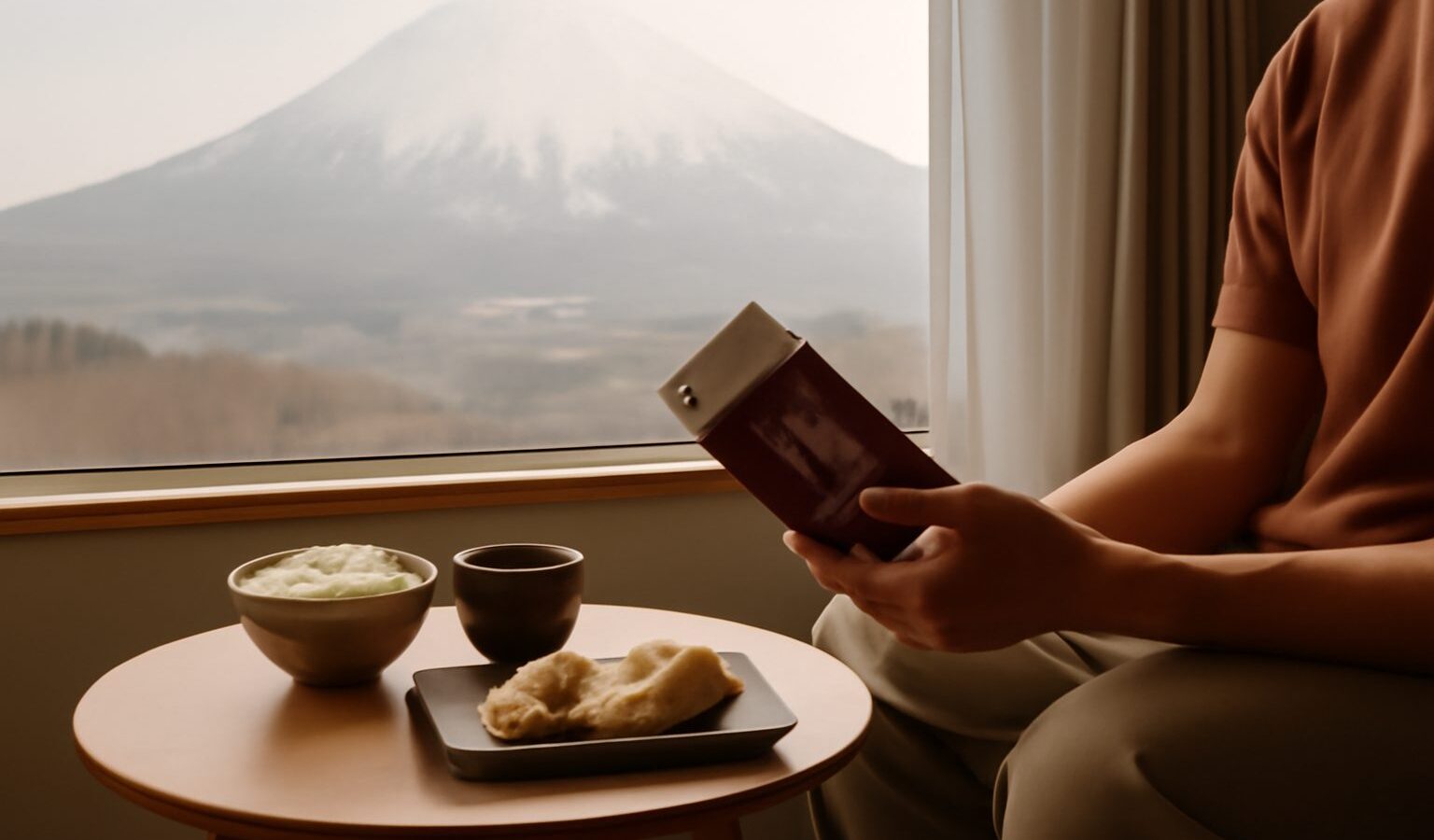
Niseko in Hokkaido is famous for its powder snow, and most of what you read about it assumes you will spend every day on the slopes. But plenty of Singaporeans head to Niseko without skiing at all. Some travel with partners or friends who ski while they do something else, some bring parents who want to see snow without risking a fall, and some simply want a winter holiday that is about scenery, hot springs and food.
This guide is for that traveller. It covers what non-skiers can actually do in Niseko, how to plan the trip from Singapore, and how to stay warm and safe when you are not dressed in full ski gear all day. If you or your group do want to ski, our Niseko ski travel guide covers the slopes side.
Is Niseko Worth It If You Do Not Ski?
It depends on what you want. Niseko is a ski resort area first, so its rhythm follows the slopes: early starts, busy lifts and après-ski evenings. As a non-skier you will not use the main attraction, and accommodation during peak winter can be pricey because of skier demand.
On the other hand, you get:
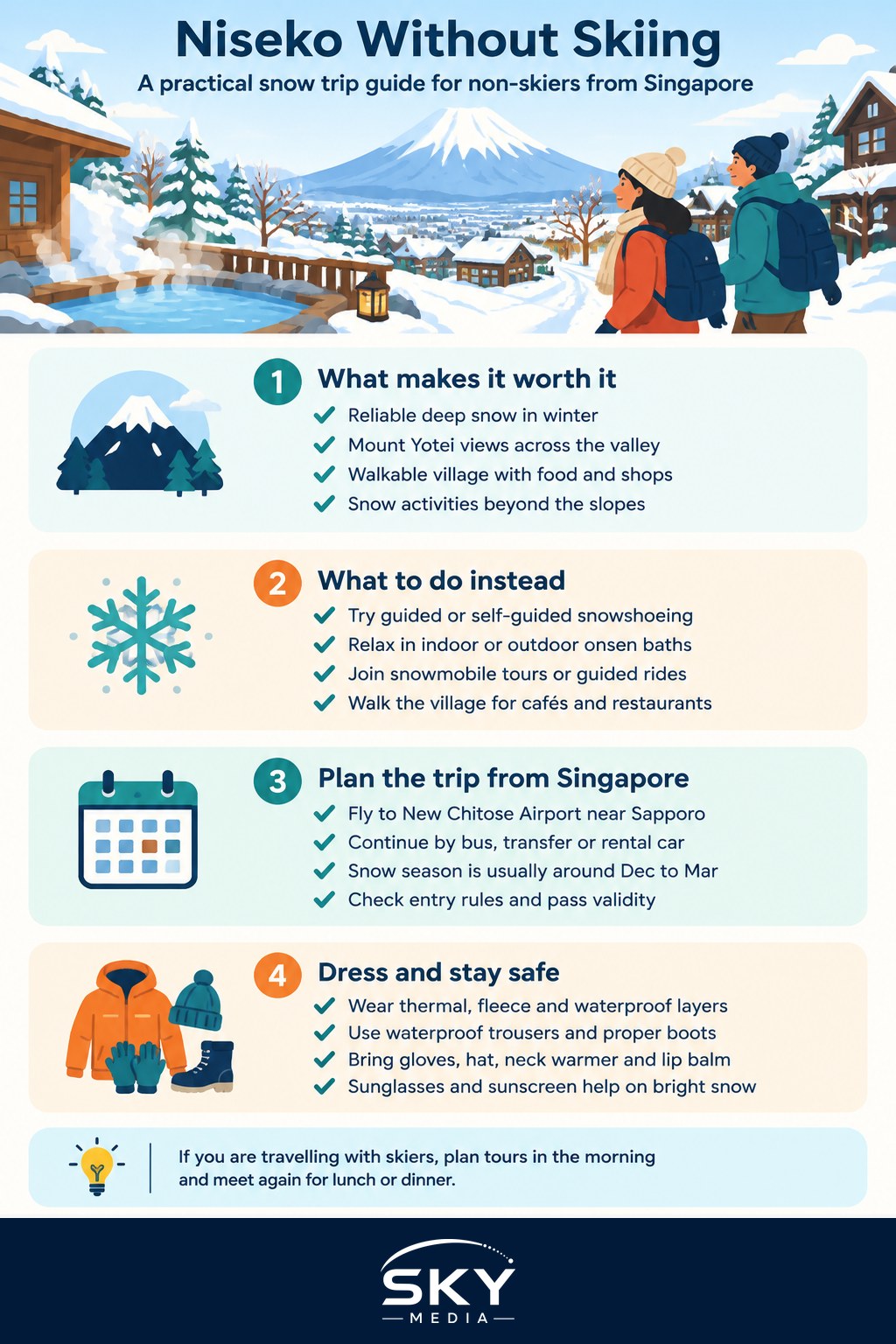
- Reliable deep snow in the main winter months, which is the whole point for many first-timers from Singapore.
- Mount Yotei views, the symmetrical volcano often compared to Mount Fuji, across the valley.
- A walkable resort village with restaurants, cafés and shops catering to international visitors.
- Plenty of activities designed for people who do not ski, from snowshoe tours to hot spring baths.
If you would rather combine snow with cities, a broader Hokkaido trip that includes Sapporo and Otaru may suit you better, with Niseko as a two or three night stop.
Things to Do in Niseko Without Skiing
| Activity | What to expect | Who it suits | What to check before booking |
|---|---|---|---|
| Snowshoeing | Guided or self-guided walks through snowy forest | Most fitness levels, older children and adults | Guide availability, route difficulty, gear rental |
| Onsen (hot spring) bathing | Indoor and outdoor baths, often with snow views | Almost everyone | Etiquette rules, tattoo policies, private bath options |
| Snowmobile tours | Guided rides on marked courses or trails | Adventure seekers | Licence or age requirements, safety briefing |
| Snow play and sledding | Gentle slopes in designated areas | Families with young kids | Location of safe sledding areas away from ski runs |
| Village walking and food | Exploring the resort village, cafés and restaurants | Everyone, especially evenings | Reservations in peak weeks |
| Day trips | Otaru, Sapporo or nearby towns by road or rail | Travellers wanting variety | Weather, road conditions, transport schedules |
Snowshoeing
Snowshoeing is the easiest way to get into the snowy landscape without skiing. Wide shoes spread your weight so you can walk on soft snow. Guided tours are the safest choice for first-timers, since guides know the terrain, the weather and where it is safe to go. Never wander into ski runs or off-limits backcountry areas.
Onsen
Hot springs are one of Hokkaido’s great pleasures, and soaking in an outdoor bath while snow falls is a highlight for many visitors. Learn the basic etiquette before you go: wash thoroughly before entering, keep towels out of the water, and follow the facility’s rules. Some onsen have policies on tattoos, so check in advance if that applies to you. If you have a heart condition, high blood pressure or are pregnant, ask your doctor in Singapore whether hot baths are suitable.
Snowmobiles and Other Guided Tours
Operators in the area run snowmobile rides and other winter activities. Requirements, such as whether you need a licence to drive or ride as a passenger, vary by operator. Compare what is included, read the cancellation terms, and choose operators with a clear safety briefing.
The Village, Food and Views
Some of the best Niseko moments are simple: an evening walk through lit-up snowy streets, a bowl of ramen or soup curry, Hokkaido dairy desserts, and fresh seafood. In peak weeks, popular restaurants fill quickly, so book ahead where possible. On a clear day, find a spot with a view of Mount Yotei at sunrise or sunset.
Planning the Trip From Singapore
- Getting there. Most travellers fly from Singapore to New Chitose Airport near Sapporo, either directly or via another Asian hub, then continue to Niseko by airport bus, private transfer or rental car. The road journey takes a few hours depending on weather.
- When to go. The snow season generally runs from around December to March, with the deepest snow typically in mid-winter. Japanese school holidays, Chinese New Year and Christmas to New Year are busy and more expensive. Late season can be quieter and still snowy, but conditions vary each year.
- Entry rules. Check Japan’s current entry requirements for your passport with the Embassy of Japan in Singapore. Work pass holders and permanent residents should make sure their Singapore pass or Re-Entry Permit is valid for the return.
- Where to stay. Staying in or near the main village means you can walk to restaurants and pick-up points for tours, which matters a lot when you are not using the lifts.
- Driving. If you rent a car, winter driving in Hokkaido needs care: snow tyres, slow speeds, and longer braking distances. Our guide on buying and fitting snow chains explains when chains are used and how they work. Japan also has specific licence requirements for foreign drivers, so confirm what you need before you go.
Our general guide to planning a ski trip from Singapore is also useful for budgeting, travel insurance and packing, even if you will not ski.
Dressing for Snow When You Are Not Skiing
Non-skiers often underestimate the cold because they are not wearing ski jackets and pants all day. Standing still on a snowshoe tour or waiting for a bus can feel colder than skiing.
- Layer up. A thermal base layer, a fleece or wool middle layer, and a waterproof, windproof outer jacket.
- Waterproof trousers. Jeans get wet and cold quickly. Snow pants or waterproof over-trousers keep you dry when sitting or sledding.
- Proper boots. Insulated, waterproof boots with good grip. Pavements in the village can be icy; slip-on ice grips for your boots are worth considering.
- Hands, head and face. Gloves, a warm hat, a neck warmer and lip balm.
- Sun protection. Snow reflects sunlight strongly, so sunglasses and sunscreen are useful on bright days.
Many Singaporeans rent or buy winter wear just before the trip. If you are only going once, renting outerwear locally in Niseko can save luggage space.
Making a Non-Ski Niseko Trip Work for Mixed Groups
In a group where some ski and some do not, plan shared moments around mealtimes and evenings. Book non-skiers onto morning tours while skiers are on the mountain, then meet for lunch in the village. Keep one or two rest days for everyone, perhaps with an onsen visit or a trip to Otaru, so the holiday does not split into two separate trips.
With the right plans, Niseko without skiing can be a relaxed and memorable first snow holiday, and you might even come home curious about trying the slopes next time.
Frequently Asked Questions
Is Niseko too cold for people from Singapore who have never seen snow? It is cold, but manageable with proper layers. Wear a thermal base, a warm middle layer and a waterproof, windproof jacket, plus insulated boots, gloves and a hat. Standing still on a tour or waiting for a bus often feels colder than moving about.
Can older parents enjoy Niseko if they do not ski? Yes, if the pace is gentle. Onsen soaks, village walks, guided snowshoeing and day trips suit many seniors. Pavements can be icy, so consider ice grips for boots. Parents with heart conditions or high blood pressure should ask their doctor about hot baths and cold exposure.
Should I rent winter clothing in Niseko or buy it in Singapore? If this is a one-off trip, renting in Niseko can save luggage space and money. If you expect more cold-weather holidays, buying before you go may pay off. Either way, prioritise waterproof boots, trousers and gloves over fashion items.
What can I do in Niseko on a day with bad weather? Plan indoor options such as onsen visits, cafés, restaurant meals and shopping in the village. Heavy snow can also disrupt road and rail trips, so check conditions before heading to Otaru or Sapporo. Keep a flexible day in your schedule for this.
Is Niseko cheaper if I avoid the peak ski season? Often, yes, since accommodation during peak winter is pricey because of skier demand. Late season can be quieter while still snowy, though conditions vary each year. Avoid Japanese school holidays, Chinese New Year and Christmas to New Year if cost matters.