
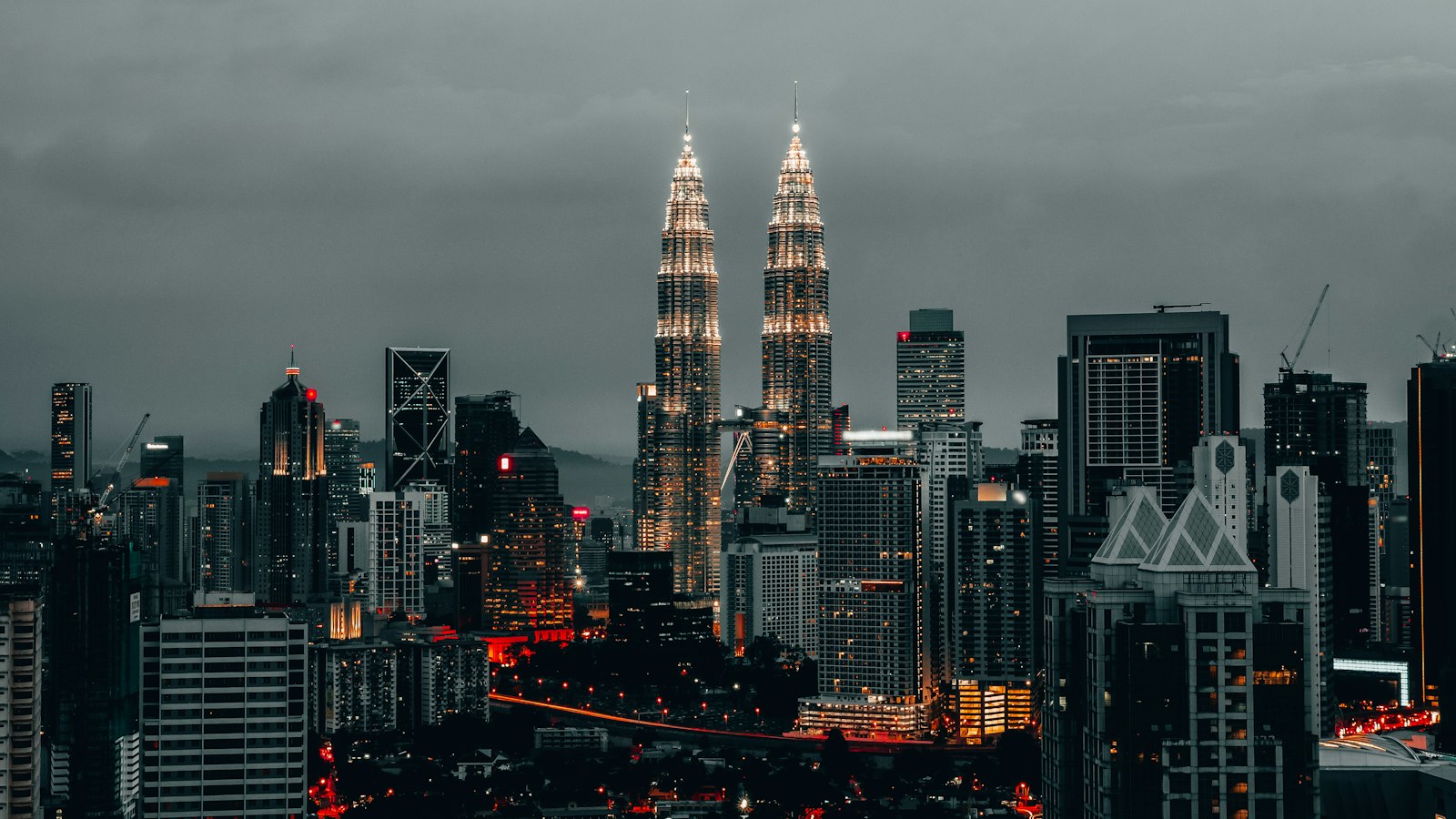
Singapore and Kuala Lumpur sit about an hour’s flight apart, share a lot of history and food, and are both popular bases for professionals relocating to Southeast Asia. Yet daily life in each city feels quite different. If you are weighing Singapore vs Kuala Lumpur as an expat, the decision usually comes down to a trade-off between Singapore’s efficiency and career density and KL’s space, lower costs and more relaxed pace.
This head-to-head comparison covers living costs, housing, getting around, careers, schools, healthcare and lifestyle. Prices and immigration rules in both countries change often, so use it as a framework and confirm specifics with official sources and your employer.
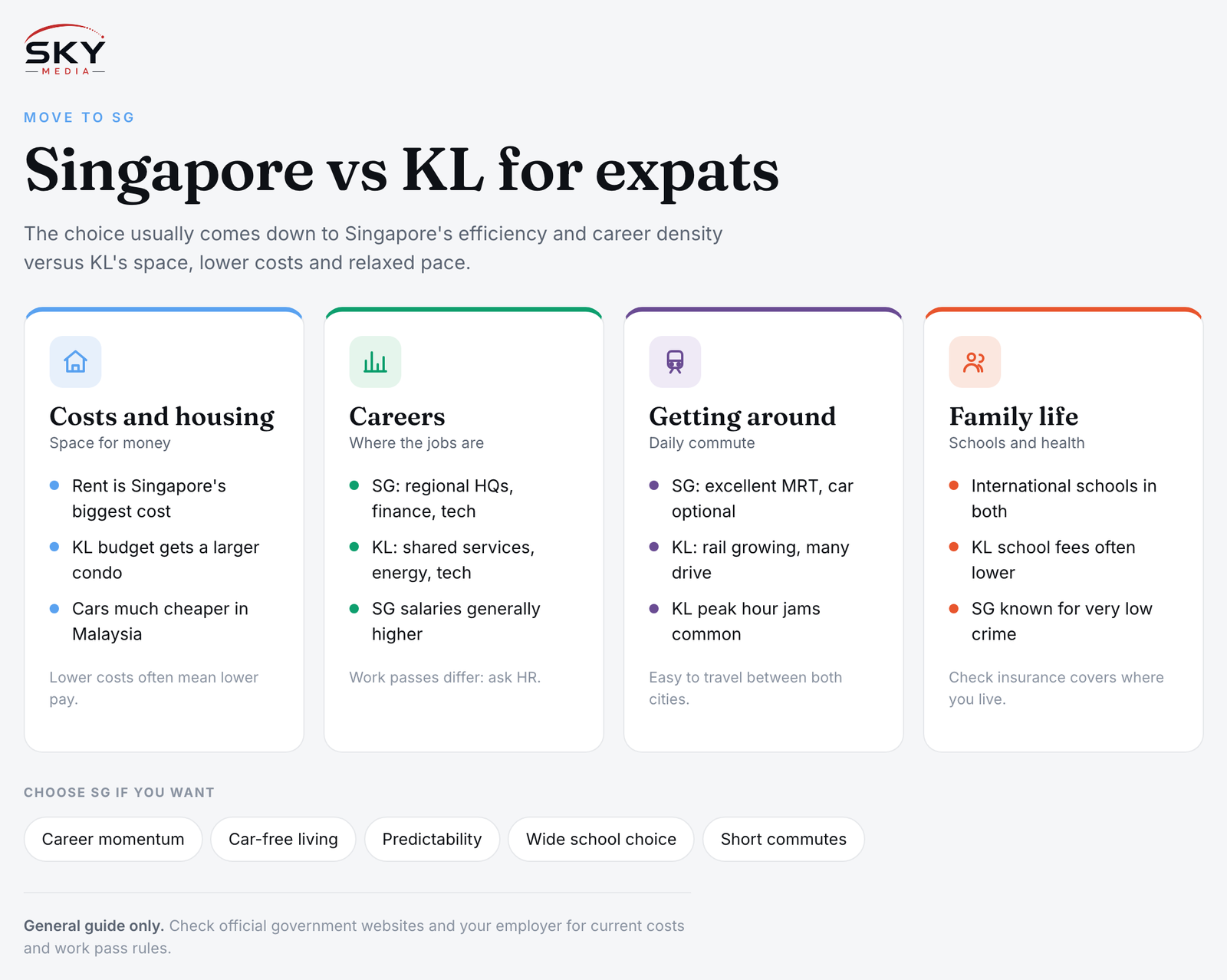
The Big Picture: Two Very Different Cities
Singapore is a compact city-state with a highly organised public system, strong rule of law, excellent public transport and a dense concentration of regional headquarters. English is the main working language, and things generally work as promised.
Kuala Lumpur is the capital of a larger country, with a sprawling metropolitan area (often called the Klang Valley) that includes Petaling Jaya and other satellite towns. It offers more living space for the money, a car-friendly lifestyle and easy weekend access to beaches, highlands and other Malaysian states. Malay is the national language, but English is widely spoken in business, and many residents also speak Mandarin, Cantonese or Tamil.
Cost of Living and Housing
For most expats, the cost gap is the headline difference.
- Housing: Rent is typically Singapore’s biggest expense. In KL, the same budget usually gets you a noticeably larger condominium, often with a pool, gym and security. Many expats in KL live in high-rise condos in areas like Mont Kiara, Bangsar or KLCC, while Singapore expats often choose condos in central or east-side districts.
- Cars: Owning a car in Singapore is very expensive because of the Certificate of Entitlement (COE) system and related taxes. In Malaysia, cars and fuel are generally much cheaper, which is why many KL residents drive.
- Everyday spending: Hawker or kopitiam food is affordable in both cities. Imported groceries, alcohol and international brands are commonly pricier in Singapore, though exchange rates affect how this feels.
- Domestic help: Both cities have families employing domestic helpers, with different rules, levies and costs. Check the relevant ministry in each country.
Remember that a lower cost of living often comes with a lower salary. Compare your offers on what you will actually save after housing, school fees and transport, not just the headline pay. Our piece on How to Avoid Lifestyle Inflation in Singapore is useful whichever city you choose.
Head-to-Head Comparison
| Factor | Singapore | Kuala Lumpur |
|---|---|---|
| Housing for your money | Smaller, higher rents | More space, condo facilities common |
| Getting around | Excellent MRT and buses, car optional | MRT and LRT growing, but many people drive |
| Career opportunities | Dense regional HQs, finance, tech, biomedical | Strong in shared services, energy, manufacturing, tech hubs |
| Pace of life | Fast, efficient, structured | More relaxed, more flexible |
| Weekend escapes | Short flights, ferries to Indonesian islands, trips to Malaysia | Drives to highlands, beaches and other states |
| Language | English as working language | Malay national language, English widely used in business |
Careers and Work Passes
Singapore hosts the regional headquarters of many multinationals, plus a large financial sector, a growing tech scene and research-heavy industries. This density means more roles at senior and regional level, and more chances to change jobs without changing country. Competition is intense and salaries are generally higher.
Kuala Lumpur has a strong base in shared services and business process centres, oil and gas, manufacturing, banking and a growing technology and startup scene. Salaries are typically lower in absolute terms, but some expats on regional packages find their money stretches much further.
Work passes differ completely:
- In Singapore, foreign professionals usually need a work pass from the Ministry of Manpower (MOM), such as an Employment Pass, with criteria that are reviewed periodically. See MOM’s website for current requirements.
- In Malaysia, foreign professionals typically need an employment pass processed through the relevant Malaysian immigration and expatriate services channels, usually arranged by the employer. Long-stay programmes for retirees and others also exist, with criteria that have changed several times.
Neither system is something to guess at. Ask your employer’s HR or a licensed relocation adviser, and check the official government websites.
Getting Around
Singapore’s public transport is one of its biggest strengths. Most expats live comfortably without a car, using the MRT, buses and taxis or ride-hailing. The city is walkable in many areas, with covered walkways that help in the rain.
KL’s rail network has expanded significantly over the years, and ride-hailing is widely used. Still, distances are bigger, some neighbourhoods are not well connected by rail, and traffic jams at peak hours are common. Many expats end up buying or leasing a car.
Travelling between the two cities is easy by air, by bus, or by driving through Johor Bahru. If you are visiting KL first to scout areas, see How to Travel from Singapore to Kuala Lumpur.
Schools, Healthcare and Safety
Schools: Both cities have many international schools offering British, American, International Baccalaureate and other curricula. International school fees in KL are often lower than in Singapore. In Singapore, foreign children can apply to local government schools, subject to availability and admission rules; in Malaysia, most expat families choose international or private schools.
Healthcare: Singapore has a high-quality public and private healthcare system, though private care is expensive without good insurance. KL has well-regarded private hospitals at lower cost, and Malaysia is a popular medical tourism destination. Make sure your insurance covers where you live and where you might seek treatment.
Safety: Singapore is known for very low crime levels. KL is generally safe for expats, but petty crime such as snatch theft is more of a concern in some areas, so normal city precautions apply.
Haze: Both cities can be affected by seasonal transboundary haze in some years. Keep an air purifier and masks in mind.
Lifestyle: Which City Suits You?
Singapore may suit you better if you:
- Want career momentum and regional roles.
- Prefer living without a car.
- Value predictability, order and efficient services.
- Have children and want easy access to a wide school choice with short commutes.
Kuala Lumpur may suit you better if you:
- Want more living space and a lower cost base.
- Enjoy driving and road trips.
- Prefer a slightly slower, less structured pace.
- Work remotely or on a regional package that pays in a stronger currency.
Some families split the difference over time: starting in Singapore for career growth and later moving to Malaysia for space, or the reverse. Both cities share a love of good food, multicultural festivals and tropical weather, so either way you will find plenty to enjoy.
For another regional comparison in the same format, read Singapore vs Tokyo for Expats, then visit both cities if you can before you sign a lease.
Further reading: Singapore vs Taipei for Expats and Families · Singapore vs Bangkok for Expats: Which City Suits You · Singapore vs Dubai for Expats