
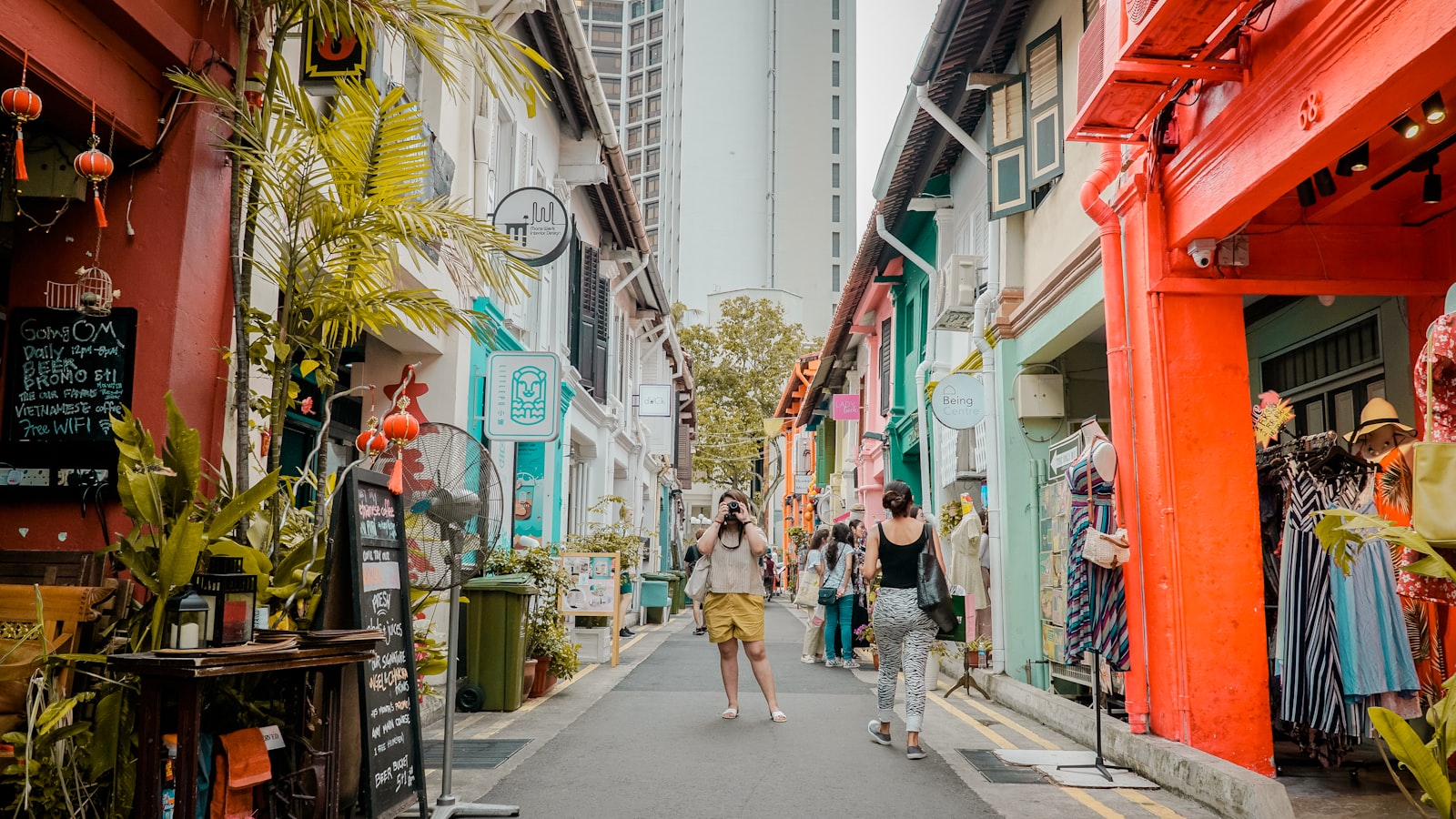
Land in Singapore and one of the first things you will notice is the way people speak. Sentences are quick, warm and sprinkled with little words that carry a lot of feeling. That is Singlish, and picking up a few common Singlish phrases is one of the fastest ways to feel at home here.
Singlish is Singapore’s own blend of English with Malay, Hokkien, Cantonese, Teochew, Tamil and more all mixed in. It is not “broken English.” It is a living, playful part of local identity, something Singaporeans genuinely love and use with family, friends and hawker uncles alike. You will hear it in offices, void decks and coffee shops every single day.
This starter phrasebook keeps things simple: what the famous particles mean, a glossary of everyday singlish words, and a friendly note on when to use them. No need to memorise everything. Just read, smile, and let it sink in naturally.
A gentle note: Singlish is best enjoyed, not performed. Locals warm to newcomers who use it sincerely and get a little wrong, far more than to anyone who mimics it to poke fun. Come to it with respect and curiosity, and you will be fine.
The particles: lah, leh, lor, meh, sia
The small words at the end of a sentence are the heart of Singlish. They do not change the facts of what you say. They change the mood, the same way a shrug, a sigh or a raised eyebrow would. Get a feel for “lah leh lor” and you are already halfway there.
- lah adds warmth, emphasis or reassurance. “Don’t worry lah.” “Okay lah, can.” It softens a statement or nudges someone along.
- leh signals a gentle question, doubt or mild disagreement. “But I thought it was free leh?” It often asks for a second opinion.
- lor shows acceptance, resignation or “that’s just how it is.” “Cannot go already, so stay home lor.”
- meh turns a statement into a slightly sceptical question. “Really cheaper meh?” It expresses surprise or doubt.
- sia adds strong emphasis or amazement, a bit like “wow” or “seriously.” “So hot today sia!”
Do not stress about placing these perfectly. Even locals use them by instinct. Listen for a week or two and the rhythm will start to feel natural.
Everyday Singlish words and phrases
Here is a glossary of the singlish words you will hear most often, with the singlish meaning and a quick example for each.
Getting things done
- can / cannot: yes it is possible / no it is not. Wonderfully flexible. “Can help me hold this?” “Can!” or “Cannot lah, too heavy.”
- steady: reliable, impressive, or “well done.” “You finished already? Steady!”
- paiseh (from Hokkien): embarrassed, shy, or “sorry to trouble you.” “Paiseh, can I squeeze past?”
- blur: confused, clueless, not paying attention. “Sorry, I’m a bit blur today, can you repeat?”
- kiasu (Hokkien for “afraid to lose”): the very Singaporean fear of missing out or losing an advantage. “He queued at 6am for the sale, so kiasu.”
Feelings and reactions
- shiok: pure satisfaction and delight, usually about food, rest or anything that feels great. “The laksa here is damn shiok.”
- sian: bored, tired, fed up, world-weary. “Raining again, so sian.”
- alamak: an exclamation of dismay or surprise, like “oh no” or “oh dear.” “Alamak, I forgot my wallet!”
- atas (from Malay for “upstairs”): posh, high-class, or a little snooty. “That new cafe damn atas.”
Social life
- bojio (Hokkien): “why didn’t you invite me?” A playful complaint about being left out. “You all went makan without me? Bojio!”
- chope: to reserve a seat or spot, famously by leaving a packet of tissues on the table. “Go chope a table first, I’ll order.”
- makan (Malay for “eat”): food or eating in general. “Let’s go makan after this.”
You will pick up plenty more over time. These are simply the ones that open the most doors in everyday singapore slang.
Food-ordering Singlish
Meals are where Singlish truly comes alive, so this deserves its own section. At a hawker centre or coffee shop, orders are short, direct and friendly. A few handy ones:
- “Uncle, one plate chicken rice, can?”: polite and normal. “Uncle” and “Auntie” are respectful terms for older stallholders, not rude.
- “Dabao” (Cantonese): takeaway. “One char kway teow, dabao.” If you are eating there, you can say “here eat” or just point to a table.
- “Less oil / no chilli / add egg”: simple add-ons, spoken plainly. No need for full sentences.
- “How much ah?”: asking the price. The “ah” is just a soft, friendly ending.
- “Shiok!”: the best review you can give after the first bite.
Ordering drinks has its own rich vocabulary, from kopi to teh, thick to thin, hot to iced. That is a lovely rabbit hole of its own, so we have given it a separate guide below.
Quick tips for using Singlish well
A short checklist for newcomers finding their feet:
- Listen first, speak later. A week of listening teaches more than any list.
- Start with “can” and “lah.” They are gentle, common and hard to get wrong.
- Match the setting. Singlish is warm and casual. For a job interview or an official email, standard English is the safer choice.
- Never mock it. Use Singlish because you enjoy it, not to imitate anyone. Sincerity is everything.
- Ask when unsure. Locals are usually delighted to explain a word. Curiosity is welcome.
When to use it (and when not to)
Singlish shines in relaxed, friendly moments: chatting with colleagues over lunch, bantering with a hawker, texting a new friend. It is the sound of everyday Singapore, and using a phrase or two signals that you are here to belong, not just to visit.
In formal settings, most Singaporeans switch smoothly to standard English, and you can too. Think of it as choosing the right register for the room. Nobody expects a newcomer to be fluent. A well-placed “can!” or “so shiok” is more than enough to earn a warm smile.
Above all, treat Singlish as the affectionate, expressive thing it is. Learn a few singlish phrases, use them with heart, and you will find that this small local language opens doors that textbook English never could.
Explore more: Hawker centre etiquette and How to order kopi like a local