
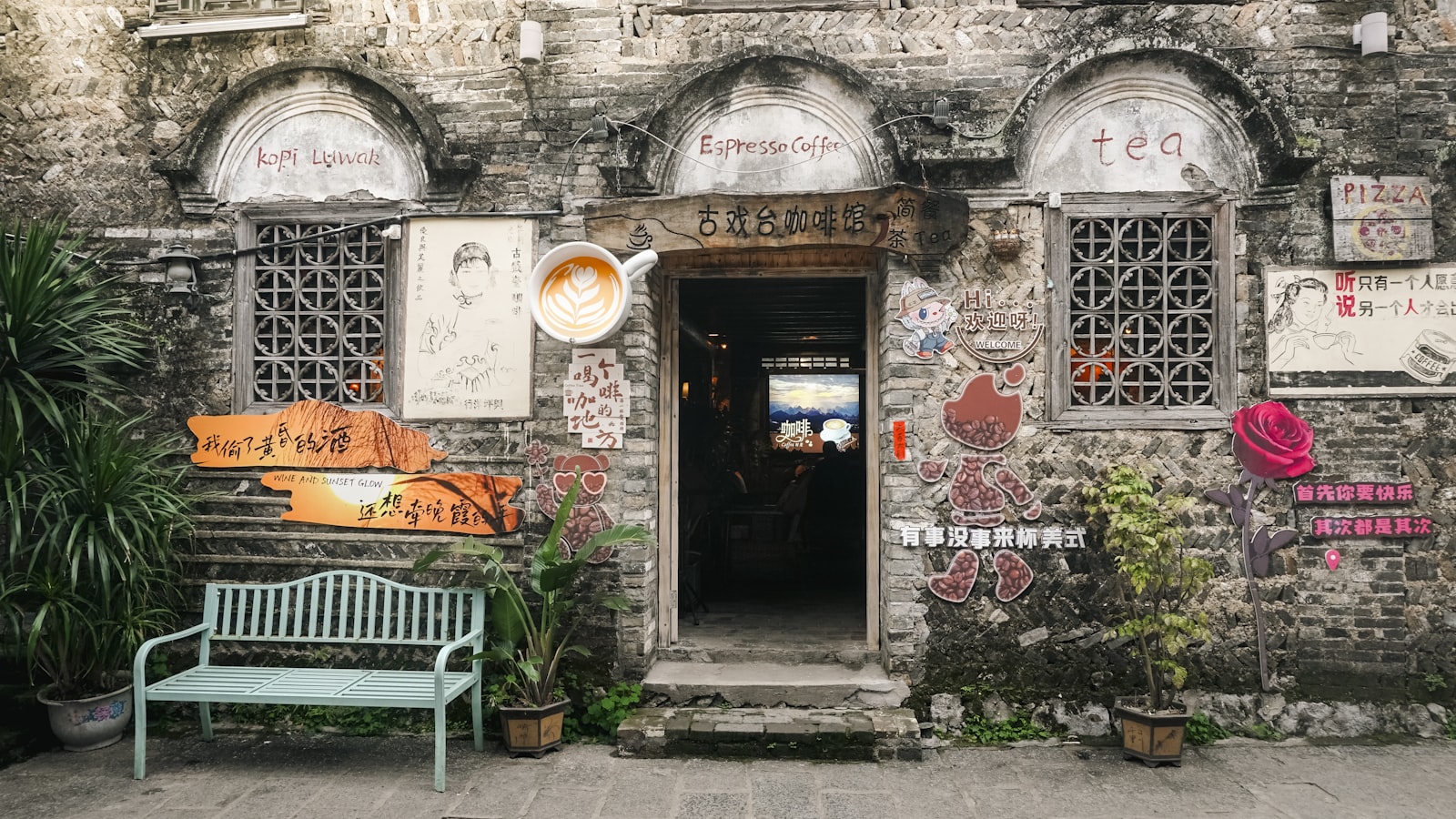
Step up to a kopitiam drinks stall for the first time and the queue moves fast, the uncle is already looking at you, and someone behind you rattles off “kopi C siew dai peng” without blinking. If you want to order kopi in Singapore with the same easy confidence, the good news is that it runs on a simple, logical code. Once you learn the handful of words behind it, you can build almost any cup exactly the way you like it.
This guide breaks down that code: the base drinks, the modifiers for milk and sugar, the temperature words, and a quick chart you can screenshot for your next visit.

First, what is kopi?
Kopi is the local-style coffee served at kopitiams (traditional coffee shops) and hawker centres across Singapore. The beans are roasted with sugar and sometimes butter or margarine, which gives the brew its dark, caramelised, slightly smoky character. It is brewed strong through a cloth “sock” filter and served in a cup or, at old-school stalls, a saucer.
By default, a plain “kopi” comes with condensed milk and is already sweet. That default matters, because every other order is really just you telling the uncle how to change it. Understand the starting point and the rest of the vocabulary clicks into place.
The same system applies to tea. Swap the word “kopi” for “teh” and you order tea the exact same way, so learning one teaches you both.
The two words that do the heavy lifting: O and C
Most of the confusion for newcomers comes down to two little letters.
- Kopi O means coffee with sugar but no milk. The “O” comes from the Hokkien word for black. So kopi O is black, sweet coffee.
- Kopi C means coffee with evaporated milk and sugar. The “C” is often traced to “Carnation,” a well-known evaporated milk brand, and it gives a lighter, less sticky-sweet cup than condensed milk.
So the milk ladder looks like this: plain kopi uses condensed milk, kopi C uses evaporated milk, and kopi O uses no milk at all. Pick your rung, then fine-tune the sugar.
Sweetness and strength modifiers
This is where you make the drink truly yours. Add one of these words after the base:
- Kosong means zero, so no sugar at all. A kopi C kosong is coffee with evaporated milk and nothing sweet.
- Siew dai means less sweet. This is the go-to for many locals who want flavour without the full sugar hit, and it is probably the single most useful modifier to remember.
- Ga dai (sometimes “gah dai”) means extra sweet, more of the condensed or evaporated milk.
- Gao means thick or strong, a more concentrated, punchier brew.
- Poh means thin or light, a weaker, more diluted cup.
You can stack these. “Kopi gao siew dai” is a strong coffee that is less sweet. Nobody will blink; stacking is completely normal.
Getting the temperature right
Two more words cover how it arrives.
- Peng means iced. “Kopi peng” is iced coffee, usually poured over a generous scoop of ice in a plastic cup or bag.
- Hot is the default, so you do not need to say anything for a warm cup.
If you want it to go, many stalls still serve takeaway drinks in a clear plastic bag with a loop of string or a rubber band, a genuinely local touch worth experiencing at least once. The word many locals use for takeaway is “dabao,” so “kopi dabao” means a coffee to go. Some stalls now also charge a small deposit or fee for a cup or bag, in line with wider moves to cut down on disposables, so do not be surprised if takeaway costs a few cents more.
The kopi teh order chart
Here is the reference to save. Read it as base plus modifiers: pick a base, then add sweetness and temperature words as you like.
| You say | You get |
|---|---|
| Kopi | Coffee with condensed milk (sweet, the default) |
| Kopi O | Coffee with sugar, no milk (black) |
| Kopi C | Coffee with evaporated milk and sugar |
| Kopi O kosong | Black coffee, no sugar, no milk |
| Kopi C kosong | Coffee with evaporated milk, no sugar |
| Teh | Tea with condensed milk (sweet, the default) |
| Teh O | Tea with sugar, no milk |
| Teh C | Tea with evaporated milk and sugar |
Modifiers you can add to any of the above:
- Siew dai = less sweet
- Ga dai = extra sweet
- Kosong = no sugar
- Gao = thicker / stronger
- Poh = thinner / lighter
- Peng = iced
So “teh C peng siew dai” is iced tea with evaporated milk, less sweet. You can now decode and build hundreds of combinations from one small vocabulary.
Quick rule of thumb: plain is condensed milk, C is evaporated milk, O is black. Everything else just tunes the sugar, strength, and temperature.
Quick tips for ordering with confidence
- Have your order ready before you reach the front. Queues move quickly and it helps everyone.
- Say the base first, then the modifiers: base, then milk, then sweetness, then temperature. “Kopi C siew dai peng” flows naturally in that order.
- Start simple. A “kopi C siew dai” is a friendly, very local first order that eases you in without overthinking it.
- Point if you are stuck. Most stalls have a drinks list on the wall, and staff are used to helping newcomers.
- Pay at the drinks stall, which is usually separate from the food stalls. In many kopitiams a server may come to your table to take drink orders instead, so a wave is fine.
- Cash is handy, though more stalls now accept QR and contactless payment.
The kopitiam culture around your cup
The kopitiam is more than a drinks counter. It is the neighbourhood living room, where retirees read the morning paper, taxi drivers take a break, and families gather after a hawker meal. The drinks stall usually sits at the front and serves the whole coffee shop, so you can order a kopi even while eating food bought from another stall.
Sitting slowly is part of the charm. A cup of kopi-o and a plate of kaya toast with soft-boiled eggs is a classic Singapore breakfast. Treating the kopitiam as a place to linger, chat and people-watch is exactly how locals use it, and it is one of the easiest ways to feel woven into everyday life here.
A few beloved variations
Once the basics feel natural, you may hear a few extras worth knowing. Yuan yang (or “kopi cham”) is a coffee-and-tea mix, best of both worlds in one cup. Diao he or a “kopi gao” leans into strength for the mornings you really need it. Teh tarik, literally “pulled tea,” is a frothy milk tea poured between two cups, more a mamak-stall staple than a sock-brew order but a firm local favourite. Milo dinosaur, a Milo drink heaped with extra Milo powder on top, is the sweet, chocolatey non-coffee pick many kids and adults love. And there is no wrong answer here: the whole point of the system is that it bends to your taste.
Beyond kopi: teh, Milo, bandung and yuan yang
The same modifier system works for more than coffee. Teh is milk tea with condensed milk and sugar by default, so you can order it much like kopi.
- Teh-o is tea with sugar, no milk.
- Teh-c is tea with evaporated milk.
- Teh peng is iced milk tea.
- Teh kosong is unsweetened, milkless tea.
- Teh tarik is “pulled” tea, poured back and forth to create a frothy top, usually found at Indian Muslim stalls.
You will also hear a few other kopitiam staples at the drinks stall.
- Milo is a chocolate-malt drink. Ask for Milo peng iced, or Milo dinosaur, topped with extra Milo powder.
- Bandung is a sweet, pink rose-syrup milk drink.
- Yuan yang blends coffee and tea in one cup.
Common questions about ordering kopi
Is kopi stronger than regular coffee?
It can taste more intense because the beans are roasted with sugar and often a little fat, which gives that dark, smoky flavour. If you want a genuinely punchier cup, add “gao” for a thicker brew; ask for “poh” if you prefer it lighter.
How do I order a less sweet kopi?
Add “siew dai” for less sweet, or “kosong” for no sugar at all. So “kopi siew dai” is a standard condensed-milk coffee dialled down, and “kopi O kosong” is black coffee with nothing added.
What is the difference between kopi C and kopi O?
Kopi C uses evaporated milk and sugar for a lighter, creamier cup, while kopi O is black coffee with sugar and no milk. Plain kopi, by contrast, uses sweet condensed milk.
Can I order kopi iced?
Yes. Add “peng” for iced, so “kopi peng” is iced coffee and “kopi C peng” is iced coffee with evaporated milk. Hot is the default, so you only need to say a word for the cold version.
Kopi is more than caffeine. It is a small daily ritual and one of the easiest ways to feel at home in a Singapore kopitiam, whether you have lived here for decades or landed last week. Order it your way, and you are already speaking a little of the local language.
How kopitiam drinks differ from other tea and coffee cultures
If you have come from the mainland, a few contrasts can make the code easier to understand.
- Chinese tea culture often prizes pure, unsweetened leaf tea brewed to be savoured on its own. Kopitiam teh is sweet, milky and meant to be gulped down against the heat, closer to Hong Kong-style milk tea in spirit.
- Coffee at home may mean an espresso bar or a chain latte. Local kopi is sock-brewed, sugar-roasted and served with condensed or evaporated milk, a heartier, sweeter tradition.
- The ordering itself is verbal shorthand rather than a printed menu of sizes and syrups, so you speak the code instead of tapping a screen.
Think of it as a new dialect of drinks to add to your collection.
Explore more: Kaya toast: the Singapore breakfast classic · Hawker centre etiquette · Must-try hawker food in Singapore · Local drinks guide Singapore · Local slang glossary Singapore
Further reading: Kopitiam Drinks Beyond Kopi in Singapore · A Guide to Local Kopitiam Breakfast