

Planning Sipadan from Singapore is a dream for divers, because Sipadan is regularly ranked among the finest dive sites on the planet. It is a small, protected island off the coast of Sabah in Malaysian Borneo, rising from deep ocean and surrounded by walls that drop into the blue. The diving here is famous for turtles, big schools of barracuda and jack, reef sharks and pristine coral. For Singaporeans who dive, or who are working towards it, Sipadan is a genuine bucket-list destination, but it is one that requires proper planning, a diving certification and a permit secured well in advance.
This guide covers why Sipadan is so special, when to visit, what you need to know about permits and safety, how to get there, and who this world-class dive trip suits best.
Why go to Sipadan
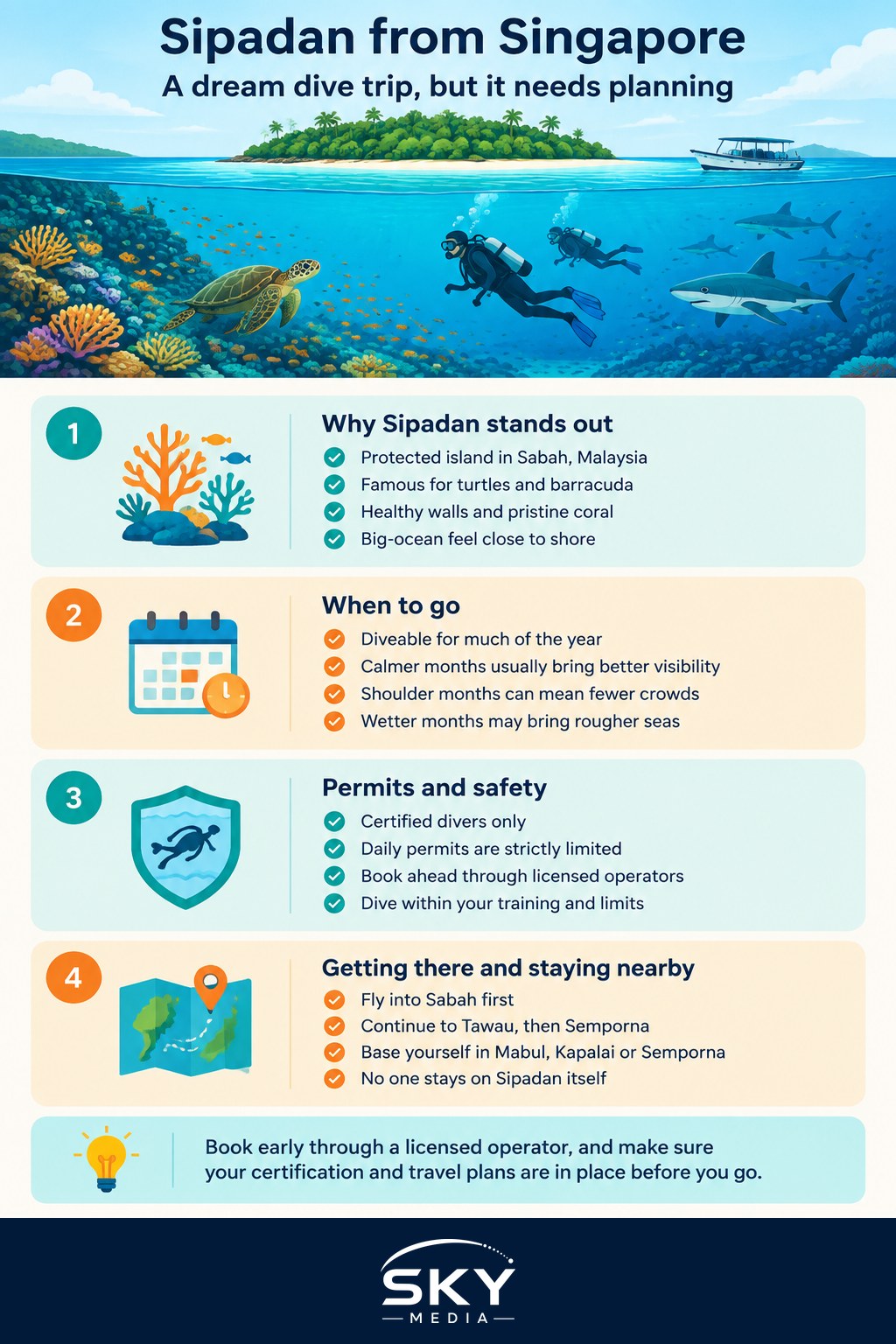
Sipadan sits on the edge of some of the most biodiverse waters in the world, and its walls are alive. Divers routinely encounter green and hawksbill turtles in remarkable numbers, swirling tornadoes of barracuda, resident reef sharks, and coral in excellent condition. The famous drop-offs plunge steeply just metres from the shore, which is what gives the site its dramatic, big-ocean feel.
Because the island is a protected marine area, diving is carefully managed. Nobody stays on Sipadan itself. Instead, divers base themselves nearby and make day trips out to the site under permit. This protection is a large part of why the reefs remain so healthy, and it means every visit feels like a privilege rather than a right. Respect for the marine environment is central to the experience.
Sipadan is best thought of as the centrepiece of a dedicated diving trip rather than a casual add-on. Treat costs as generally mid-range to higher, since dive packages, permits and resort stays add up, and check current rates when you book.
When to visit
The waters off Sabah are diveable for much of the year, but conditions vary with the seasons. Calmer, clearer periods tend to offer the best visibility and the most comfortable boat crossings, while wetter, windier stretches can bring rougher seas and reduced visibility on some days. Marine life is present year-round, though certain months are known for particularly good sightings. Conditions are never guaranteed, so treat any month as a general guide rather than a promise.
Here is a simple seasonal comparison to help you plan.
| Period | Sea conditions | Visibility | Notes |
|---|---|---|---|
| Calmer months | Generally smoother | Often very good | Popular, book early |
| Shoulder months | Variable | Usually decent | Fewer crowds |
| Wetter, windier months | Rougher at times | Can be reduced | Trips still run, weather permitting |
Whenever you go, book early. Permit numbers are strictly limited, and the most popular periods fill up far ahead. Securing your dates through a licensed operator is the single most important planning step for any Sipadan trip.
Permits, certification and safety
Two rules define a Sipadan trip. First, this is a site for certified divers only. It is not a place to learn from scratch on the day, and the walls and currents demand competence and comfort in the water. If you are still training, complete your certification and build experience before you come, or use your time in the region to dive the gentler surrounding sites instead.
Second, a strict daily permit limit applies to Sipadan. Only a set number of divers are allowed on the island each day, and permits are allocated through licensed operators. This is why you must book well ahead through a reputable, licensed dive operator, who will arrange your permit as part of your package. Do not expect to simply turn up and dive Sipadan on demand.
Safety and conservation go hand in hand here. Dive within your training and limits, follow your divemaster’s briefings, and never push into conditions beyond your ability. Practise good buoyancy to avoid touching or damaging coral, keep a respectful distance from turtles, sharks and other marine life, and never chase or handle them. The health of this reef depends on every visitor treating it with care.
How to get there and where to base yourself
The practical route is to fly into Sabah and make your way to the coastal town of Tawau, then continue overland to Semporna, the main jumping-off point for the dive region. From Semporna, boats run out to the islands. There are no guaranteed direct options and routes change, so reach a Sabah gateway first, then arrange onward transport, ideally coordinated through your dive operator, who will handle the logistics as part of your booking.
Because you cannot stay on Sipadan, divers base themselves nearby. The usual choices are the islands of Mabul or Kapalai, known for excellent macro and muck diving in their own right, or the town of Semporna on the mainland. Each has its own character, and your operator can advise what suits your budget and diving plans. Always confirm entry requirements for Malaysia through official channels, including Singapore’s MFA travel advisories, check current flight routes and prices close to your dates, and review any travel guidance for the wider area before you commit.
Who it suits and budget
Sipadan suits certified divers who want world-class reefs and big marine encounters, and who are happy to plan a dedicated diving trip around permits and boat schedules. Keen underwater photographers, in particular, will be in their element. Non-divers can join and enjoy the nearby islands, snorkelling and the relaxed pace, but the star attraction is very much below the surface and reserved for those with a certification.
It is less suited to beginners hoping to try diving for the first time at a famous site, or to travellers wanting a spontaneous, unplanned beach break. The permit system rewards those who organise early. Budget is generally mid-range to higher, driven by dive packages, permits and resort stays, so avoid locking in fixed figures far ahead and check live prices when you plan.
Sipadan is not the easiest trip to arrange, and that is exactly why it stays so special. Sort your certification, book early through a licensed operator, respect the reef and its wildlife, and you will experience the kind of diving that many Singaporean divers spend years hoping to tick off.
Explore more
- Kota Kinabalu from Singapore
- Diving Destinations from Singapore
- Redang from Singapore
- Tioman from Singapore
Frequently Asked Questions
Can non-divers or beginners visit Sipadan? Diving at Sipadan is for certified divers only, so beginners cannot learn on the day. If you are still training, finish your certification first or dive the gentler nearby sites. Non-divers can join the trip and enjoy the surrounding islands and snorkelling.
How far ahead should I book Sipadan permits? Book as early as you can, as daily permit numbers are strictly limited and popular periods fill up far ahead. Permits are allocated through licensed operators, who usually include them in your package. You cannot simply turn up and dive, so secure your dates first, then flights.
Where can I stay if nobody can stay on Sipadan itself? Divers base themselves nearby, usually on the islands of Mabul or Kapalai, or in the mainland town of Semporna. Each has its own character, and your dive operator can advise on what suits your budget and diving plans. Boats take you out to the site for the day.
What can I see underwater at Sipadan? Divers routinely meet green and hawksbill turtles, swirling schools of barracuda, resident reef sharks and healthy coral along dramatic drop-offs. Sightings are never guaranteed, but marine life is present year-round. Keep your distance, practise good buoyancy and never chase or handle the animals.
How do I get from Singapore to Semporna? Fly into Sabah, make your way to Tawau, then continue overland to Semporna, the main jumping-off point. Routes change and there are no guaranteed direct options, so check current flights and prices. Your dive operator can coordinate transfers as part of the booking.