
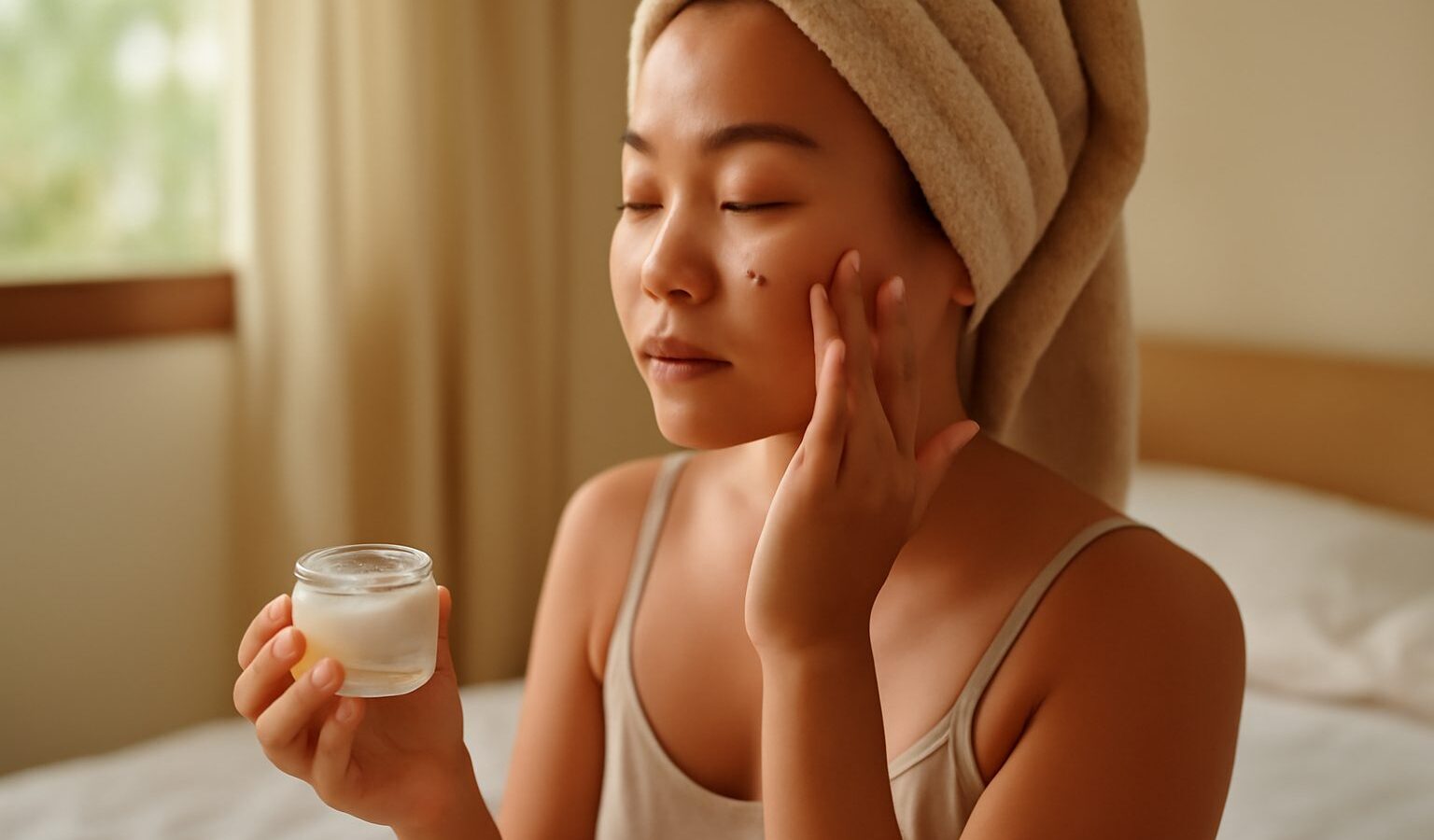
Skin slugging is one of those beauty trends that sounds strange until someone explains it. The name comes from the shiny, slug-like sheen you end up with: you finish your night routine, then coat your face in a thick occlusive layer, usually a petrolatum-based balm or ointment, and sleep in it. In the morning you wash it off and, in theory, wake up with soft, dewy, well-hydrated skin. It has become popular online, and plenty of people swear by it. Whether it is right for you depends a lot on your skin type and, here in Singapore, on the weather. This guide explains how skin slugging works, who tends to benefit, and who is better off skipping it.
This is general information, not medical or dermatological advice. If you have persistent skin concerns, acne, eczema or a reaction to a product, see a doctor or dermatologist, and patch-test anything new before you commit to a full-face layer overnight.
What Skin Slugging Means
At its simplest, slugging is the practice of sealing your skin with an occlusive as the last step of your night routine. An occlusive is a type of ingredient that forms a physical barrier on the surface of the skin and slows the rate at which water evaporates from it. Petrolatum, the ingredient in classic petroleum jelly, is the most common choice because it is very effective at holding water in and is generally non-irritating.
It helps to know the difference between the three ways skincare hydrates:
- Humectants (such as hyaluronic acid and glycerin) draw water into the skin.
- Emollients (such as many facial oils) soften and smooth the surface.
- Occlusives (such as petrolatum) seal the surface so water cannot easily escape.
Slugging uses that last group. It does not add much moisture on its own; it traps whatever hydration is already there. That is why the layers underneath matter so much.
How It Works and Who It Suits
Your skin loses water through its surface all day and all night, a process often called transepidermal water loss. When your barrier is healthy this is slow and normal. When your barrier is stressed, dry or damaged, water escapes faster and skin feels tight, flaky and rough. An occlusive layer slows that loss right down, giving a compromised barrier a calmer overnight environment to recover in.
That makes slugging most useful for people with genuinely dry, dehydrated or flaky skin, or skin that has been left tight and sensitive after travel, strong air-conditioning or overuse of active ingredients. If your skin drinks up moisturiser and still feels parched by morning, a sealing layer once in a while may help it hold on to more of what you apply.
To slug sensibly:
- Cleanse, then apply your usual hydrating serum and moisturiser first, because the occlusive only seals; it does not hydrate.
- Use a thin layer of a plain occlusive balm, not a thick slather.
- Use an old pillowcase, since the balm can transfer and stain.
- Do it occasionally, on nights when skin feels dry, rather than every single night.
Why Singapore’s Humidity Changes the Picture
Most slugging advice comes from people living in cold, dry winter climates, where the air strips moisture from skin and a heavy seal is genuinely welcome. Singapore is the opposite for most of the year: hot, humid and sweaty. The air is already full of moisture, so many people here do not lose water through their skin as quickly, and sleeping under a thick, airtight layer can feel heavy, sticky and uncomfortable.
There is a practical concern too. A heavy occlusive traps not only water but also warmth, sweat, dirt and whatever is on your skin. On a warm, humid night, and often in a bedroom that is only lightly air-conditioned, that can leave skin feeling congested rather than refreshed. For skin that is already oily or prone to breakouts, sealing everything in overnight can make matters worse.
If you still want to try slugging in this climate, a few adjustments help:
- Keep the room cool with air-conditioning or a fan so you sweat less under the layer.
- Reserve it for the occasional dry spell, a flight, or a patch of over-exfoliated skin, rather than a nightly habit.
- Use a genuinely thin layer, and consider slugging only the driest areas, such as around the nose or cheeks, instead of the whole face.
- Cleanse thoroughly in the morning to lift the balm off completely.
Who Should Be Cautious or Skip It
Slugging is not for everyone, and in a humid climate more people fall into the cautious group. Because an occlusive traps whatever is beneath it, it can worsen certain conditions rather than help them.
| Skin type or situation | Slugging verdict | Reason |
|---|---|---|
| Very dry, flaky, tight skin | Often helpful | Occlusive slows water loss and calms the barrier |
| Acne-prone or congested skin | Usually skip | Trapped sweat and oil can trigger breakouts |
| Oily skin in humid weather | Skip or go minimal | Heavy seal feels greasy and can clog pores |
| Skin using strong actives | Be careful | Sealing can intensify actives and irritation |
| Sensitive or reactive skin | Patch-test first | Occlusion can amplify a reaction overnight |
A couple of extra cautions. Never slug over active ingredients such as retinoids or exfoliating acids without care, because sealing them in can increase their strength and the chance of irritation. Do not slug over broken, weeping or infected skin. And if you are pregnant or breastfeeding, or managing a skin condition, check with your own doctor about your overall routine. If slugging leaves you with new spots, redness or itching, stop and let your skin settle; see a doctor if it does not improve.
The Practical Takeaway
Skin slugging is a simple, low-cost idea with a real basis: an occlusive layer slows water loss and can help a dry, stressed barrier recover overnight. The catch is that it was popularised in cold, dry climates, and Singapore is neither. Here it works best as an occasional rescue for genuinely dry or over-exfoliated skin, done with a thin layer in a cool room, rather than a nightly ritual. If your skin is oily, humid-climate sweaty, or prone to breakouts, this trend is one you can comfortably skip in favour of a light, well-sealed moisturiser. As with any new step, patch-test first, pay attention to how your skin responds, and check with a dermatologist if you are treating a specific concern.