
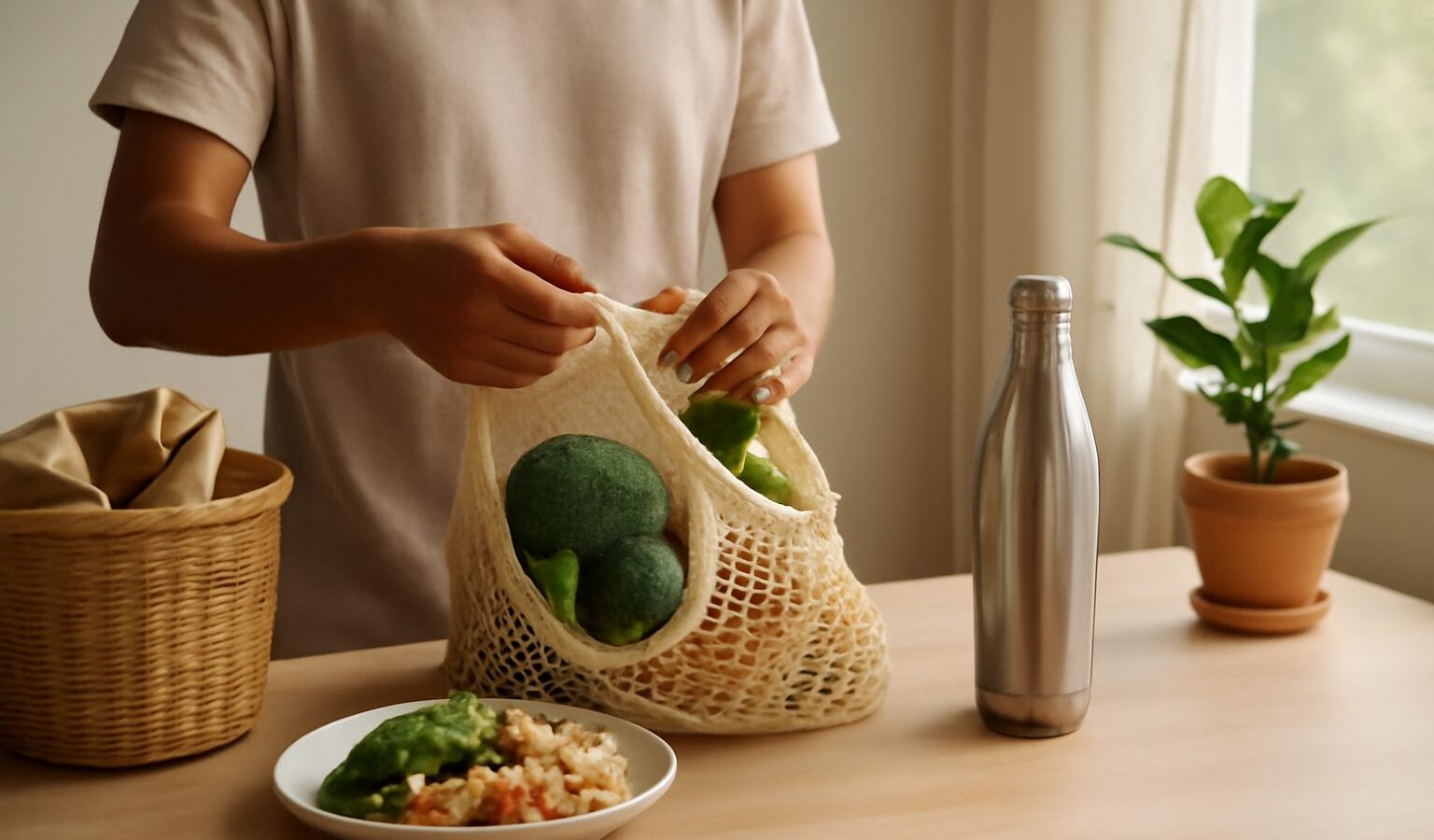
Living more sustainably can feel like a huge project, the kind you keep meaning to start. The good news is that greener living habits in Singapore are mostly made of small, ordinary moments: the bag you grab on the way out, the button you press on the aircon remote, what you do with an empty bottle. None of these single choices will save the planet on their own. Stacked together, day after day, they genuinely add up, and they are far easier to keep going than a dramatic overhaul you abandon in a fortnight.
This guide is a friendly tour of easy habits that fit real life here, in HDB flats, on the MRT and around the neighbourhood. There is no eco-guilt and no purity test. The goal is to help you find a handful of changes that stick, celebrate the wins, and let the rest come naturally over time.
Start With What You Carry
Some of the simplest habits are about the things you bring with you so you refuse the disposable version later. Keep a few reusables where you will actually see them, by the door or in your bag, and they quietly become second nature.
- Bring your own bag. A foldable one that lives in your everyday bag means you are never caught out at the supermarket or wet market.
- Carry a water bottle. Singapore tap water is safe to drink, refill points are common, and you skip buying bottled water in the heat.
- Bring a container or cup. Handy for takeaway or leftovers, and some places are happy to fill your own.
- Refuse the freebies you will not use. The extra straw, the goodie-bag trinket, the flyer. A polite no thanks is a small habit with real effect, because the greenest item is the one never made.
None of this needs to be perfect. Forgetting your bag once does not undo the times you remembered. The point is the pattern, not the occasional slip.
Move and Power Your Home More Lightly
How you get around and how you run your flat are two of the biggest everyday levers, and small tweaks here are easy to live with.
For getting around, leaning on public transport, walking or cycling for shorter trips is one of the most effective habits available in a compact city like ours. The MRT and bus network reaches most places, and a short walk often beats waiting in traffic anyway.
At home, a few painless energy habits go a long way. Setting the aircon a degree or two warmer still keeps you comfortable while using less electricity, and a fan helps you feel cooler for very little power. Switching off appliances at the wall rather than leaving them on standby stops the quiet trickle of energy from devices you are not even using. Using natural light in the day and switching off lights in empty rooms rounds it out. For guidance on appliance efficiency and any current household support schemes, check trusted sources such as the Energy Market Authority and the National Environment Agency rather than relying on fixed figures, since the details change.
Water counts too. PUB encourages simple saving habits, and small ones fit easily into a day: shorter showers, turning off the tap while brushing or soaping, and running the washing machine with full loads. Treated as defaults rather than sacrifices, they barely register as effort.
Waste Less and Choose Thoughtfully
A lot of greener living is really about wasting less, of food, of stuff and of packaging. These habits also tend to save money, which makes them easy to keep.
- Sort your recycling right. Rinse containers, keep them dry, and put only accepted items in the blue bin. When unsure whether something belongs, check NEA’s guidance, because wrong items can spoil a whole batch.
- Reduce food waste. Plan meals loosely, store food well, use up leftovers and buy only what you will eat. Wasted food is wasted money and effort too.
- Eat more plants sometimes. You do not have to give anything up. Simply having a few more plant-forward meals each week is a gentle, flexible habit. Treat this as general lifestyle information, and speak to a doctor or dietitian about your own nutrition needs.
- Buy less, and buy second-hand. Pausing before a purchase, and looking at pre-loved options first, cuts waste at the source and is often kinder to your wallet.
- Choose local when it is easy. Picking up local produce at the wet market or supermarket supports nearby growers and can mean fresher food.
The theme running through all of these is gentleness. You are nudging your defaults, not policing every choice.
A Friendly Starter Checklist
If a long list feels like a lot, do not try to do everything at once. Pick two or three habits that feel genuinely easy for you and let them settle before adding more. Use this table to match an everyday moment to a small greener habit.
| Daily moment | Greener habit |
|---|---|
| Heading out the door | Grab your reusable bag, bottle and cup |
| Making a short trip | Walk, cycle or take the MRT or bus |
| Feeling warm at home | Nudge the aircon up a degree and switch on a fan |
| Finishing with an appliance | Switch it off at the wall, not just standby |
| Emptying a bottle or container | Rinse, dry and recycle it correctly |
| Planning meals | Buy what you will use and add a plant-based day |
| Tempted to buy something | Pause, and check second-hand or local first |
| Offered a freebie | Politely refuse what you will not use |
| Needing a breather | Spend time in a park or green space nearby |
That last one matters more than it looks. Spending time outdoors in Singapore’s parks and greenery, part of the City in Nature vision cared for by NParks, is good for you and quietly builds the sense of connection that makes all the other habits feel worthwhile.
Let Small Wins Build
The most sustainable habit of all is the one you can keep. Perfection is not the target, and beating yourself up over a plastic bag or a long shower helps no one. Notice what you are already doing well, add one small change when you are ready, and give it time to become automatic. Green living is not a finish line you cross, but a direction you keep leaning towards, one easy choice at a time.
Explore more
If you want habits that are kind to your wallet as well as the planet, read our guide to sustainable living on a budget in Singapore. And to see how these everyday choices connect to the bigger picture, reducing your carbon footprint in Singapore shows which changes tend to matter most.