
The curtain comes down, the applause fades, and you would love a chance to say thank you to the lead actor, the pianist or the band whose music you have played for years. Meeting performers after a show can be a lovely end to a night out, but it works best when fans understand how it actually happens and what is expected. Good stage door etiquette protects the performers’ rest, keeps the venue running smoothly and makes the experience pleasant for everyone waiting.
This guide focuses on what happens after the final bow: the ways fans meet artists at Singapore venues and how to behave once you are there. If you want tips on behaviour during the performance itself, such as phones, singing along and seat manners, that is a separate topic.
How Post-Show Meetings Usually Work in Singapore
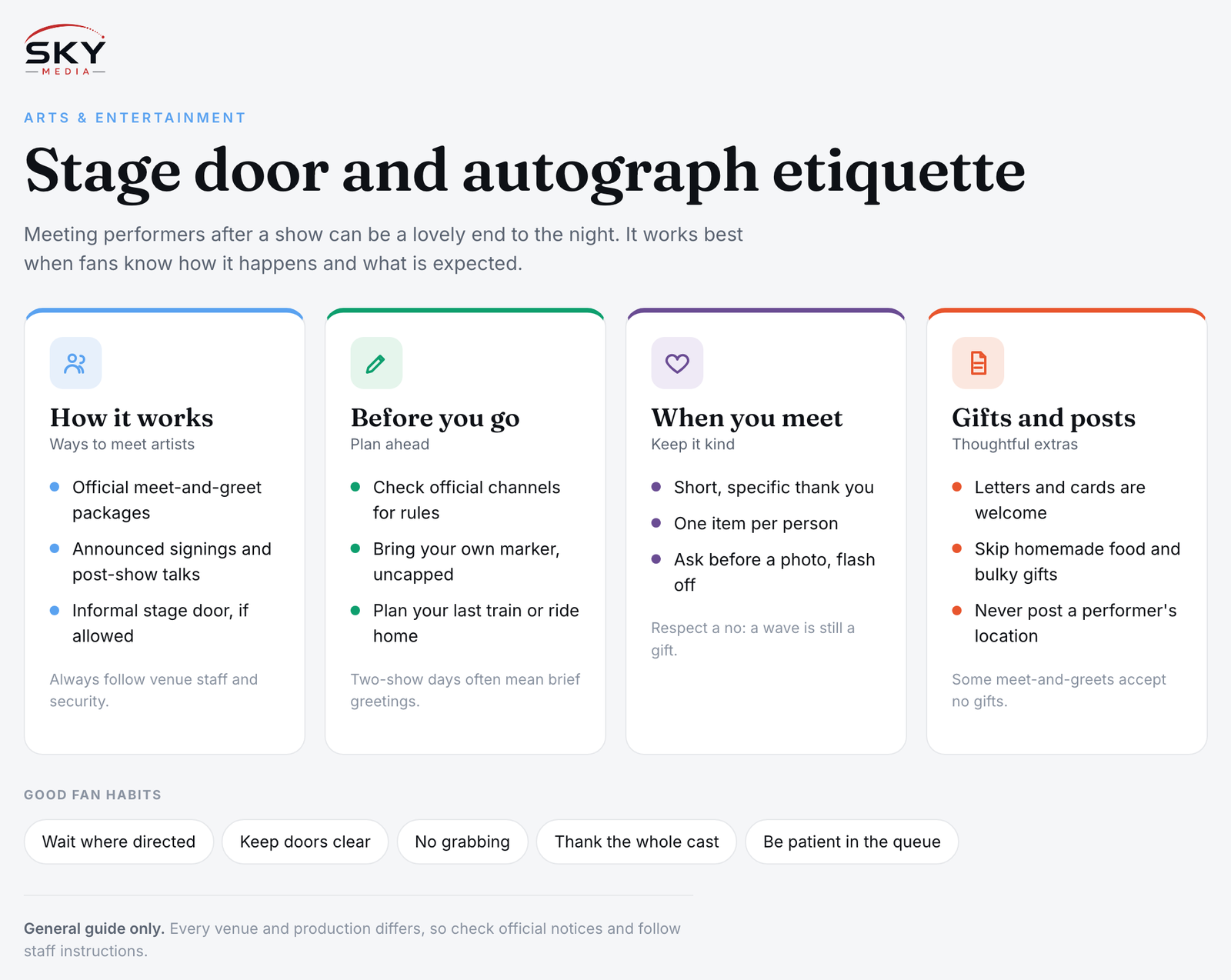
There is no single system. How, and whether, you can meet a performer depends on the production, the artist and the venue’s security arrangements. The common routes are:
- Official meet-and-greet packages. For many concerts and some touring shows, promoters sell premium ticket tiers that include a meet-and-greet, photo session or signing. These are scheduled, supervised and usually have strict rules on time, gifts and photography. If meeting the artist matters a lot to you, this is the most reliable route. Read the package terms carefully before buying.
- Organised signings. Some performers do signing sessions in the foyer after a show, at a merchandise counter or at a separate event such as a book or album launch. These are announced in advance by the venue, promoter or the artist’s official channels.
- Post-show talks. Theatre companies and festivals sometimes hold short talks after selected performances where the cast or creative team answer questions on stage. You may not get an autograph, but you do get a genuine conversation.
- The informal stage door. Most theatres have a performers’ entrance separate from the main audience doors. In some places, especially for musical theatre tours, fans wait near it after the show. Whether this is possible depends entirely on the venue. Some venues in Singapore route performers through secure areas or car parks with no public access, and some productions ask fans not to wait.
The golden rule: follow the instructions of venue staff and security. If they say there is no stage door access, or ask you to wait in a particular spot, accept it graciously. They are protecting the performers and keeping exits clear.
Before You Go: Planning a Possible Meeting
A little homework saves disappointment.
- Check official channels. Look at the production’s website, the venue’s notices and the artist’s verified social media for any announced signings or rules about waiting after the show.
- Ask front-of-house staff politely. Ushers may be able to tell you whether performers usually come out to greet fans. Do not press if they say they cannot share that.
- Think about timing. Performers often need time to change, remove make-up and cool down. On days with two shows, they may need to rest and eat between them, so a brief greeting or none at all is common.
- Plan your journey home. Waiting can take a while. Check the last train and bus times or plan a ride home, especially for late shows.
- Bring your own pen. A permanent marker works on programmes and glossy photos; a silver or gold marker shows up on dark covers. Uncap it before the performer reaches you.
Stage Door Do’s and Don’ts
| Do | Don’t |
|---|---|
| Wait quietly where staff direct you | Block doors, driveways or footpaths |
| Have one item and a pen ready | Bring a stack of items to be signed |
| Ask before taking a photo or selfie | Push a phone into anyone’s face |
| Say a short, specific thank you | Hold up the line with a long story |
| Accept it if a performer only waves | Shout, chase or follow them to a car |
| Let children go forward with a parent | Push past others to get to the front |
Etiquette Once You Meet a Performer
When the moment comes, it may last only a few seconds. Make it count by keeping it simple and kind.
Keep it brief. Performers may be greeting dozens of people. A sincere line such as “Your second-act song made my mother cry, thank you” means more than a long speech. If they want to chat, they will.
One item per person. Asking for a single autograph is the accepted norm. Requests for several signatures, especially on items that look like they are for resale, are frowned upon and may lead a performer to stop signing altogether.
Ask for photos, do not assume. Some performers are happy to pose; others are tired, unwell, or simply prefer not to. Ask, “Would you mind a quick photo?” and accept the answer. Turn off the flash, and have your camera ready so you do not hold up the queue.
Respect a no. A performer who walks straight to a waiting car owes nobody an explanation. They may be unwell, protecting their voice, catching a flight or just exhausted. A wave and a smile is still a gift.
Mind your personal space. Do not grab, hug or touch someone without clear permission. Keep your hands to yourself and your bag out of the way.
Treat everyone equally. Supporting cast, musicians, understudies and swings work just as hard as the headliner. Thanking them is warmly appreciated, and they are often more relaxed than the stars.
Be considerate in the queue. Let people who have been waiting longer go first, and step aside once you have had your moment. If there are children or elderly fans, a little patience goes a long way.
Gifts, Letters and Social Media
Fans often want to give something back. Keep it thoughtful and practical.
- Letters and cards are almost always welcome and easy to carry. Write your name if you would like a reply, but never expect one.
- Small gifts are fine if light and portable. Avoid large items, fragile objects, live flowers in bulky arrangements or anything that requires a decision from the performer on the spot.
- Homemade food is usually best avoided. Many performers will not eat it for health, allergy or security reasons. Some productions and official meet-and-greets do not accept gifts at all, so check the rules first.
- Do not share private details. If you happen to see a performer outside the venue, do not post their location in real time or photos of where they are staying. Their safety and privacy come first.
- Tag thoughtfully. Posting a photo you took with permission and a kind caption is lovely. Avoid posting unflattering candid shots or videos taken without consent.
Bringing Children and First-Timers
A meeting with a favourite character from a family show can be magical for a child. To keep it calm:
- Explain beforehand that the performer may only have time to wave, so a short greeting is not a disappointment.
- Keep children close to you and away from doors and moving vehicles.
- Help them prepare a short sentence to say, such as “Thank you, I loved the show.”
- Remember that performers playing a character may be out of costume and look different from on stage.
Fans who go regularly to theatre and live music often say the best encounters are the quiet ones: a quick word of thanks and a genuine smile. If you enjoy connecting with artists, you may also like learning about buskers and street performers in Singapore, where friendly interaction is part of the art, or even stepping into the spotlight yourself by learning how to join Chingay as a performer or volunteer.
Good stage door etiquette comes down to patience, respect and gratitude. Follow venue instructions, keep requests small, and accept whatever time a performer can give. Do that, and you will leave with a memory worth keeping, whether it is a signed programme or simply a wave across the car park.
Further reading: How to Use the SG Culture Pass on Shows, Museums and Classes · K-Pop Fan Meetings in Singapore: Tickets, Hi-Touch and What to Expect · What Happens If a Concert or Show Is Cancelled: Refunds in Singapore