
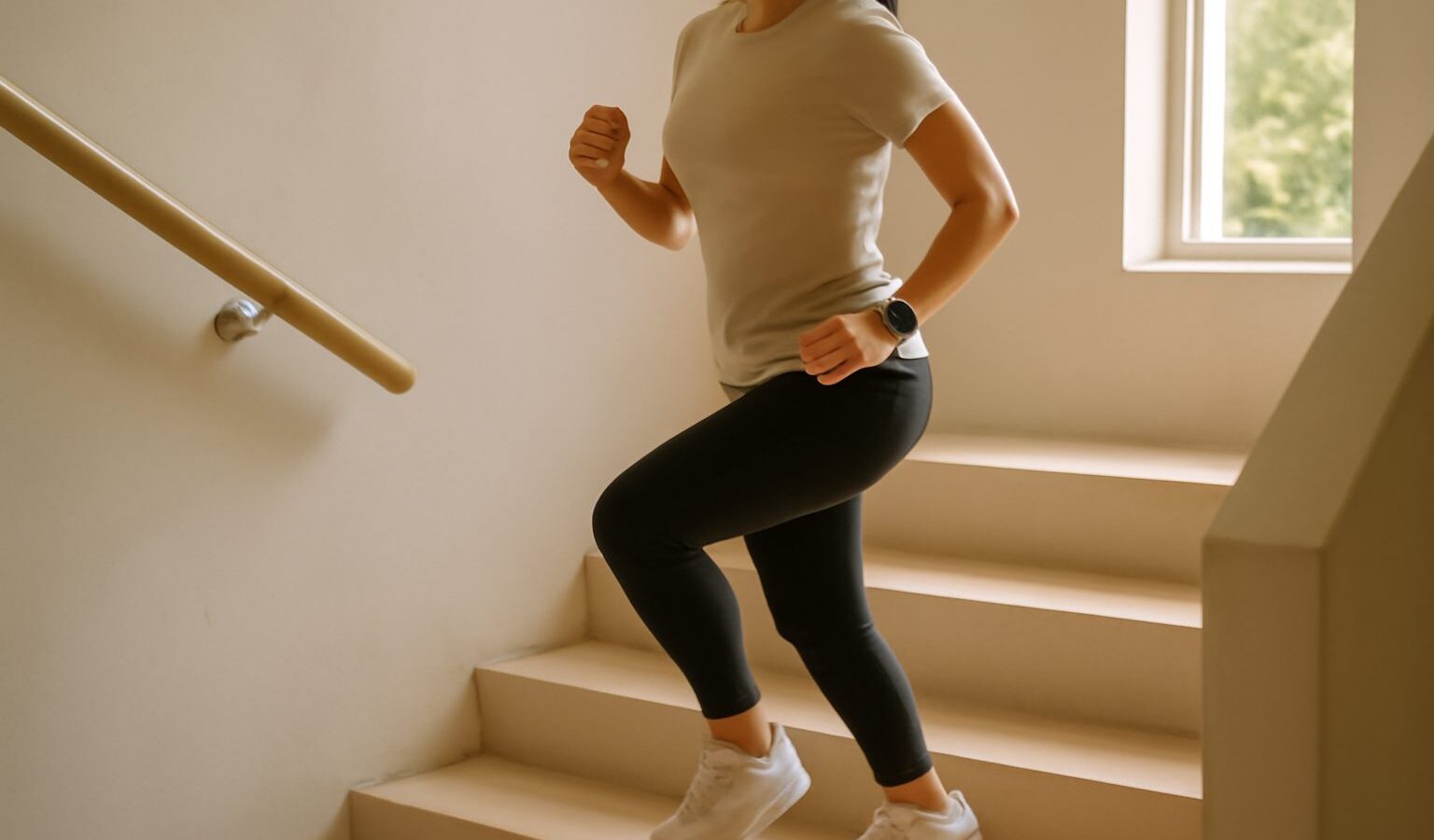
Look around your neighbourhood and you may be standing next to one of the best free pieces of gym equipment there is. A stair climbing workout in Singapore costs nothing, needs no membership, and is never more than a short walk away thanks to our HDB blocks, overhead bridges and stadium stands. It is a brilliant way to build cardiovascular fitness and leg strength using nothing but your own body weight. This guide explains why stairs work so well, how to start safely, and how to look after your knees along the way.
A quick note before you begin. This article is general fitness information, not medical advice. If you have a heart condition, knee problems, or any health concern, or you are new to exercise, check with a doctor before starting a new routine.
Why Stairs Are Such Great Exercise
Climbing stairs gets your heart and lungs working quickly. Because you are lifting your own body weight against gravity with every step, it raises your heart rate faster than walking on the flat, which makes it an efficient way to build cardiovascular fitness in a short time.
It also strengthens the big muscles of your lower body. Your glutes, thighs and calves all work hard to power you upwards, so regular stair sessions build useful, functional leg strength. On top of that, stairs are weight bearing, which is good for bone health, and the workout is easy to scale. You simply climb more slowly or fewer flights when you need to, and pick up the pace as you get fitter.
Where to Climb in Singapore
One of the joys of stair training here is how easy it is to find somewhere to do it. Your own HDB block is the obvious starting point, with a sheltered, well lit stairwell right on your doorstep, which is handy on a rainy day. Just be considerate of neighbours and keep to a sensible volume and hour.
If you prefer open air, many public stadiums have tiered seating stands that are popular with runners and fitness groups. Parks and nature spots such as hilly trails and pedestrian overhead bridges also offer natural climbing. Whichever you choose, pick somewhere with good footing, decent lighting and enough space to move safely.
| Location | Good for |
|---|---|
| HDB stairwell | Convenient, sheltered, close to home |
| Stadium stands | Open air, longer sessions, wider steps |
| Overhead bridges | Quick sessions on your commute route |
| Park slopes and trails | Softer surfaces and scenery |
Warm Up First
Never rush straight into hard climbing from cold. A short warm up prepares your muscles and joints, raises your heart rate gradually and lowers your risk of strains. It only takes a few minutes and is well worth it.
Start with three to five minutes of easy walking on the flat to get your blood moving. Add some gentle leg swings, ankle circles and a few slow, controlled lunges or squats to loosen your hips, knees and ankles. Then begin your stair session at a relaxed pace for the first minute or two before building up. Your body will thank you, and you will feel stronger once you get going.
A Simple Beginner Session
You do not need a complicated plan to benefit from stairs. The most important rule for beginners is to ease in gently. Start with a modest number of flights, see how your body feels the next day, and build up gradually over the weeks rather than going all out on day one.
A sensible first session might look like this. After your warm up, walk up a flight of stairs at a steady, controlled pace, then walk back down slowly to recover. Repeat this for a set number of rounds that feels challenging but manageable, resting whenever you need to. As you get fitter, you can add more rounds, climb a little faster, or take on a taller set of stairs. There is no need to run or take two steps at a time when you are starting out.
Listen to your breathing and pace yourself. You should feel worked but still able to keep going in a controlled way, not gasping or dizzy. If you feel unwell at any point, stop and rest.
Mind Your Knees
Stairs are demanding on the knees, particularly on the way down, so a little care goes a long way. The good news is that a few simple habits keep the workout knee friendly for most people.
Going up is generally gentler on the joints than coming down, so many beginners walk up and then take the lift or walk down slowly and carefully to reduce the pounding. When you do descend on foot, control each step rather than dropping heavily, and use the handrail for balance. Keep your steps light, land softly, and avoid letting your knee collapse inwards.
If you feel sharp knee pain, that is a signal to stop for the day rather than push through. Building strength gradually, wearing supportive shoes and not increasing your volume too quickly all help protect your knees over time. Anyone with existing knee trouble should get advice from a doctor or physiotherapist before taking on lots of stairs.
Building the Habit Safely
The best workout is the one you keep doing, so aim to make stairs a sustainable part of your week rather than a one off burst. A couple of short sessions a week is plenty to start, with a rest day in between to let your legs recover.
Progress slowly and let your body adapt. Adding a little more each week, whether that is another round, a slightly faster pace or a taller climb, is far safer than a sudden jump in effort that leaves you sore or injured. Keep well hydrated, especially in our warm and humid weather, and choose cooler times of day such as early morning or evening if you are climbing outdoors.
You can also weave stairs into everyday life. Taking the steps instead of the lift or escalator when it is practical adds up over time and keeps you moving without needing a formal session.
The Simple Takeaway
A stair climbing workout is one of the most accessible ways to build fitness. It is free, close to home, effective for both your heart and your legs, and easy to scale to your level. With our abundance of HDB blocks and stadiums, you are never short of somewhere to climb.
Just remember the essentials. Warm up first, ease in gently, mind your knees on the way down, and build up gradually. Do that, and a humble flight of stairs becomes a genuinely powerful tool for your health.
Explore more
The Health Benefits of Walking More
Why Rest Days Matter
Foam Rolling for Recovery
Active Recovery Explained