
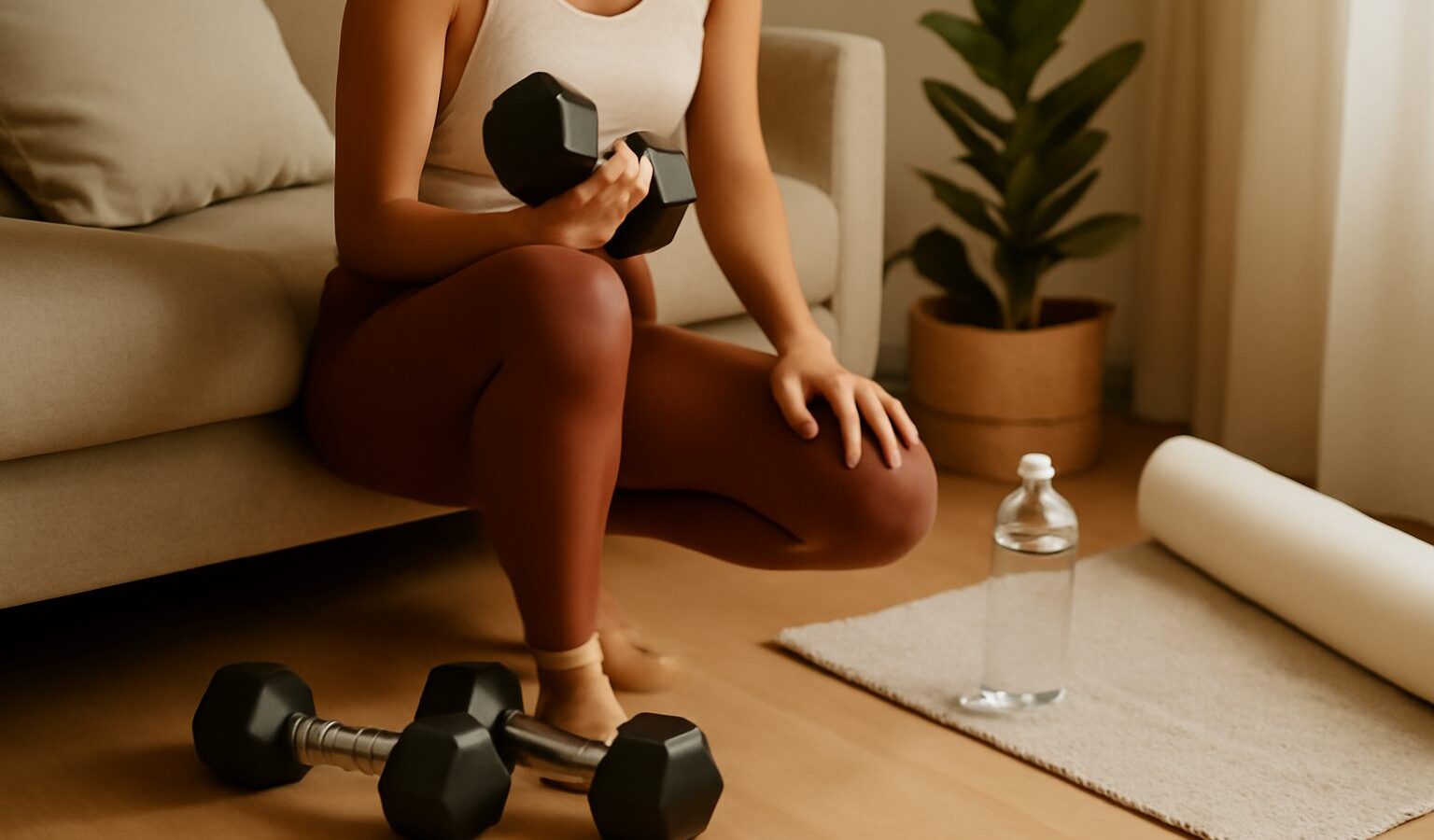
Dumbbell workouts at home are the sweet spot for many Singaporeans who want to get stronger without a gym membership or a spare room full of equipment. A single pair of dumbbells, or an adjustable set, tucks neatly into an HDB flat and lets you train your entire body a few steps from your sofa. That convenience matters here, where a hot, humid commute to a crowded gym can be the very thing that derails a new routine. This guide covers the handful of movements that give you the most for your effort, and how to string them into a simple, balanced session.
If you are new to exercise, older, sedentary, pregnant, or managing any injury or health condition, check with a doctor before you begin. This is general information, not personalised coaching. With any weight, the rule is the same: start light, master the movement before adding load, keep a neutral spine, and stop if you feel sharp pain rather than ordinary muscle effort.
Why Dumbbells Suit Home Training
Dumbbells are forgiving and versatile, which makes them ideal for training at home. Because each hand works independently, they let your body move naturally and help even out strength differences between your left and right sides. They also store easily, so you are not committing a whole room to a rack and barbell. For a small flat, that practicality is the whole point.
Just as importantly, dumbbells scale with you. You can start with a light pair, focus on clean technique, and add small increments over months as you get stronger. The same set can be used for gentle rehabilitation-style movements or challenging full-body work, depending on how you load and combine the exercises. That range means a modest investment keeps paying off for years.
The Core Dumbbell Movements to Learn
A complete home workout does not need dozens of exercises. A few well-chosen movements cover your whole body. Learn these patterns with light weight first.
- Goblet squat: hold one dumbbell vertically at your chest and squat, hips back and chest up. Trains your legs and core.
- Dumbbell Romanian deadlift: hinge at the hips with a soft knee bend, lowering the weights down your thighs with a flat back. Trains your hamstrings and glutes.
- Dumbbell floor press or push up: press the weights up while lying on the floor, or do push ups for your chest, shoulders and triceps.
- One-arm dumbbell row: brace a hand and knee on a sturdy chair, and row one dumbbell to your ribs with a flat back. Trains your back.
- Overhead press: press the dumbbells from your shoulders to overhead, keeping your ribs down and core braced.
- Reverse lunge: step back into a lunge holding the weights, working each leg and your balance.
Practise each with a manageable weight until the pattern feels smooth. Good technique now prevents the aches and plateaus that come from rushing to heavier dumbbells too soon.
A few shared cues apply across all of these. Keep a neutral spine on anything that involves hinging or squatting, so your back stays flat rather than rounding. Brace your core before each repetition, as if preparing for a light nudge to the stomach, which steadies your trunk and protects your lower back. Control the lowering phase rather than letting the weights drop, because that slower, controlled portion is where a lot of the strength is built. And keep your movements smooth rather than jerky, since yanking a dumbbell up with momentum shifts the effort away from the muscle and onto your joints. If any of these cues break down, the weight is too heavy for now, and there is no shame in dropping down a size.
Building a Simple Full-Body Session
You can turn those movements into a balanced workout by covering a squat, a hinge, a push and a pull each session. Here is a sensible starting structure using general ranges rather than prescribed weights.
| Exercise | Pattern | Suggested effort |
|---|---|---|
| Goblet squat | Legs, squat pattern | A weight you can control for moderate reps |
| Romanian deadlift | Hips, hinge pattern | Light enough to keep a flat back throughout |
| Floor press or push up | Upper body push | Stop a rep or two before form breaks down |
| One-arm row | Upper body pull | Controlled, no jerking the weight up |
| Reverse lunge | Legs, balance | Light until your balance feels steady |
Move through the exercises with rest between sets, and aim for a level of effort where the last couple of repetitions feel challenging but your form stays clean. Two or three sessions a week, with rest days in between, is plenty for a beginner. If you are unsure how hard to push, err on the easier side and build up.
You can run these as straight sets, finishing all the sets of one exercise before moving to the next, which is the simplest approach for a beginner learning the movements. As you grow more comfortable, pairing a push with a pull, or a squat with a hinge, back to back saves time and keeps your heart rate up, which suits a quick session before work. Whichever way you organise it, the aim is the same: cover your legs, hips, pushing and pulling in a balanced way, so no part of your body gets neglected. Rest around a minute or two between harder sets, and take a little longer if you feel you need it. There is no prize for rushing, and a rested muscle performs its next set with far better form.
Progressing and Staying Safe Over Time
The way to keep improving is progressive overload, which for dumbbells might mean adding a repetition, slowing your tempo, or nudging up to the next weight once your current load feels comfortable for all your sets. Small steps beat big jumps. Chasing a heavy dumbbell before your technique is ready is the fastest route to a tweaked back or shoulder.
Warm up before every session with a few minutes of easy movement, as covered in warming up and cooling down. This matters even at home, and doubly so in our climate, so switch on a fan, keep water within reach, and train in the cooler morning or evening if your flat gets stuffy. Sweat adds up quickly in the humidity, so rehydrate as you go.
To keep your efforts organised, slot these workouts into a plan. A framework like building your first workout routine helps you set training days and track progress, and as you advance you can explore choosing a training split to structure your week. If you want to add variety with minimal kit, resistance band exercises pair well with dumbbells and travel even more easily.
Start light, learn the movements properly, and let the weight climb slowly. With one modest pair of dumbbells and a clear patch of floor, you can build real, lasting strength at home, no gym and no excuses about the weather required.