

Singapore is a bright, busy city, so many parents assume stargazing here is a lost cause. It is not. With realistic expectations, a little planning and the right spot, children can see the Moon’s craters, bright planets, well-known star patterns and the occasional meteor. This guide covers the best places to stargaze with kids in Singapore, what you can actually expect to see, and simple ways to turn an evening out into a learning moment.
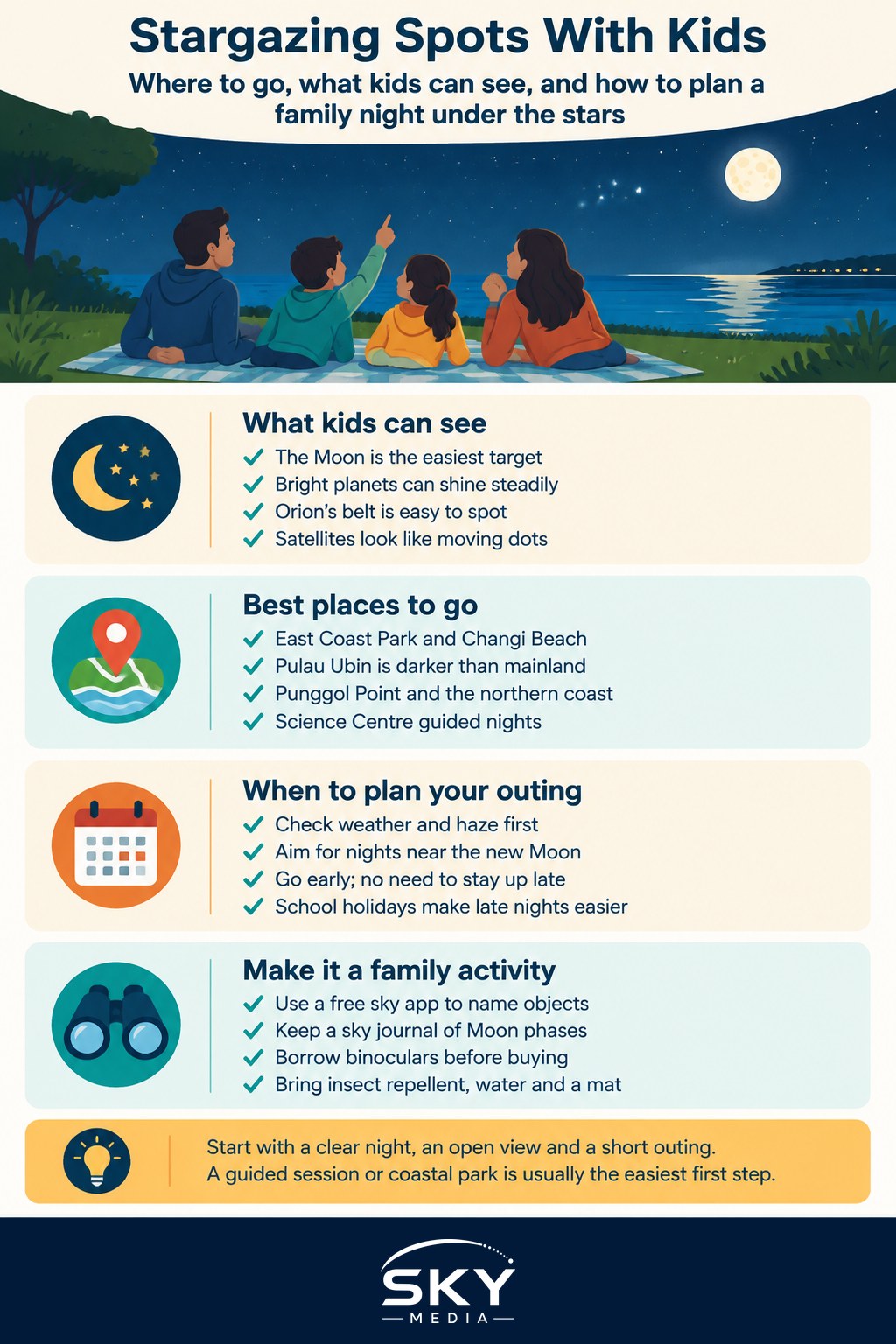
What Kids Can Realistically See From Singapore
Light pollution means you will not see the Milky Way from most of the island. Set expectations before you go, so children are excited rather than disappointed.
What you can usually see on a clear night:
- The Moon. The easiest and most rewarding target. Even basic binoculars show craters and the line between light and dark.
- Bright planets. Venus, Jupiter and Saturn often appear as steady, bright points. Through a small telescope, kids may spot Jupiter’s moons or Saturn’s rings, which tends to be a highlight.
- Bright stars and patterns. Orion is a favourite for children because its belt of three stars is easy to find at certain times of year.
- Satellites and the International Space Station. These look like steady moving dots. Free apps and websites can tell you when a bright pass is due.
- Meteor showers. Most need dark skies, but a bright meteor can still be seen from darker parts of Singapore during a major shower.
Being near the equator is a bonus: over the year, you can see stars from both the northern and southern skies, something children in many other countries cannot do from home.
The Best Places to Stargaze With Kids
The general rule is simple: the further you are from bright lights and the wider your view of the sky, the better. Coastal spots facing the sea usually work well because there is less light in one direction.
- East Coast Park and Changi Beach. Wide, open views over the sea, plenty of space for a mat, and toilets and food nearby. The further east along the coast, the darker it tends to get.
- Pulau Ubin. Darker than mainland Singapore because there is little development. Going at night needs careful planning around ferry availability, so check before you go, and many families prefer to watch the sunset and early evening sky before heading back.
- Punggol Point and the northern coast. Open water views and fewer tall buildings in some directions.
- Science Centre Singapore observatory nights. The Science Centre has run public stargazing sessions with telescopes and guides. This is the easiest option for younger children because experts help them find targets. Check the Science Centre’s official website for current schedules and booking details, as arrangements can change.
- Open fields in your own neighbourhood. A school field, park or rooftop garden away from strong lamps can work surprisingly well for the Moon and planets. It also means you can go home quickly if a child gets tired.
- Sentosa beaches. Sea-facing views to the south, though nearby resort lighting varies.
Families who enjoy early-morning outings can pair this with our guide to the best sunrise spots with kids, as many of the same coastal locations work for both.
Comparing Stargazing Options for Families
| Option | Best for | Sky darkness | Child-friendliness |
|---|---|---|---|
| Guided observatory night | First-timers and younger kids | Moderate, but telescopes help | High, with experts on hand |
| Coastal parks and beaches | Relaxed family picnics | Moderate, darker towards the sea | High, with toilets and space to run |
| Pulau Ubin | Older kids and adventurous families | Darker than mainland | Medium, needs transport planning |
| Neighbourhood field or rooftop | Quick weeknight looks at the Moon | Lower, but convenient | High, close to home |
For a first outing, a guided session or a coastal park is usually the gentlest start. Save island trips for when children are older and used to being out late.
Timing Your Stargazing Night
Good timing makes a bigger difference than location.
- Watch the weather. Singapore’s skies are often hazy or cloudy. Check the forecast from the Meteorological Service Singapore (MSS) and be ready to reschedule. Clear nights after a daytime storm can be surprisingly good.
- Check the Moon phase. A full Moon is great for looking at the Moon itself, but it washes out faint stars. For stars and planets, aim for nights around the new Moon.
- Go early for little ones. You do not need to stay up past midnight. Planets and bright stars are often visible soon after the sky gets fully dark.
- Avoid haze periods. When haze is present, visibility drops and outdoor activity may not be advisable. Check NEA’s air quality readings before heading out.
- Use school holidays. Late nights are easier during school breaks, such as the year-end holidays.
Turning Stargazing Into a Learning Experience
Stargazing is a natural way to spark curiosity about science, maths and stories from different cultures.
- Use a free sky app. Many apps let children point a phone at the sky to name stars and planets. Switch to red-light or night mode to protect night vision.
- Let kids keep a sky journal. Sketch the Moon’s shape every few nights for a month. Children see the phases change and learn why.
- Share star stories. Different cultures have their own names and legends for the same stars. In Chinese tradition, for example, the story of the Cowherd and the Weaver Girl is linked to the stars Altair and Vega. Ask grandparents what stories they grew up with.
- Try simple maths. Older kids can count how many meteors they spot in ten minutes, or compare how high the Moon is at different times.
- Borrow before you buy. A pair of binoculars is often a better first tool than a cheap telescope. Check whether your local library offers astronomy books or learning kits.
If your child enjoys photography, try capturing the Moon on a phone held against binoculars. Our guide to the best places to photograph in Singapore has more ideas for budding photographers.
Packing and Safety Tips for Families
A little preparation keeps the evening comfortable.
- Bring insect repellent. Coastal and green areas can have mosquitoes after dark.
- Pack a mat, light snacks and water. Lying down is the most comfortable way to look up.
- Use red torches. Cover a torch with red cellophane so your eyes stay adjusted to the dark.
- Dress for comfort. Light long sleeves help with insects. A light jacket helps on breezy beaches.
- Stay near the group. Agree on a meeting point, and give younger kids a small light so they are easy to spot.
- Respect the space. Keep noise down in residential areas, follow park and NParks rules, and take all rubbish home.
- Never look at the Sun through binoculars or a telescope, even at sunset.
Making Stargazing a Family Habit
You do not need expensive equipment or a remote location to start. Pick a clear night, choose a spot with an open view, and spend half an hour looking up together. Over a few months, children will start to recognise the Moon’s phases, spot planets on their own and ask big questions about space.
The best places to stargaze are often simply the ones you return to, where your family learns the sky one clear night at a time.
Frequently Asked Questions
When is the best time of night to stargaze in Singapore with children? Early evening works well, soon after the sky is fully dark, since planets and bright stars are often visible by then. You do not need to stay past midnight. School holidays make late nights easier, and nights around the new Moon are better for stars.
Should I buy a telescope or binoculars for a child? Binoculars are usually the better first tool. They show the Moon’s craters and are easy for kids to hold and use. A cheap telescope can frustrate beginners, so try a guided session or borrow equipment before spending money.
Can we stargaze when the weather is hazy in Singapore? Haze cuts visibility and outdoor activity may not be advisable, so check NEA’s air quality readings first. Also look at the Meteorological Service Singapore forecast. Clear nights after a daytime storm can be surprisingly good, so be ready to reschedule.
How do I keep a child interested if we cannot see many stars? Focus on the Moon, bright planets and passing satellites, which are easy to spot. Let your child keep a sky journal, sketch the Moon every few nights, or use a free sky app. Sharing star stories from grandparents also helps.
Is it safe to look at the Sun through binoculars at sunset? No. Never look at the Sun through binoculars or a telescope, even at sunset, as it can damage eyes. Keep stargazing to night-time targets and supervise children closely whenever optical equipment is in use.