
Few meals capture the warmth of a Singapore gathering quite like a steamboat. Steamboat in Singapore is the ritual of gathering around a bubbling pot, cooking fresh ingredients together at the table, and eating slowly while everyone talks over the steam. It is comfort food, a social occasion, and a small performance all at once. Whether you grew up dipping prawns into a shared pot or you have just arrived and keep seeing “hotpot Singapore” pop up on your feed, this guide walks you through the formats, the soup bases, the ingredients, the etiquette, and how to host a good one at home.
What steamboat and hotpot actually mean here
“Steamboat” and “hotpot” describe the same basic idea: a pot of simmering broth kept hot at the centre of the table, into which diners cook raw ingredients themselves. “Steamboat” is the older, homelier term you will hear from Singaporean and Malaysian families, while “hotpot” is the more common label for the Chinese restaurant style, especially the fiery Sichuan version. In practice, people use the words interchangeably.
The appeal is communal dining in its purest form. Nobody is served a finished plate. Instead, everyone shares the same pot, drops things in, fishes them out, and looks after one another as the meal unfolds. That is why steamboat is the default for reunions, birthdays, and especially Chinese New Year, when families crowd around the table on the eve of the festival. The round pot, the shared broth, and the unhurried pace all quietly stand for togetherness.
The main formats you will meet
Singapore’s version of this dish borrows from several culinary traditions, so you will come across a few distinct styles.
- Traditional Chinese steamboat. The classic home and restaurant format, built on a comforting, savoury broth. Ingredients are simmered gently, and the emphasis is on freshness and a clean, warming flavour rather than heat.
- Sichuan mala hotpot. The bold, numbing-and-spicy style flavoured with dried chillies and Sichuan peppercorns. It has a devoted following, and many places offer it in a divided pot so the spice lovers and the spice-averse can share one table happily.
- Thai-style mookata. A hybrid grill-and-steamboat that sits over a charcoal burner. A domed metal plate in the centre is used to grill meat, while a moat of broth around the edge simmers vegetables and noodles. Fat from the grilling meat drips down to flavour the soup, which is part of the charm of mookata.
- Buffet versus a la carte. Buffet steamboat gives you a fixed price and free rein to keep ordering rounds of ingredients, which suits big, hungry groups. A la carte lets you order only what you want, which tends to be calmer and better for smaller tables who prefer quality over quantity.
Many restaurants combine ideas, offering a divided pot with two soup bases, a barbecue plate on the side, or a conveyor belt delivering plated ingredients. Do not feel you have to pick a “correct” one. Half the fun is trying different formats over time.
Choosing your soup base
The soup base is the soul of the meal, and a good one carries everything cooked in it. If you are sharing a divided pot, a common and sensible move is to pair one mild broth with one bolder broth so there is something for everyone.
Popular broths
- Clear or chicken broth. Light, savoury, and forgiving. It lets fresh seafood and vegetables taste like themselves, and it is the easiest base for newcomers and children.
- Herbal broth. Simmered with Chinese herbs for a warming, slightly medicinal depth. Many people find it especially comforting.
- Tomato broth. Gently sweet and tangy, popular with families and anyone who wants flavour without heat.
- Mala broth. The numbing, spicy Sichuan base for those who like a kick. You can usually ask for mild, medium, or hot.
- Laksa or curry-style broth. A local, coconut-rich twist that leans into Southeast Asian flavours.
A quick word of caution: the broth reduces and gets saltier and more concentrated as the night goes on, because you keep cooking in it. Top it up with hot water or plain stock now and then to keep it drinkable and balanced.
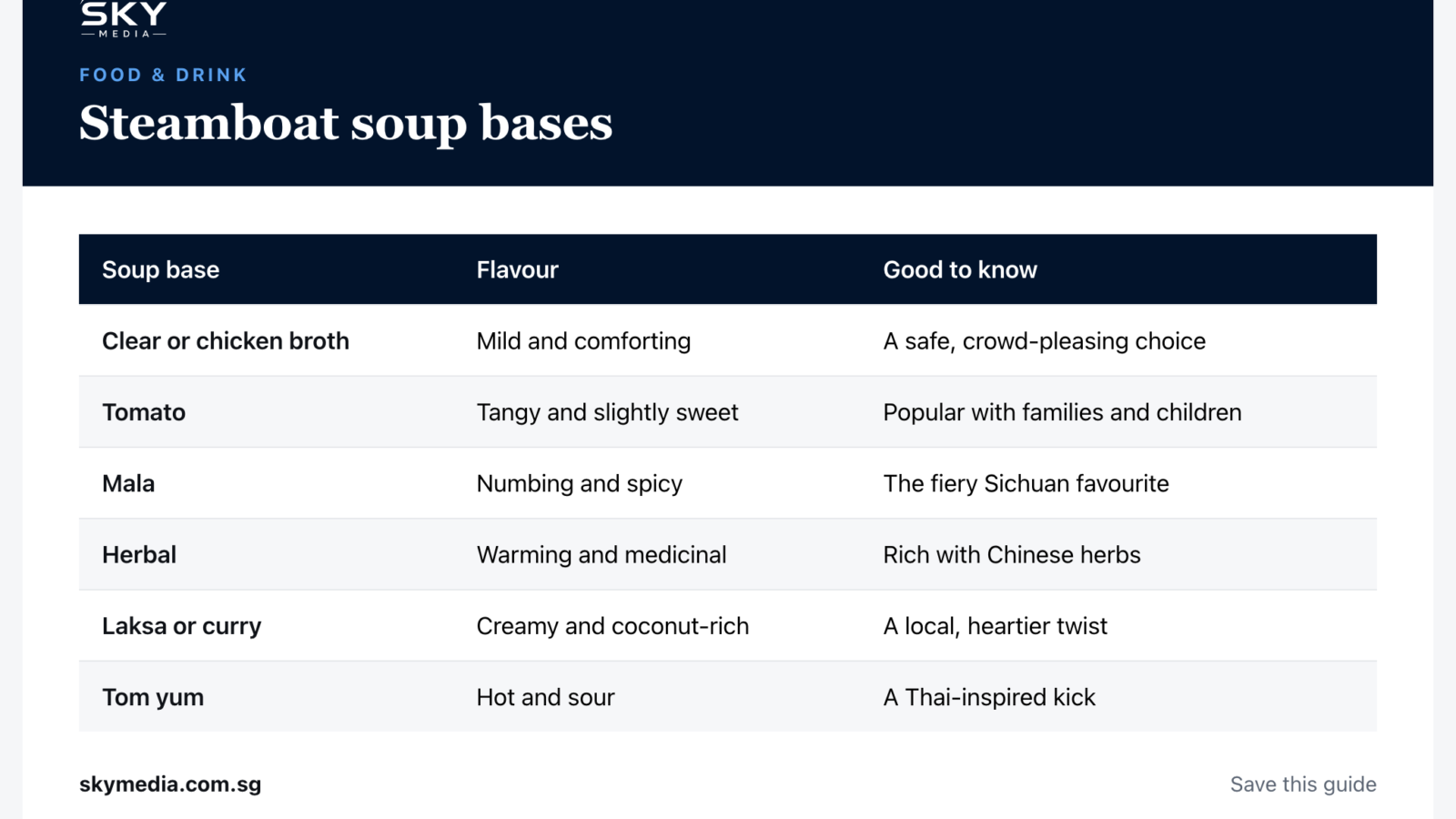
Most places let you split the pot, so you can pick two. Here are the popular bases:
| Soup base | Flavour | Good to know |
|---|---|---|
| Clear or chicken broth | Mild and comforting | A safe, crowd-pleasing choice |
| Tomato | Tangy and slightly sweet | Popular with families and children |
| Mala | Numbing and spicy | The fiery Sichuan favourite |
| Herbal | Warming and medicinal | Rich with Chinese herbs |
| Laksa or curry | Creamy and coconut-rich | A local, heartier twist |
| Tom yum | Hot and sour | A Thai-inspired kick |
Common ingredients
Part of the joy is the spread of raw ingredients laid out around the pot. A typical selection includes:
- Proteins: thinly sliced beef, pork, and lamb; whole prawns; fish slices; squid; clams and other shellfish; and chicken.
- Balls and processed items: fish balls, meatballs, prawn balls, fish cake, and crab sticks, all beloved steamboat staples.
- Tofu and eggs: firm tofu, tofu puffs, beancurd skin, and quail eggs.
- Vegetables and mushrooms: leafy greens such as chye sim and napa cabbage, plus enoki, shiitake, and other mushrooms that soak up the broth.
- Carbohydrates: instant noodles, glass noodles, udon, and dumplings to finish the meal.
Buy more vegetables than you think you need. They cook down to almost nothing, and a green-heavy pot feels lighter after all the richer ingredients.
Dipping sauces
The sauce is where you make the meal your own. Most tables set out a small station so everyone can mix a bowl to taste. Common building blocks include:
- Light soy sauce as a base
- Chopped garlic and cut chilli
- Chilli padi for real heat
- Sesame oil, which is the classic Sichuan-style dip
- Sha cha (a savoury seafood-and-garlic sauce) that is hugely popular for steamboat
- Fresh coriander, spring onion, and a squeeze of lime or calamansi
There is no single right recipe. A good starting point is soy sauce, garlic, chilli, and a little sesame oil, then adjust from there. Keep a spare clean bowl on hand so you can rinse and rebuild if you want a different flavour later.
Etiquette: how to share the pot gracefully
Steamboat is communal, so a little courtesy keeps everyone comfortable and everything cooked properly.
The unwritten rule of steamboat: use the serving chopsticks or ladle for the raw ingredients, cook thoroughly, and look after the people beside you before yourself.
Keep these habits in mind:
- Cook in the right order. Start denser, longer-cooking items and anything that flavours the broth, then move to quick-cooking greens and thin meat slices near the end. Add noodles last, as they release starch and cloud the soup.
- Mind raw and cooked. Use separate serving chopsticks or the provided ladle to add raw meat and seafood, and your own chopsticks only for eating. This is both hygiene and good manners at a shared pot.
- Cook meat and seafood through. Thin slices take only seconds, but do not rush shellfish and thicker pieces. When in doubt, give it a moment longer.
- Do not overcrowd the pot. Add a little at a time so nothing gets lost or overcooked, and so you can find what you dropped in.
- Share and offer. Fish out a few pieces for others, especially elders and guests, before serving yourself. That small gesture is the whole spirit of the meal.
- Pace the noodles and starches. Save them for the end, when the broth is at its most flavourful, so they act as a satisfying finale.
Hosting steamboat at home
You do not need a restaurant to enjoy this. A home steamboat is one of the easiest ways to feed a crowd, and it is a lovely way to welcome friends into a new place.
Here is a simple checklist to host your own:
- Equipment: an electric steamboat pot or a portable induction or gas burner with a suitable pot. A divided pot is handy if guests want different soup bases.
- Broth: buy a ready soup base or simmer your own stock, and keep a kettle of hot water nearby for topping up.
- Ingredients: plan a rough spread of proteins, balls, tofu, plenty of vegetables and mushrooms, and noodles to finish. As a rough guide, allow a generous handful of each protein per person and lean heavy on greens.
- Sauces: set out soy sauce, garlic, chilli, sesame oil, and sha cha so everyone can mix their own.
- Safety: keep the burner stable and central, watch trailing cables, and make sure there is good ventilation, especially with gas or charcoal for mookata.
- Prep ahead: slice and plate everything before guests arrive so you can sit down and enjoy the meal too.
Buy fresh, keep the pot topped up, and let the evening run long. The food is only half of it. The rest is the talking, the reaching across the table, and the shared warmth that gives steamboat its name.
Explore more: Mala hotpot in Singapore and Must-try hawker food in Singapore