

Supporting a child with dyscalculia singapore starts with patience, understanding, and the belief that every child can learn maths in their own way. Dyscalculia is a specific learning difficulty that affects how a child understands and works with numbers. A child with dyscalculia is not lazy or careless, and it has nothing to do with how clever they are. Many children with dyscalculia are bright, curious, and capable, and simply need a different route into numbers. This guide offers general information and gentle learning strategies. It is not a diagnosis, and if you have concerns, a proper professional assessment is the right next step.
What Dyscalculia Can Look Like
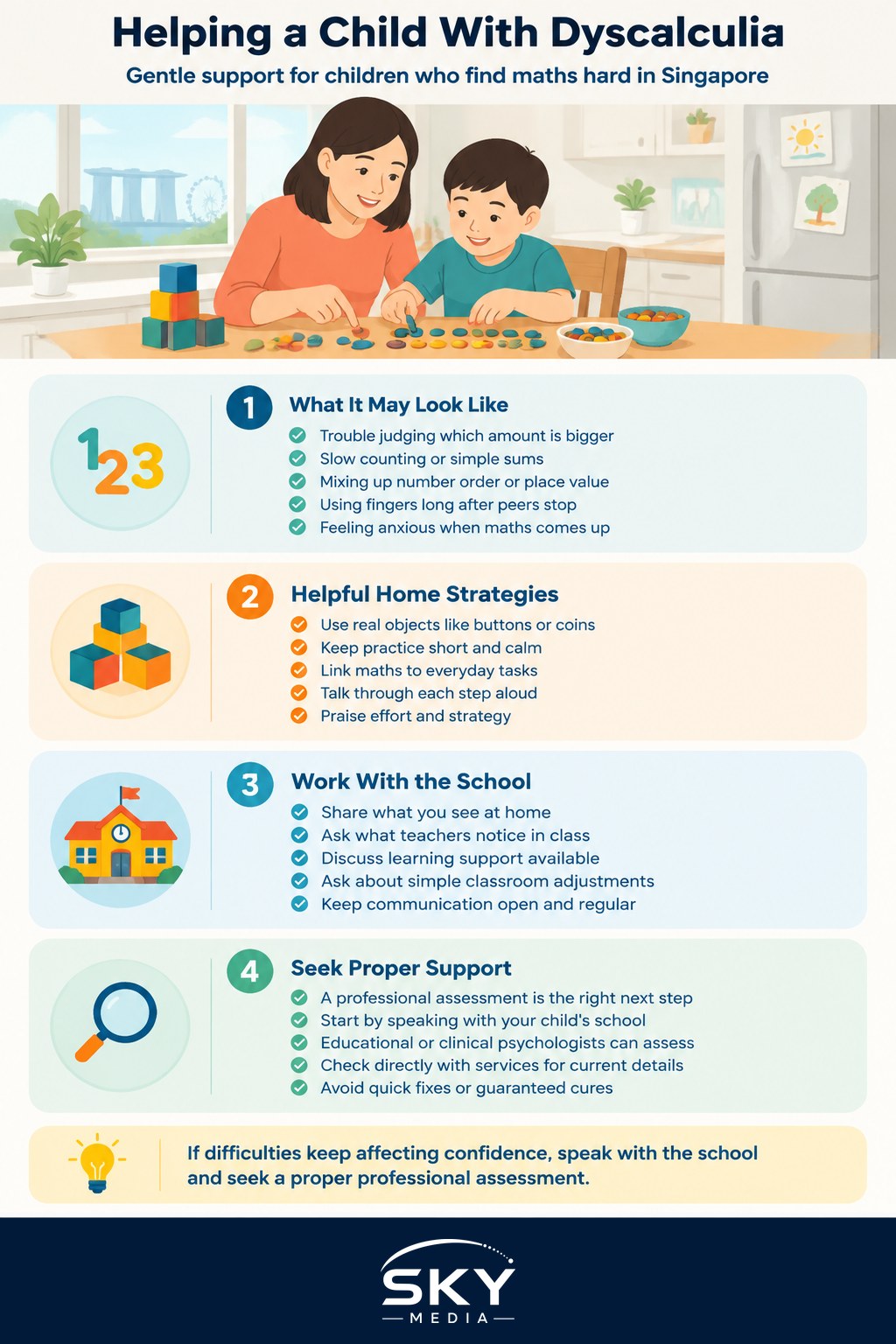
Every child is different, so it helps to think in terms of patterns over time rather than a single bad day. A child who finds numbers hard may struggle to sense which of two amounts is bigger, take much longer to count or do simple sums, or mix up number order and place value. They might rely heavily on their fingers well past the age when peers have moved on, forget number facts they knew yesterday, or feel real anxiety when maths appears.
These signs on their own do not confirm anything. Plenty of children find maths tricky for a while and then catch up. What matters is the persistence of the difficulty and the gap between a child’s effort and their progress. If the struggle continues despite steady support at home and in school, it is worth looking more closely rather than waiting and hoping it passes.
Try to notice strengths too. A child who finds sums hard may be wonderful at storytelling, drawing, building, or spotting patterns in the world around them. Keeping a strengths-based view protects your child’s confidence and reminds both of you that maths is only one part of a full and capable person.
Helpful Learning Strategies at Home
Small, steady changes at home can make maths feel calmer and more doable. None of these is a cure, and they are not a replacement for professional support, but they can ease the daily load.
- Use real objects. Buttons, coins, blocks, and snacks turn abstract numbers into things a child can touch and move. This makes ideas like sharing, grouping, and taking away much clearer.
- Slow down and shorten sessions. A few focused minutes done often beats one long, tearful session. Stop before frustration takes over.
- Link maths to daily life. Counting out change at the hawker centre, measuring rice, or splitting food into equal shares makes numbers feel useful rather than scary.
- Talk through steps aloud. Saying each step in plain words helps a child follow the logic instead of guessing.
- Praise effort and strategy, not just correct answers. This keeps motivation alive on hard days.
For broader ideas, our guides on building early maths skills in kids and overcoming maths anxiety offer gentle, everyday support you can weave in.
Working With the School
Your child’s teachers are important partners. Share what you notice at home in a calm, factual way, and ask what they see in class. Many schools in Singapore have learning support staff and processes to help children who find literacy or numeracy difficult, and teachers can suggest classroom adjustments such as extra time, simpler layouts, or step-by-step help.
Keep the conversation open and regular. A short note or a quick chat after school can keep everyone on the same page. Remember that you and the school share the same goal, which is a child who feels supported and keeps trying.
Seeking a Proper Assessment and Support
If the difficulties are persistent and affecting your child’s confidence, a proper professional assessment is the honest and caring next step. A trained professional can look at the whole picture and advise on what will help. You do not have to work this out alone.
In Singapore, you can begin by speaking with your child’s school, which can guide you on next steps. A qualified educational or clinical psychologist can carry out an assessment. Organisations such as the Dyslexia Association of Singapore support children with specific learning difficulties, and hospital child development services, such as those at KKH or NUH, and early intervention programmes are also part of the wider support landscape. Because services, eligibility, and waiting times change, check directly with each for current, accurate information.
Be wary of anyone promising a quick fix or a guaranteed cure. Support that works is patient, individual, and built on understanding your particular child.
Keeping Heart Through the Journey
Supporting a child with dyscalculia singapore is a marathon, not a sprint, and your steady warmth matters more than any single strategy. Celebrate small wins, protect your child’s sense of worth, and remind them often that struggling with numbers says nothing about how loved or how capable they are. If maths stress spills into worry, our piece on helping children cope with exam stress may help. With the right support and plenty of encouragement, your child can grow into a confident learner who knows their own strengths.
Frequently Asked Questions
Is it normal for a child to count on their fingers for a long time? Many children use fingers while learning, so it alone proves nothing. What matters is persistence and the gap between effort and progress. If the struggle continues despite steady support at home and school, it is worth speaking to the school and considering a professional assessment.
Who can assess a child for dyscalculia in Singapore? A qualified educational or clinical psychologist can carry out an assessment, and your child’s school is a good place to start for guidance. Hospital child development services also form part of the support landscape. Services, eligibility and waiting times change, so check with each directly.
What can teachers do in class to help a child who struggles with numbers? Teachers can suggest adjustments such as extra time, simpler layouts and step-by-step help. Share what you notice at home in a calm, factual way and ask what they see in class. Many schools have learning support staff who can advise.
How can I make maths less stressful at home? Keep sessions short and stop before frustration takes over, use real objects such as buttons or coins, and talk through each step aloud. Praise effort and strategy, not only correct answers. These are gentle supports rather than a cure or a substitute for professional help.
Are there programmes that promise to cure dyscalculia quickly? Be wary of any promise of a quick fix or guaranteed cure. Support that works is patient, individual and built on understanding your particular child. If you are unsure about a service, ask your child’s school or a qualified professional before committing.
Further reading: Supporting a Child With Autism in Learning in Singapore