

Just as the day winds down and you are longing for a quiet evening, some babies do the opposite. They fuss, cry, arch their backs and seem impossible to settle, often for a stretch in the late afternoon or evening. This predictable bout of unhappiness has a nickname that many exhausted parents come to know well: the baby witching hour. If you are living through it, take a breath. This is a common and normal phase, it is not your fault, and it does pass. This guide explains what is going on and offers gentle, practical ways to get through it here in Singapore.
What the Witching Hour Actually Is
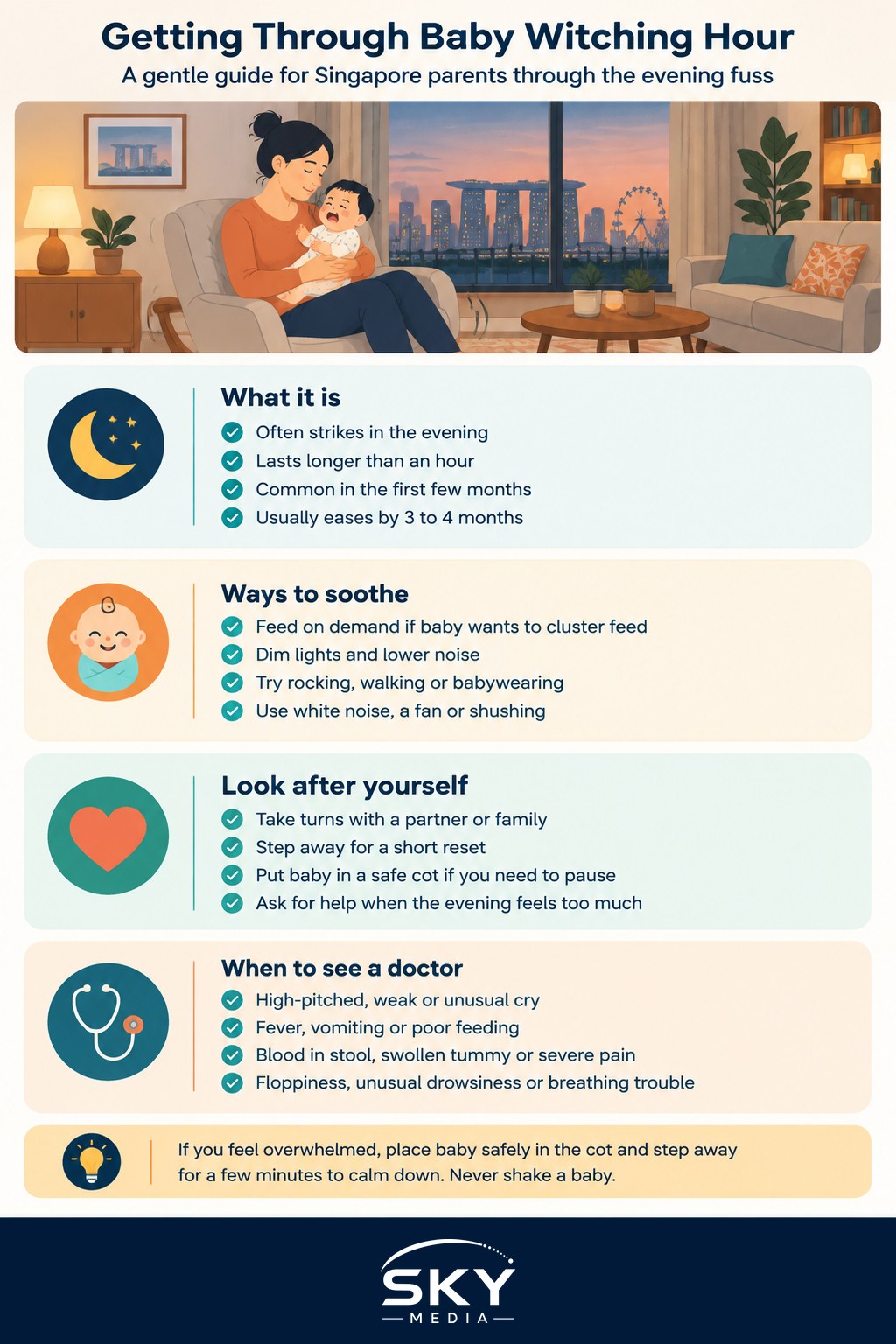
Despite the name, the baby witching hour often lasts longer than sixty minutes, and it tends to strike in the evening. It is most common in the first few months and frequently eases by around three to four months of age. Every baby is different, so yours may follow its own pattern.
Experts are not entirely sure why it happens, but a few sensible explanations come up again and again. By evening a young baby may simply be overtired and overstimulated after a busy day of new sights and sounds. Milk supply can feel a little lower at that time for breastfeeding parents, which can leave a baby wanting to cluster feed. A developing nervous system may also struggle to wind down. None of these mean anything is wrong. Your baby is releasing the tension of the day in the only way they know how.
It helps to remember that crying is your baby’s main way of communicating. Learning to read the signals makes the evening feel less mysterious, and our guide to decoding your baby’s different cries can help you tell a hungry cry from a tired one.
Gentle Ways to Soothe
There is no magic switch, but a calm, steady routine of comfort often takes the edge off. Try a few of these and see what your baby responds to.
- Feed on demand. If your baby wants to cluster feed in the evening, that is normal and helps settle them. Let them nurse or take a bottle little and often.
- Dim the lights and lower the noise. Turning down the stimulation signals that the day is ending. In a busy HDB home, moving to a quieter room can help.
- Try motion. Rocking, a slow walk around the flat, babywearing in a carrier, or a gentle bounce can be very soothing.
- Use sound. Soft white noise, a fan, or a calm shushing sound mimics the womb and can quiet a fretful baby.
- Offer skin to skin or a warm bath. Close contact and warmth relax both of you.
- Take turns. If you have a partner or family nearby, hand the baby over and step away for ten minutes to reset.
Watch for tired signs before the meltdown builds, since an overtired baby is much harder to settle. Getting the timing of naps and wind-downs right can shrink the evening fuss. Our notes on understanding your baby’s hunger and tired cues go into this in more detail.
Looking After Yourself
The witching hour is as hard on parents as it is on babies. Listening to a crying baby you cannot soothe is genuinely stressful, especially when you are already short on sleep. Be kind to yourself.
If you feel your patience running out, it is always safe to put your baby down somewhere secure, such as their cot, and step away for a few minutes to calm down. A crying baby in a safe cot is far better than a parent who is at breaking point. Never shake a baby. Call a family member or friend if you need a hand, and share the evening load where you can. Colic, which is frequent intense crying with no obvious cause, overlaps with this phase for many families, and our guide to coping with colic and a crying baby has more support if the crying feels relentless.
When to See a Doctor
The evening fuss is usually harmless, but trust your instincts. Contact your GP, a polyclinic, or KKH or NUH, and seek prompt care, if your baby shows any of these signs:
- A high-pitched, weak, or unusual cry that is different from the normal fussing.
- A fever, poor feeding, vomiting, or fewer wet nappies than usual.
- Blood in the stool, a swollen tummy, or signs of pain that seem severe.
- Floppiness, unusual drowsiness, or difficulty breathing.
- Crying that suddenly becomes far more intense or does not stop for hours.
For any emergency, call 995 or go straight to A&E. It is always better to get a worried mind checked than to sit at home wondering.
The witching hour can feel endless when you are in it, but it is a passing chapter. As your baby’s nervous system matures, those stormy evenings settle into calmer nights. Lean on your support network, swap the baby around when you can, and remind yourself that this hard patch is temporary and completely normal.
Frequently Asked Questions
How long will the witching hour last for my baby? It is most common in the first few months and frequently eases by around three to four months. Every baby is different, so yours may follow its own pattern. If the crying becomes far more intense or lasts hours, check with your doctor.
Why does my baby cluster feed in the evening? Milk supply can feel lower in the evening for breastfeeding parents, which can leave a baby wanting to feed little and often. This is normal and helps settle many babies. Feed on demand, and speak to a lactation support service if you are worried.
Is witching hour the same as colic? They overlap for many families but are not identical. The witching hour is a predictable evening fussiness, while colic is frequent intense crying with no obvious cause. If the crying feels relentless, ask your doctor or polyclinic for support.
What should I do if I feel I might lose my patience? Put your baby down somewhere secure, such as the cot, and step away for a few minutes to calm down. A crying baby in a safe cot is better than a parent at breaking point. Never shake a baby, and call someone for help.
Which crying signs mean I should see a doctor? Seek prompt care for a high-pitched, weak or unusual cry, fever, poor feeding, vomiting, fewer wet nappies, blood in the stool, a swollen tummy, floppiness or breathing difficulty. Contact your GP, a polyclinic, KKH or NUH, and call 995 in an emergency.