
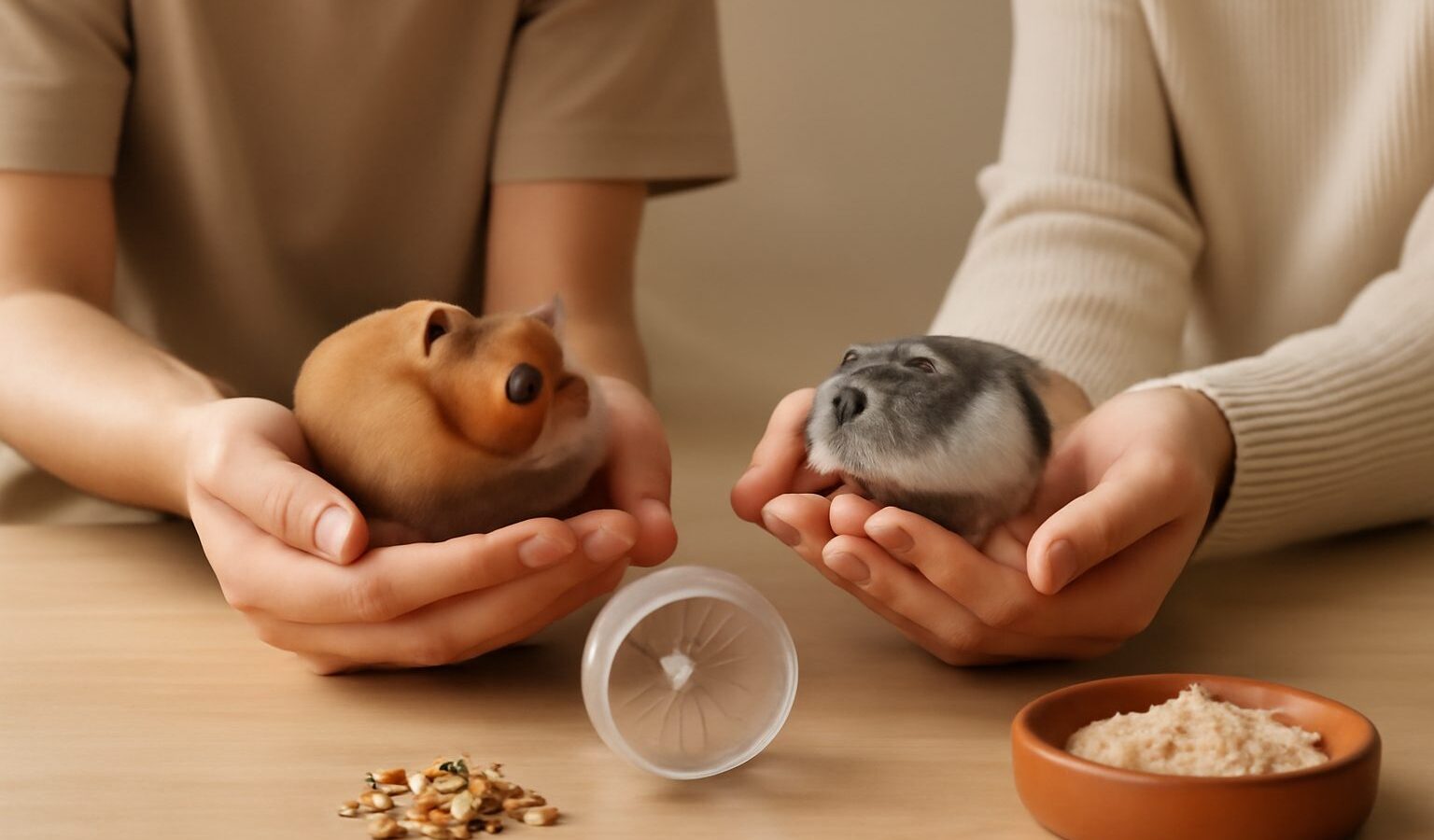
Hamsters are one of the most popular small pets for HDB living: quiet, compact and full of personality. But “hamster” is not one animal, and good hamster care starts with knowing which kind you have. The two you will meet most often in Singapore are the Syrian, a solitary palm-sized hamster, and the smaller dwarf hamsters. They differ in temperament, housing and whether they can live with a companion, so getting this right from the start saves a lot of stress for you and them. This guide walks through both, the essentials they share, and the local rules to check first.
Know Your Hamster: Syrian and Dwarf
Hamsters split into a few types, and the split matters for daily care.
- Syrian hamsters (also called golden or teddy bear hamsters) are the larger of the two, roughly the size of an adult’s palm. They are strictly solitary. In the wild they live alone, and kept together they will fight, often to the death. One Syrian per cage is the firm rule.
- Dwarf hamsters cover a few species, including Campbell’s, winter white and the tiny Roborovski. They are much smaller and faster. Some can live in same-species, same-litter pairs or small groups if introduced very young and given plenty of space, but this is not guaranteed, and fighting can still break out later, meaning you must be ready to separate them permanently.
A common mistake is buying two Syrians to “keep each other company”. They do not want company. Understanding this one difference prevents the most serious welfare problem in hamster keeping. If you want the interaction of a pair, a dwarf may suit better, but go in knowing you might end up with two separate cages.
Housing, Cage Size and the Right Setup
Whatever the type, hamsters are widely kept in cages that are far too small. Bigger is always better, and a large single floor space beats a tall cage with narrow tubes, because hamsters run along the ground, not up and down. Aim for the most generous continuous floor area you can fit and afford, and treat commonly sold starter cages as a minimum to exceed, not a target.
The core setup for both Syrians and dwarfs:
- Deep bedding of a safe, unscented paper or suitable wood-based substrate, deep enough to burrow into, which is a real need not a luxury
- A solid, appropriately sized wheel with a closed running surface to protect feet and spine; a wheel too small forces a curved back, so size up
- A hideout or two, chew toys, and things to forage in, since a bored hamster bar-chews and stresses
- A water bottle or bowl kept fresh, and a heavy food dish
- A sand bath for cleaning, especially valued by dwarf species
Singapore’s climate needs thought. Hamsters cope poorly with heat and prefer a comfortable, stable room temperature, so keep the cage out of direct sun and away from the hottest part of a flat. Avoid placing it right under a strong fan or air-con draught either. Because our homes are humid, watch bedding for damp and spot-clean often to keep things dry and odour-free.
Handling, Diet and Daily Care
Hamsters are crepuscular, most active around dawn and dusk, so let a new one settle for a few days before handling and never wake a sleeping hamster with a grab, which invites a startled nip. Build trust slowly by letting it come to your open hand. Dwarfs are quicker and more prone to darting, so many owners find them harder to hold than a placid Syrian, a point worth weighing if children are involved. Supervise young children closely, as these are small, delicate animals.
Feeding is broadly similar for both:
- A quality hamster mix as the base, offered in measured amounts
- Small, occasional fresh additions such as suitable vegetables, given sparingly to avoid upset
- Constant fresh water
- Safe items to gnaw, since their teeth grow continuously
Ask your vet or a licensed seller before offering any new food, and avoid anything sugary, salty, sticky or citrusy. Clean the cage on a sensible routine: daily spot-cleaning of soiled corners and a fuller change periodically, rather than stripping everything at once, which wipes out their familiar scent and can unsettle them. Hamsters hide illness well, so watch for wet tail, weight loss, lumps, laboured breathing or a scruffy coat, and see a vet who treats small animals promptly, as little bodies go downhill fast.
Syrian vs Dwarf at a Glance
Use this quick comparison to decide which suits your home, then read the rest of the guide before buying.
| Feature | Syrian hamster | Dwarf hamster |
|---|---|---|
| Size | Larger, palm-sized | Small, a few centimetres |
| Company | Always solo, never paired | May pair or group if raised together, with backup cages ready |
| Handling | Usually slower, easier to hold | Fast and darty, trickier for children |
| Floor space | The largest you can manage | Still needs generous space despite small size |
| Best for | First-timers wanting a calm single pet | Those wanting to watch natural behaviour, prepared to separate |
Rules, Sourcing and Responsible Ownership
Before bringing any small pet home, check the current NParks AVS approved-pet list, because only approved animals may legally be kept in Singapore, and many exotics that look tempting online are not allowed. Hamsters are commonly kept here, but rules can change, so confirm the current position rather than assuming. Always buy from a licensed source, whether a licensed pet shop or a licensed rehomer, and consider adopting, as small pets do end up needing homes. A responsible seller keeps animals in clean conditions and can sex them correctly, which matters hugely if you plan to keep dwarfs together and want to avoid accidental litters.
A few final responsibilities:
- Do not release a hamster outdoors, ever; it is cruel and harmful to local wildlife. If you can no longer cope, contact a rescue or rehomer
- Plan for the cost and lifespan, typically a couple of years, including cage, bedding, food and possible vet visits
- Prevent escapes, as hamsters are expert squeezers, and secure the cage well
Hamsters reward attentive owners with charm out of all proportion to their size. Match the type to your household, give them far more space than the pet-shop cage suggests, keep them cool in our climate, and start on the right side of the rules. Do that, and whether you choose a solitary Syrian or a lively dwarf, you will have a small companion that thrives.