
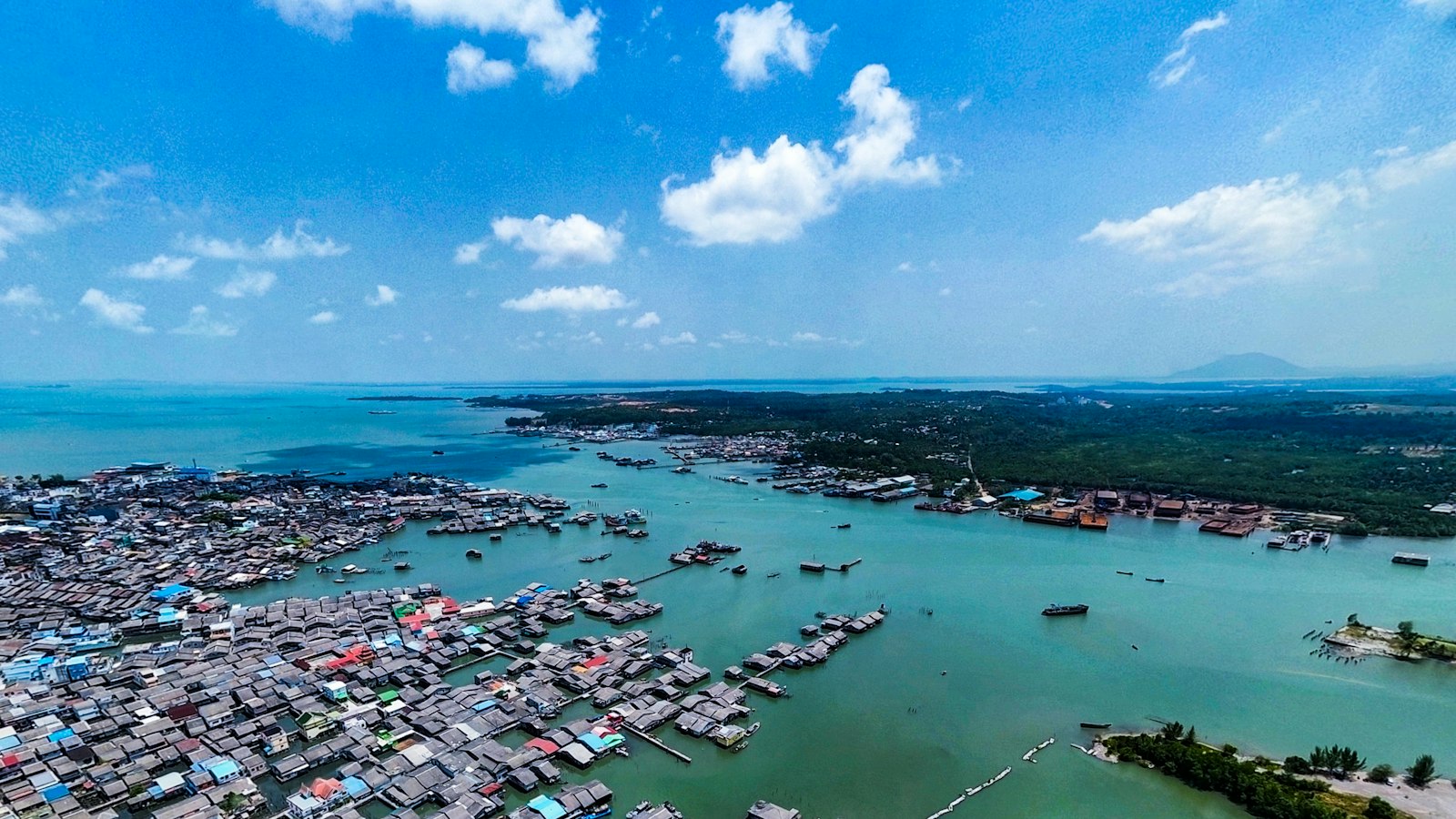
Most Singaporeans know Bintan as resort country: the beach hotels and golf courses of Lagoi in the north. On the other side of the island sits a very different place. Tanjung Pinang is the provincial capital of the Riau Islands, a working port town with busy markets, old Chinese temples, a historic Malay island just offshore and some of the best simple seafood within easy reach of Singapore. Getting there is straightforward: a Tanjung Pinang ferry from Tanah Merah takes you straight into the town centre, no resort shuttle required.
This guide covers how the crossing works, how to spend a day or a weekend there, and what to eat. If you want the resort side of the island instead, our guide to Bintan focuses on Lagoi.
How the Tanjung Pinang Ferry Works
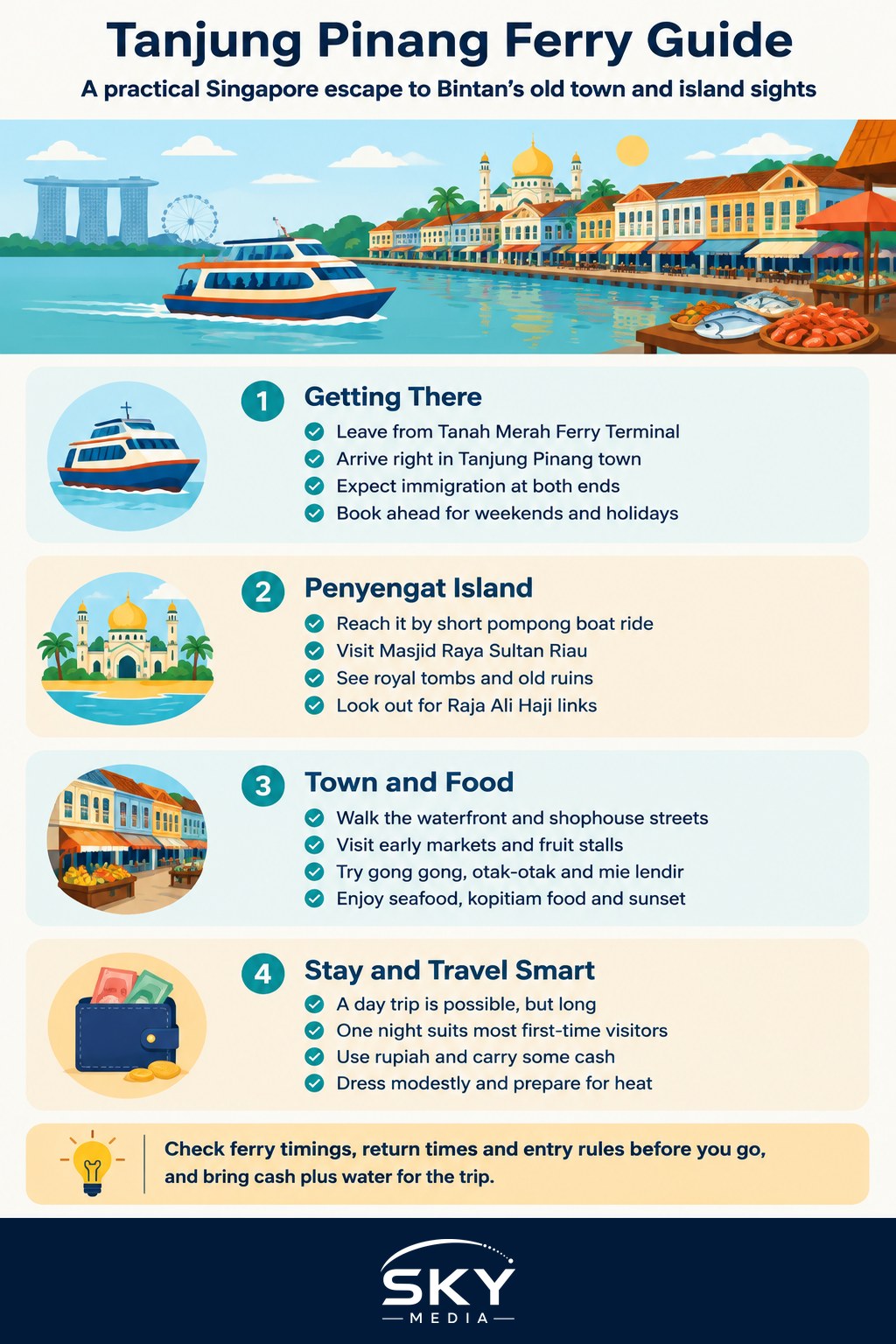
Ferries to Tanjung Pinang leave from Tanah Merah Ferry Terminal in the east of Singapore, near Changi. They arrive at Sri Bintan Pura, the ferry terminal right on the Tanjung Pinang waterfront, so you step off the boat and into town. This is the key difference from the Lagoi route, which uses a separate terminal (Bandar Bentan Telani) in the resort zone.
A few practical points:
- Operators and schedules change. More than one ferry company has served the route over the years, with several sailings a day. Check timetables and buy tickets on the operators’ official sites or at the terminal counters, and book ahead for weekends and school holidays.
- Allow time at both ends. You clear Singapore immigration at Tanah Merah and Indonesian immigration at Sri Bintan Pura. Arrive at the terminal early, as counters close before departure.
- The crossing is longer than to Batam. Expect a journey of a couple of hours rather than the shorter hop to Batam. If you get seasick, sit low and in the middle of the boat, and consider medication on a doctor’s or pharmacist’s advice.
- Bintan is one hour behind Singapore. Indonesia’s western time zone runs an hour behind, which catches people out on the return sailing. Your return ticket time is usually shown in local time, so double check.
- Entry rules are Indonesia’s to set. Visa on arrival, electronic visa and arrival declaration requirements have changed in recent years and differ by passport. Check the current rules on official Indonesian immigration and customs channels before you travel, and make sure your passport has enough validity.
For the full kit list, see what to pack for a short Batam or Bintan trip.
Penyengat Island: The Reason to Go
The highlight for many visitors is Pulau Penyengat, a small island just off the Tanjung Pinang waterfront. It was once a royal and intellectual centre of the Riau-Lingga sultanate, and it carries a lot of history for its size.
Getting there by pompong
You reach Penyengat by pompong, a small wooden motorboat that shuttles locals and visitors across from a jetty near the town centre. Boats usually leave once enough passengers have boarded. The ride is short, but it is an open boat, so keep bags and phones secure and wear the life jacket if one is offered. Fares are modest and paid in rupiah; ask at the jetty for the current price.
What to see on the island
- Masjid Raya Sultan Riau. The bright yellow and green mosque is the island’s landmark. A well known local story says egg whites were mixed into the mortar during construction. Visitors are generally welcome outside prayer times; dress modestly (shoulders and knees covered), remove shoes where asked, and women may be offered a covering at the entrance.
- Royal tombs and old buildings. The island has the graves of Riau royalty and the ruins of palace and administrative buildings, some restored, some slowly being reclaimed by greenery.
- Raja Ali Haji’s legacy. Penyengat is associated with Raja Ali Haji, the 19th century scholar remembered for his work on the Malay language and for the poem Gurindam Dua Belas. You will see verses displayed around the island.
The island is small enough to walk, though the heat is real. Local motorised becak (a motorbike with a sidecar) also take visitors on short loops. Agree on the price and route before you set off.
Exploring Tanjung Pinang Town
Back on the main island, the old town around the waterfront is best explored on foot in the morning, before the midday heat.
- The waterfront and old shophouse streets. The area around the ferry terminal has older shophouse rows, small hardware shops, gold shops and coffee shops. It feels a little like older parts of Singapore and Johor.
- Markets. Wet markets and fruit stalls are busiest early. They are a good place to see local produce and seafood coming in.
- Chinese temples. Tanjung Pinang has a sizeable Chinese Indonesian community, and temples appear throughout the town. Across the water, the village of Senggarang is known for its temples, including one wrapped in the roots of a banyan tree. You can get there by boat from the town; ask locally.
- Sunset by the sea. The waterfront promenade fills up in the evening with families and food sellers.
What to Eat: Seafood and Riau Specialities
Food is reason enough to make the trip. Tanjung Pinang’s cooking blends Malay, Chinese and Indonesian influences, and seafood is everywhere.
- Gong gong. The town’s signature dish is a type of sea snail, usually boiled and eaten with a toothpick and chilli dip. It is fun, messy and very local.
- Otak-otak. The Riau version of the grilled fish paste parcel is a popular snack and take-home buy.
- Mie lendir. Noodles in a thick, sweetish peanut and sweet potato gravy, often topped with egg. A common breakfast.
- Seafood restaurants on stilts. Many seafood places sit over the water. Crab, prawns, fish and clams are typically priced by weight, so confirm the price per kilo and the cooking style before ordering.
- Kopitiam breakfast. Coffee shops serve kopi, toast and kueh in a way that will feel familiar to Singaporeans.
A few food safety basics: drink bottled water, choose busy stalls with high turnover, and go easy on raw or lightly cooked shellfish if your stomach is sensitive.
Day Trip or Overnight: Which Suits You
A day trip is possible if you take an early sailing out and a late one back, but with the time at the terminals and the crossing it makes for a long day. Many visitors prefer one night in town.
| Plan | What it allows | Best for |
|---|---|---|
| Same-day return | Penyengat in the morning, seafood lunch, a short walk in town | Travellers short on leave who travel light |
| One night | Penyengat, the old town, Senggarang temples, sunset and a relaxed seafood dinner | Most first-time visitors |
| Two nights | All of the above plus a trip out to the beaches or across to Lagoi | Families, or anyone pairing town and resort |
Money, Getting Around and Practical Tips
- Currency. Indonesia uses the rupiah. Bring some cash, as small stalls, pompongs and becak drivers work in cash. Money changers operate in town, and some places may accept Singapore dollars, but you will usually get better value paying in rupiah.
- Getting around. Taxis and ride-hailing apps operate in Tanjung Pinang; check what is available on arrival. For longer distances, hiring a car with a driver for a few hours is common. Agree on the rate in advance.
- Mobile data. Use a roaming plan or buy a local SIM or eSIM.
- Dress and respect. Tanjung Pinang is a conservative, majority Muslim town. Casual clothes are fine, but cover up for mosques and avoid beachwear in town.
- Heat. Carry water, a hat and sunscreen, especially on Penyengat where shade can be patchy.
If you enjoy this kind of easy cross-border escape, compare it with other short ferry trips from Singapore or a slow seafood day out at Kukup’s fishing village.
Frequently Asked Questions
Should I pick Tanjung Pinang or Batam for my first ferry trip from Singapore? Choose Batam for a shorter crossing and an easy, mall-and-massage getaway. Choose Tanjung Pinang if you want old-town history, temples, Penyengat Island and local seafood, and are fine with a longer ride. Tanjung Pinang suits one night better than a rushed day.
Is Tanjung Pinang suitable for young kids or older parents? Yes if you pace it, though the heat, the open pompong boat to Penyengat and uneven pavements can tire little ones and seniors. Plan short outings, carry water and consider a car with driver for longer legs. Life jackets and shaded breaks matter.
Is it easy to find halal food in Tanjung Pinang? Yes, because it is a majority Muslim town, and many stalls and restaurants cater to Muslim diners. The Chinese-run seafood places and kopitiams may serve pork, so ask before ordering. Look for signs, or ask locals, rather than assuming.
What can I bring back to Singapore from a Tanjung Pinang trip? Packaged snacks such as otak-otak are a popular take-home, but check what is allowed. Singapore Customs and the Singapore Food Agency publish rules on duty-free allowances and food imports, which can change. Declare anything you are unsure about at the checkpoint.
Do I need to speak Bahasa Indonesia to get around Tanjung Pinang? Not fluently, but a few phrases help a lot, since English is less common than in Singapore. Many people understand basic Malay words, and numbers help with bargaining. A translation app is a good backup, and pointing at menu items works at food stalls.
Further reading: Tanah Merah vs HarbourFront: Singapore Ferry Terminals Explained · Singapore to Club Med Bintan Without the Guesswork