
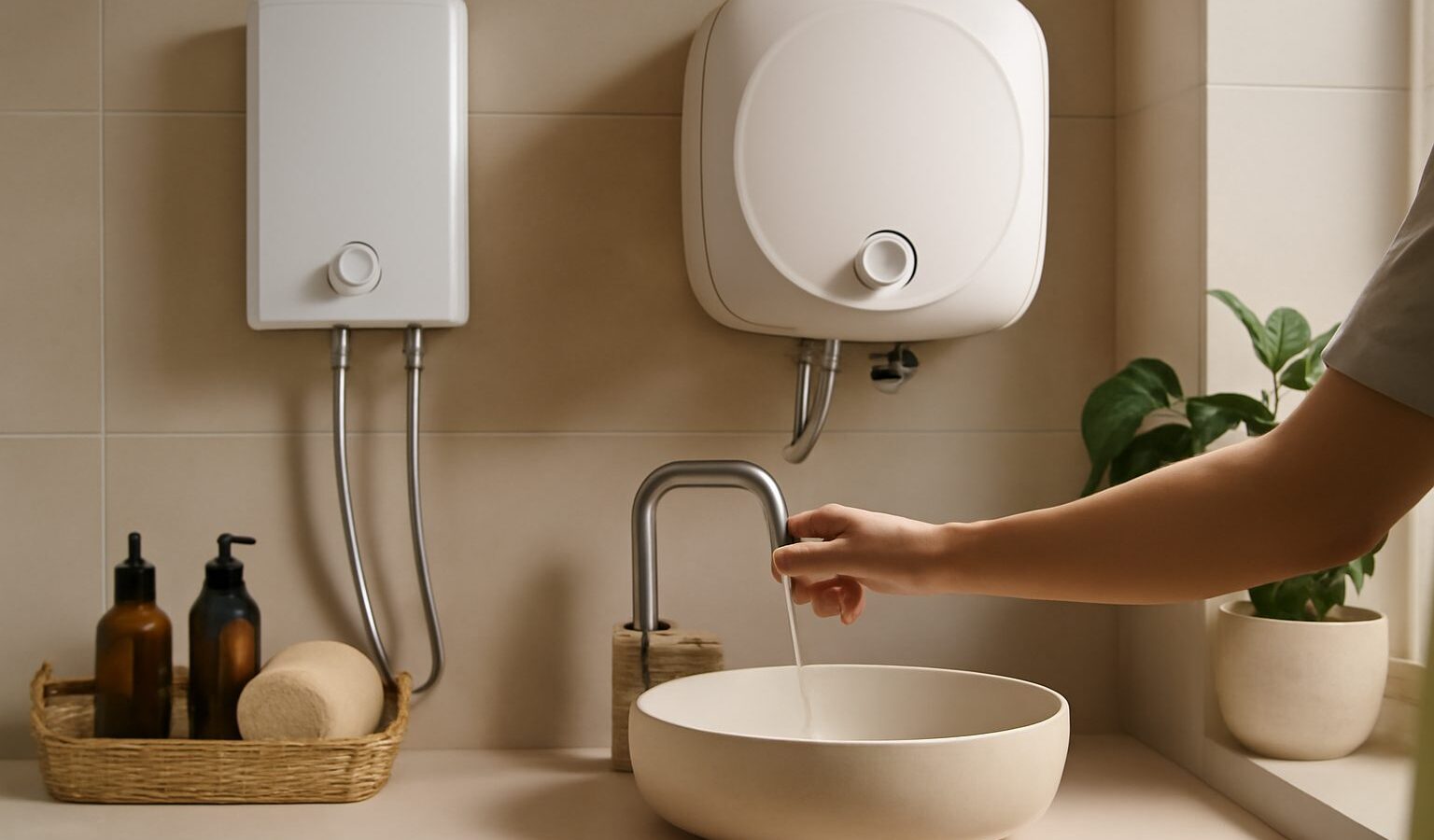
The choice of a tankless vs storage water heater shapes how you get hot water, how much space you give up, and what electrical work your bathroom needs. Both are common in Singapore homes and both work well when matched to the right situation. This guide sets out the honest differences in instant versus stored hot water, power, space and safety so you can pick with confidence.
The Core Difference
A tankless heater, often called an instant heater, warms water only as it flows through the unit. Turn on the tap and it heats the water on demand, so you get a continuous supply without waiting and without storing anything. It is compact and hangs neatly in the shower area.
A storage heater keeps a tank of water hot and ready. It heats a set volume in advance and holds it at temperature, so hot water is available the moment you turn the tap until the tank runs low. Then it needs time to reheat. This single difference, heating on demand versus heating in advance, drives every other trade-off below.
Instant vs Stored Hot Water in Daily Use
An instant heater gives you endless hot water for as long as you need it, which suits a quick daily shower and never runs cold mid wash. Because it heats a smaller flow at once, the water pressure and flow you enjoy can feel gentler, especially if two outlets run together.
A storage heater delivers strong, steady hot water and copes well when you want a fuller, more powerful shower or when more than one person showers back to back. The catch is the tank size. Once you empty it, you wait for it to reheat, so a large family may exhaust a small tank during a busy morning.
Power and Electrical Supply
This is a crucial and often overlooked point. Instant heaters draw a lot of power in a short burst because they heat water rapidly on demand. Many require a dedicated high rating electrical circuit and their own supply, which not every bathroom has ready.
Storage heaters draw less power at any one moment because they heat slowly over time, so they place a gentler load on the circuit. Whichever you choose, the electrical connection, isolation switch and earthing for a water heater are safety critical, and the work should always be carried out and certified by a licensed electrician. Do not attempt heater wiring yourself.
Comparing the Two
| Factor | Tankless (instant) | Storage |
|---|---|---|
| Hot water supply | Endless, on demand | Limited to tank, then reheats |
| Water flow feel | Gentler flow | Stronger, steadier |
| Space needed | Compact, small unit | Larger tank on the wall |
| Power draw | High burst, may need dedicated circuit | Lower at any moment |
| Waiting time | None | None until tank empties |
| Best for | Quick single showers, tight spaces | Fuller showers, multiple users |
Space and Installation
Space often decides the matter in a compact HDB bathroom. A tankless unit is small and unobtrusive, which is why it is so popular where wall space is tight. A storage heater needs room for its tank, usually mounted high on the wall or above the ceiling line, so you sacrifice more space for the benefit of stored hot water.
Both types involve connecting to your water supply and mains power. Getting the mounting, water fittings and electrical isolation right is not a job to improvise. A qualified installer and a licensed electrician should handle fitting and connection, and any water pipe alterations may call for a licensed plumber. This keeps the installation safe and compliant.
Safety Points That Matter
Water and electricity together demand respect. A few principles apply to both types:
- Every water heater should have a residual current device or safety cut off to protect against electric shock, installed by a professional.
- The unit needs proper earthing and a dedicated isolation switch outside the wet zone.
- Never run a heater from an extension cord or an unsuitable socket.
- Have the installation inspected and certified, and keep to any servicing the manufacturer recommends.
Following these is not optional caution. It is the difference between a safe bathroom and a dangerous one.
Maintenance also plays a part in long term safety. A storage heater holds water constantly, so over the years the tank and its heating element can collect deposits, and many models carry a safety valve that should be checked. An instant heater has fewer stored water concerns but still relies on sound wiring and a working safety cut off. In both cases, arranging a periodic professional check keeps small faults from becoming hazards, and you should switch the unit off at the isolation switch if you ever notice tripping, leaks or unusual noise.
Which One Should You Choose?
Lean towards a tankless instant heater if your bathroom is small, if you mainly take quick individual showers, if you value never running out of hot water, and if your electrical supply can take a dedicated high rating circuit. It rewards compact homes and simple daily routines.
Lean towards a storage heater if you want a stronger, fuller shower, if several people shower in succession, or if your circuit cannot support the heavy instant load. As long as you size the tank to your household and accept the space it takes, it delivers reliable, powerful hot water.
Sizing and Habits
If you go storage, match the tank to how many people shower close together, since an undersized tank is the most common regret. If you go tankless, remember that running a second hot tap at the same time can weaken the flow. In both cases, sensible habits, such as staggering showers or keeping them efficient, help you get the most from the heater while keeping your electricity use in check.
The Bottom Line
There is no outright winner in tankless vs storage water heater. The instant heater wins on space and endless supply, while the storage heater wins on flow strength and gentler power draw. Weigh your bathroom size, your household routine and your electrical supply, then let a licensed electrician and installer fit whichever suits you safely.
Explore more: Water Heater and Plumbing Guide · Energy Efficient Appliances · Lowering Your Electricity Bill at Home