
Many dogs know how to sit and stay long before they learn how to switch off. In a busy Singapore household, with lifts pinging, neighbours passing the void deck and delivery riders at the door, a dog that cannot relax lives in a state of low-level alert. Teaching your dog to settle is one of the most valuable skills you can give it, and it is different from obedience. Settling is not a trick you demand; it is a calm state you help your dog find and enjoy. Done kindly, it makes life easier for you and far less stressful for your dog, especially in a compact flat where there is nowhere to escape the bustle.
This is general guidance, not veterinary advice. If your dog shows signs of genuine anxiety or panic, please speak to a licensed vet, who can rule out pain or illness and refer you to a qualified behaviourist.
Why Settling Matters, Especially in a Flat
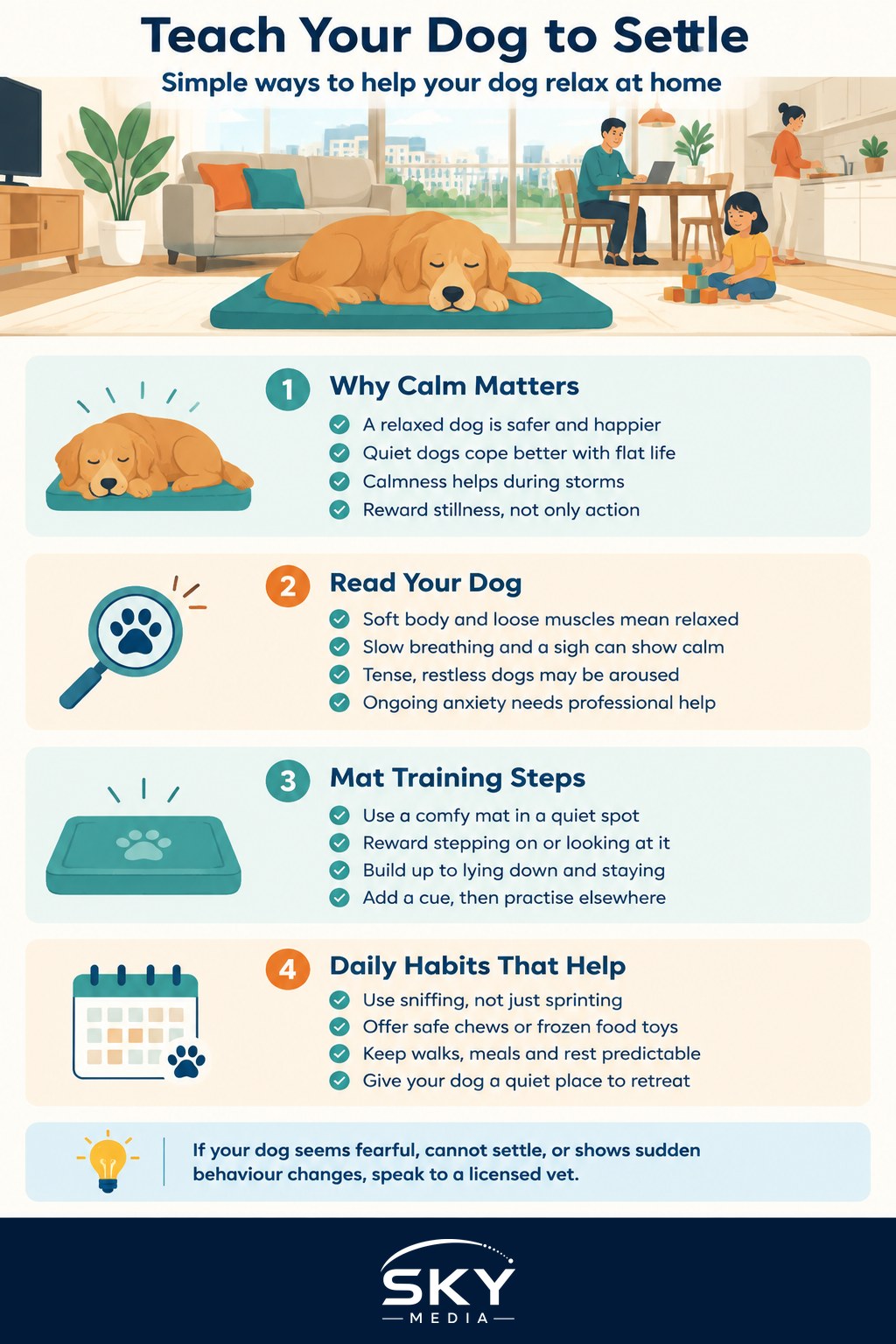
A dog that can relax on cue is safer, happier and easier to live with. It can lie quietly while you work, ride out a thunderstorm with less distress, and cope with the constant comings and goings of high-density living. Dogs that never learn to settle often pace, bark, pester or chew, not out of defiance but because they simply do not know how to come down from an aroused state.
Calmness is a skill, and like any skill it grows with practice and reward. The mistake many owners make is only paying attention to their dog when it is doing something, and ignoring it when it is quiet. If you flip that around and notice, praise and reward stillness, you teach your dog that relaxing is worthwhile.
Understanding Calm: Arousal, Rest and the Anxious Dog
Before the training, it helps to read your dog. A relaxed dog has a soft body, loose muscles, slow breathing and often a sigh as it flops down. An aroused or anxious dog is tense, quick to react, restless and slow to recover after excitement.
Some dogs are naturally wired and need help learning to downshift. Others are anxious, and for them settling is not just convenient but genuinely therapeutic. Rescue dogs and ex-breeding dogs in particular may never have had a safe, quiet place of their own. Building one is a gift. If your dog seems fearful much of the time, cannot settle at all, or shows sudden changes in behaviour, involve your vet, because ongoing anxiety is a welfare issue that deserves professional support rather than tougher training.
Teaching a Mat or Place Cue Step by Step
A mat or place cue gives your dog a portable island of calm. The mat becomes a signal that means “you are off duty, nothing is expected of you here”. Keep sessions short, upbeat and force-free.
- Choose the spot. Use a comfy mat, blanket or bed in a quieter corner, away from the front door and main walkways. This is your dog’s safe base.
- Reward any contact. Whenever your dog steps on or looks at the mat, calmly mark it and drop a treat onto the mat. You are teaching that good things happen there.
- Reward lying down. As your dog offers more, wait for it to lie down before rewarding. Deliver treats slowly and low, between the paws, which encourages it to stay put.
- Add a word. Once your dog reliably settles on the mat, attach a gentle cue such as “settle” or “place” just before it lies down.
- Build duration. Reward longer and longer periods of calm before releasing with a word like “okay”. Grow the time gradually so success stays easy.
- Generalise it. Practise in different rooms, then take the mat to a friend’s home or a cafe, so the cue works anywhere.
Never force your dog onto the mat or hold it down. Settling has to feel safe and voluntary, or it is not really settling at all.
Enrichment and Routines That Build Everyday Calm
Training a cue works best alongside a lifestyle that lowers your dog’s overall stress. A dog whose needs are met finds it far easier to relax.
- Sniffing over sprinting. Scent work is naturally calming. Snuffle mats, scatter feeding and slow sniffing walks settle the mind better than high-octane play.
- Long-lasting chews. Chewing and licking release tension. A safe chew or a filled, frozen food toy can help a dog wind down after a busy morning.
- Predictable rhythm. Regular times for walks, meals, play and rest give your dog a sense of order, which reduces anxious anticipation.
- A real off switch. Balance activity with genuine downtime. A constantly stimulated dog never learns to rest, so build quiet spells into the day.
- A quiet retreat. In a flat, give your dog somewhere it can go to be left alone, and teach children to respect it. For a dog that also digs at rugs or doors when unsettled, our guide on managing digging behaviour in dogs covers the overlap between boredom, anxiety and calm.
What Helps a Dog Settle and What Backfires
Owners often reach for quick fixes that quietly make anxiety worse. The comparison below sorts the kind, effective approaches from the ones to avoid.
| Situation | Helps your dog settle | Tends to backfire |
|---|---|---|
| Dog is restless indoors | Reward calm, offer a chew or sniff activity | Scolding or repeated commands |
| Dog fears storms or fireworks | A safe den, calm presence, vet advice on severe fear | Punishing the fear or forcing exposure |
| Dog will not stay on its mat | Shorter, easier reps with better rewards | Physically holding it in place |
| Dog is anxious most of the time | Vet check plus a force-free behaviourist | Dominance or fear-based methods |
Reassuring a frightened dog does not reward the fear, so comfort it freely. What you want to avoid is punishment, flooding a dog with what scares it, or any method built on fear or pain, all of which erode trust.
Being Patient and Knowing When to Get Help
Teaching your dog to settle is a slow, gentle process measured in weeks, not days. Some dogs, especially anxious or newly adopted ones, take longer, and that is completely normal. Celebrate small wins, keep sessions short and positive, and never punish your dog for struggling to relax.
If your dog cannot settle despite consistent, kind practice, or if anxiety is affecting its quality of life, reach out for professional help. A licensed vet can check for underlying pain or illness and refer you to a qualified, force-free trainer or behaviourist. With patience, a comfy mat and plenty of quiet praise, most dogs can learn that calm is a lovely place to be, even in the busiest Singapore home.
Further reading: Choosing a Dog Trainer in Singapore