
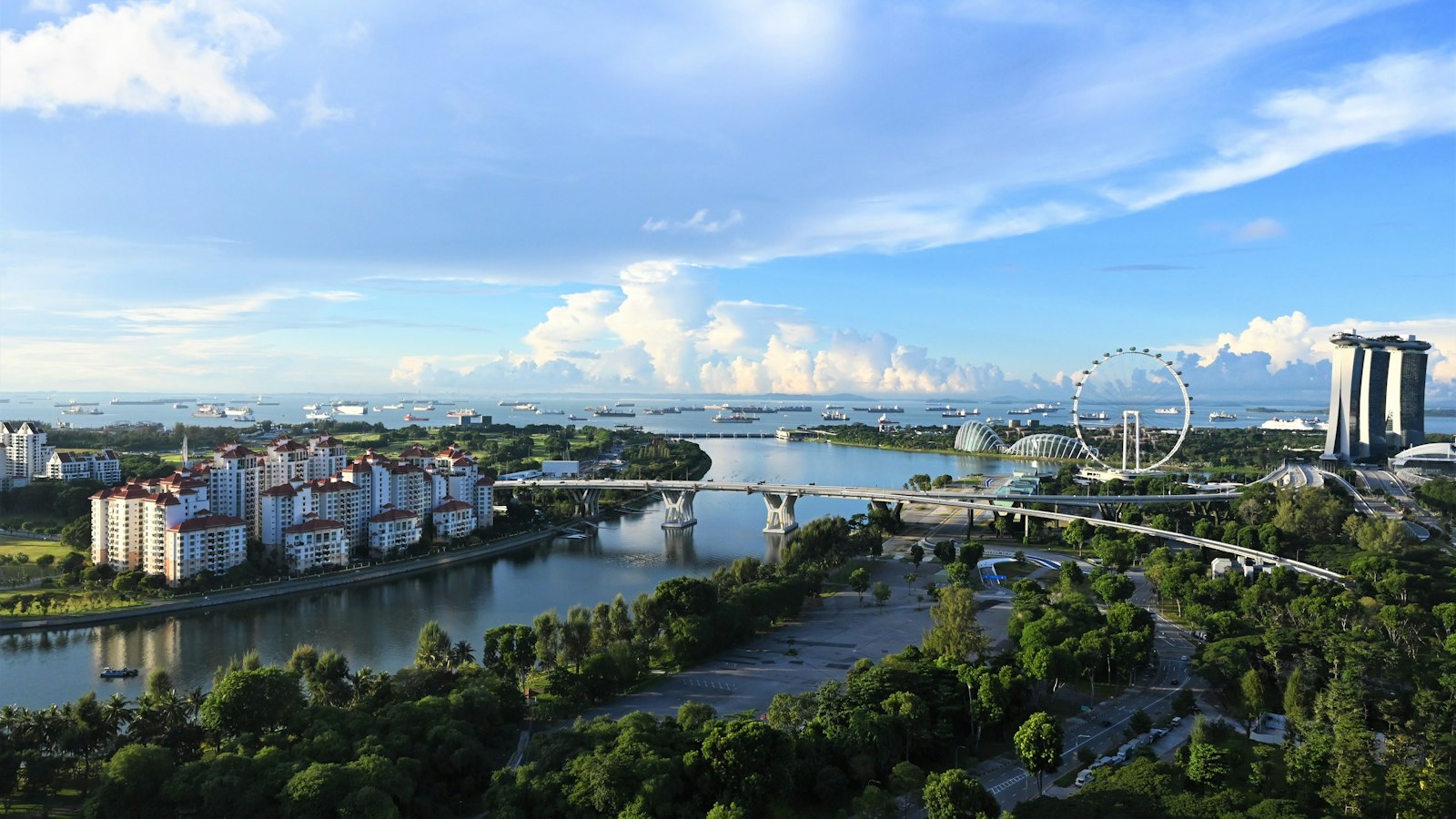
Tengah is Singapore’s newest HDB town, carved out of former forest and farmland in the west and planned from scratch as a “Forest Town”. If you have collected keys there, are eyeing a BTO launch, or are simply curious, this guide covers what life in the Tengah neighbourhood is actually like: how you get around, what amenities exist so far, and how the car-free town centre and green corridors are meant to shape daily life.
Tengah is still growing, so details change fast. Check HDB, the Land Transport Authority (LTA) and your town council for the latest on transport and facilities.
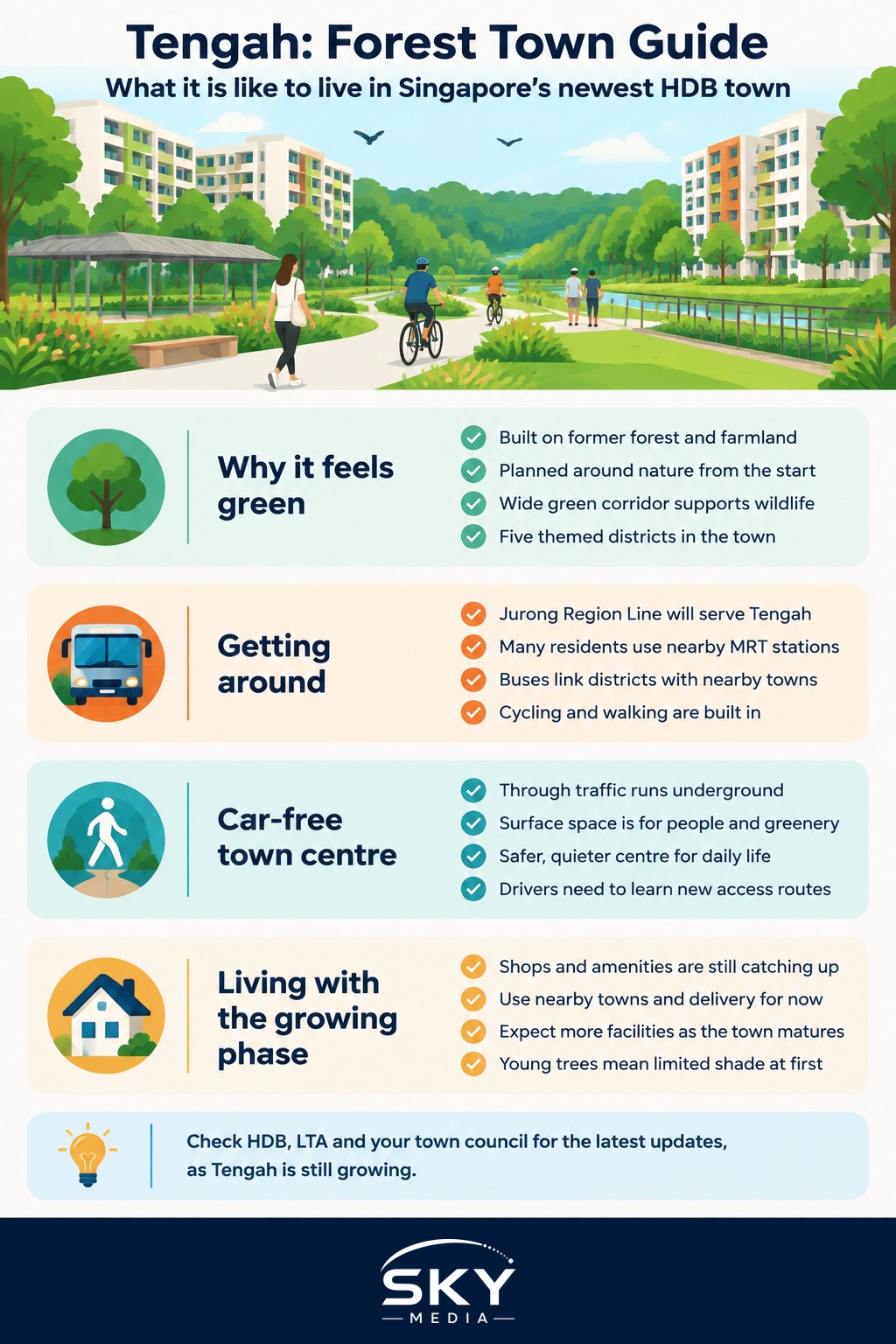
Why Tengah Is Called a Forest Town
Tengah sits between Bukit Batok, Choa Chu Kang and Jurong East. Before development, much of the land was secondary forest and former plantation land. HDB planned the town around nature rather than clearing everything:
- A forest corridor. A wide green corridor runs through the town, intended to connect the Western Water Catchment with the Central Catchment Nature Reserve so that wildlife can move between them.
- Five districts. The town is organised into districts with their own themes: Plantation, Park, Garden, Brickland and Forest Hill. Names reflect the area’s past, such as former plantations and brickworks.
- Community farming. Some districts include space for community gardens and farming, reflecting the town’s plantation roots.
- Smart and sustainable design. Tengah has been a test bed for HDB features such as smart-enabled homes and a centralised cooling system that residents can opt into.
The result is a town that feels greener than older estates, though young trees take years to provide real shade.
Getting Around: Transport Links
Transport is the question every Tengah resident asks first. Today and in the coming years, it looks like this:
- Jurong Region Line (JRL). Tengah is planned to be served by several stations on the JRL, which links Choa Chu Kang, Tengah, Jurong and the Boon Lay area. The line is opening in phases, so check LTA for which stations are running when you read this.
- Existing MRT nearby. Until the JRL is fully running, many residents take a bus to stations such as Bukit Batok or Choa Chu Kang on the North-South Line, or Jurong East for wider connections.
- Buses. Bus services connect the districts to surrounding towns and MRT stations, and more routes have been added as blocks are completed.
- Driving. Major expressways run close by, including the Pan Island Expressway and Kranji Expressway, making it reasonably direct to drive to the west and north.
- Cycling and walking. The town is designed with cycling paths and pedestrian links, which are useful for short trips within Tengah.
If you commute to the CBD, expect a longer journey than from older central towns, especially before the JRL is complete. Test the commute at peak hour before you decide.
The Car-Free Town Centre
One of Tengah’s most talked about features is its car-free town centre. Through traffic is planned to run underground beneath the centre, freeing up the surface for pedestrians, cyclists and greenery. The idea is a safer, quieter heart of town where you can walk between shops, transport and community spaces without crossing busy roads.
This also applies to the wider design: many blocks have car parks tucked away from the ground level, with landscaped spaces and walkways on top. For families with young children, the reduced traffic at street level is a genuine plus. For drivers, it means getting used to new routes and underground access points.
The town centre will develop over time, so in the early years residents rely more on neighbourhood centres within each district and nearby towns for bigger shopping trips.
Amenities So Far and What Is Coming
New towns go through a “growing pains” phase, and Tengah is no exception. Here is what residents commonly experience at different stages:
| Area of daily life | Early years in a new district | As the town matures |
|---|---|---|
| Groceries and food | Limited shops; residents travel to Bukit Batok or Choa Chu Kang | Neighbourhood centres with supermarkets, coffee shops and clinics |
| Transport | Reliance on buses to nearby MRT stations | JRL stations within the town |
| Schools | Fewer options; longer trips to existing schools | New schools open as the population grows |
| Greenery | Young trees, limited shade | Mature planting and a fuller forest corridor |
| Community | Few events, many neighbours new to each other | Active residents’ networks and community facilities |
Practical tips for the early phase:
- Use online delivery and nearby towns. Grocery delivery and trips to established malls in neighbouring towns fill the gap.
- Check school options early. If you have children, look at which primary schools are open and their registration rules on MOE’s website.
- Join residents’ groups. New estates often have active online chat groups that share updates on new shops, bus services and renovation contractors.
- Plan for renovation season. When many blocks complete at once, expect noise and lift crowding for months.
Living With Nature Next Door
Living beside a forest corridor is part of Tengah’s appeal, but it comes with some adjustments.
- Wildlife. You may see birds, monitor lizards, snakes or wild boars. Keep your distance, do not feed or touch animals, and call the Animal Concerns Research and Education Society (ACRES) or NParks if an animal seems injured or trapped.
- Mosquitoes and insects. Greenery brings insects. Keep homes free of stagnant water and use screens if needed.
- Heat. Shade is still developing. Bring water and a hat for walks in the day.
- Nearby air base. Tengah lies near an air base, so some residents notice aircraft noise from time to time. Visit at different times of day to judge for yourself.
For green activities with kids, see our guide to nature playgrounds and forest walks, and for eco-friendly habits at home, a newcomer’s guide to green living in Singapore.
Who Tengah Suits
Tengah tends to suit:
- Young families who value green space, low traffic at street level and a brand new environment.
- People working in the west, such as the Jurong Lake District, Jurong Innovation District or nearby industrial estates.
- Nature lovers who do not mind being a little further from the city.
It may suit you less if you need a quick daily commute to the CBD before the JRL is fully running, or if you want mature amenities on your doorstep from day one.
Tengah is a long-term project. Like Punggol and Sengkang before it, it will feel very different in ten years than it does at key collection. If you are curious how Singapore’s earlier towns evolved, read about Queenstown, Singapore’s first satellite town.
Frequently Asked Questions
Is the centralised cooling system in Tengah compulsory? The article describes it as a system residents can opt into, so it is not forced on every household. If you join, there are charges, and the details of the arrangement come from HDB. Check HDB’s latest information for your block before deciding.
How do I apply for a flat in Tengah? New flats are usually offered through HDB’s Build-To-Order launches, and you apply online through HDB’s channels during the application period. Eligibility, ballot and priority rules apply. Check the current launch details, income ceilings and grants on HDB’s website before you apply.
Is a Tengah flat a good long-term investment? No one can promise that. Resale value depends on many things, including transport links, amenities, the market and the flat itself. Consider how you will live there rather than predicting returns, and remember the minimum occupation period applies. Check the rules on HDB’s website.
Is it safe for children to explore the forest corridor alone? Young children should be supervised, because the corridor is a natural habitat with wildlife, insects and uneven ground. Teach children not to touch or feed animals. Keep to marked paths, and call ACRES or NParks if you find an injured animal.
Can I rent a flat in Tengah before I decide to buy? Rental supply may be limited in a new town, since owners are generally allowed to rent out their flats only after meeting HDB’s occupation requirements. Look at current listings and ask agents. Check HDB’s rules on renting out and renting a flat before signing anything.
Official sources: HDB