
Moving to a new country means learning a whole set of everyday systems at once: where the rubbish goes, how the bills work, how to get around and where to shop. If you care about the environment, it also means working out how to keep your green habits in a place where things are done a little differently.
The good news is that green living in Singapore is easier than many newcomers expect. The city is compact, public transport is extensive, and there are clear systems for recycling, water and energy. This guide brings the most important ones together so you can set up a lower-waste home from your first week.
For the bigger picture of where the country is heading, see our explainer on Singapore’s Green Plan and sustainability. This article focuses on what you can do day to day.
Recycling: How the Blue Bin System Works
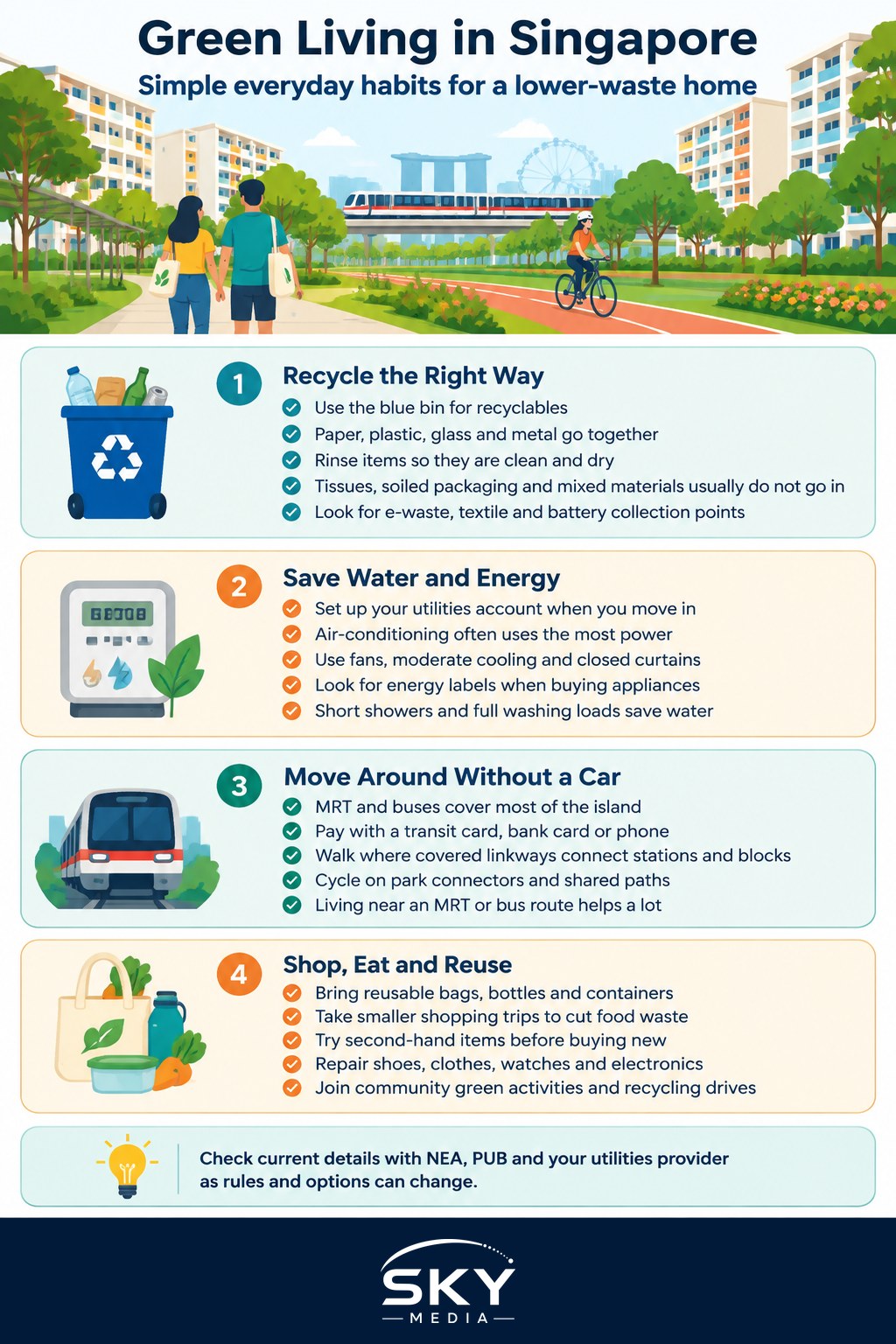
Most homes in Singapore have access to a blue recycling bin. In HDB estates (public housing), these are usually placed near the blocks, and many condos have their own recycling points. The National Environment Agency (NEA) runs the national recycling programme and publishes guidance on what can go in.
The basics:
- One bin for all recyclables. Paper, plastic, glass and metal generally go into the same blue bin. You do not need to sort them by material.
- Clean and dry only. Rinse food containers and bottles. Greasy, food-stained or wet items can contaminate a whole bin of otherwise good recycling.
- Not everything is recyclable. Items such as soiled food packaging, tissues and some mixed materials usually belong in general waste. Check NEA’s current list if you are unsure.
- Old clothes, electronics and batteries have separate collection points. Look out for e-waste bins at many malls, community centres and supermarkets, and textile collection points in some neighbourhoods.
A simple habit helps: keep a small recycling bag or box in your kitchen next to the rubbish bin, rinse items as you go, and empty it into the blue bin every few days.
Utilities: Electricity, Water and Gas at Home
When you rent or buy a home, you will usually set up a utilities account. Your bill normally covers electricity, water and, where available, piped gas. Green habits here help both the planet and your wallet.
Electricity. Air-conditioning is often the biggest electricity user in a Singapore home. A few small changes make a big difference:
- Set the air-conditioner to a moderate temperature rather than the coldest setting.
- Use fans, which use far less power, when it is not too hot.
- Close doors and curtains to keep cool air in.
- Clean air-conditioner filters regularly, or ask your landlord about servicing.
Appliances sold in Singapore carry energy labels with ticks. More ticks generally means better energy efficiency. If you are buying a fridge, air-conditioner or washing machine, compare the labels as well as the price.
Water. Singapore takes water conservation seriously, and the national water agency, PUB, runs public campaigns on saving water. Taps, showers and toilets carry water efficiency labels. Short showers, full loads in the washing machine and fixing dripping taps quickly all help.
Choosing a retailer. Many households can choose their electricity retailer, and some offer plans that support renewable energy. Compare plans carefully and read the terms before switching. Check current details with the Energy Market Authority and your utilities provider, as options and rules can change.
Getting Around Without a Car
Owning a car in Singapore is expensive, and many residents live comfortably without one. That makes low-carbon travel the natural default.
- MRT and buses. The rail and bus network covers most of the island. You can pay with a stored-value transit card or a contactless bank card or phone at the gantries.
- Walking. Many neighbourhoods have covered walkways linking blocks to bus stops and MRT stations, which helps on hot or rainy days.
- Cycling. Park connectors and cycling paths link many parks and towns. Follow the rules for shared paths and be considerate of pedestrians.
- Shared mobility. Bicycle sharing and ride-hailing exist for the trips that public transport does not cover well.
If you are choosing where to live, being near an MRT station or a good bus route makes car-free living much easier.
Everyday Choices at a Glance
| Area of daily life | Common default | Greener alternative in Singapore |
|---|---|---|
| Grocery shopping | Disposable carrier bags | Bring reusable bags; many larger supermarkets charge for disposable bags |
| Drinks and takeaway | Single-use cups and containers | Bring your own bottle, cup or tiffin carrier for hawker takeaway |
| Getting to work | Taxi or private car | MRT, bus, walking or cycling |
| Cooling the home | Air-conditioner on the coldest setting | Fans, moderate air-con temperature, closed curtains |
| Furnishing a new home | Buying everything new | Second-hand marketplaces, hand-me-downs, repairs |
Shopping and Eating With Less Waste
Food is a big part of life here, and it is also where much household waste comes from.
- Hawker centres and wet markets. Bringing your own container for takeaway and your own bag for produce cuts a lot of plastic. Our newcomer’s guide to wet markets explains how they work and what to expect.
- Buy what you need. Smaller, more frequent shopping trips reduce food waste in a hot climate where fresh produce spoils quickly.
- Second-hand first. Many newcomers furnish their homes using online marketplaces, community groups and neighbours who are moving out. It saves money and keeps furniture out of the waste stream.
- Repair before replacing. Neighbourhood shops for shoes, clothes, watches and electronics repairs are common in HDB town centres.
Making Green Living Part of Community Life
Green living is easier when you do it with others. Many neighbourhoods have community gardens, clean-up activities and recycling drives, often organised through community centres, residents’ committees or local groups. Joining in is a friendly way to meet neighbours and learn local tips.
If you would like to give time to environmental causes, our guide to volunteering in Singapore covers how to find opportunities and get started.
A Simple First-Month Checklist
- Find your nearest blue recycling bin and e-waste collection point.
- Set up your utilities account and note your air-conditioner settings.
- Get a transit card or set up contactless payment for the MRT and buses.
- Pack a reusable bag, bottle and container for daily use.
- Look up your local community centre for green activities.
Rules, schemes and labels can change over time, so check current information with NEA, PUB and other official sources. Start with a few habits, build from there, and green living will soon feel like a natural part of your new life in Singapore.
Further reading: The HDB Green Towns Programme Explained · How China Newcomers Can Recycle in Singapore