
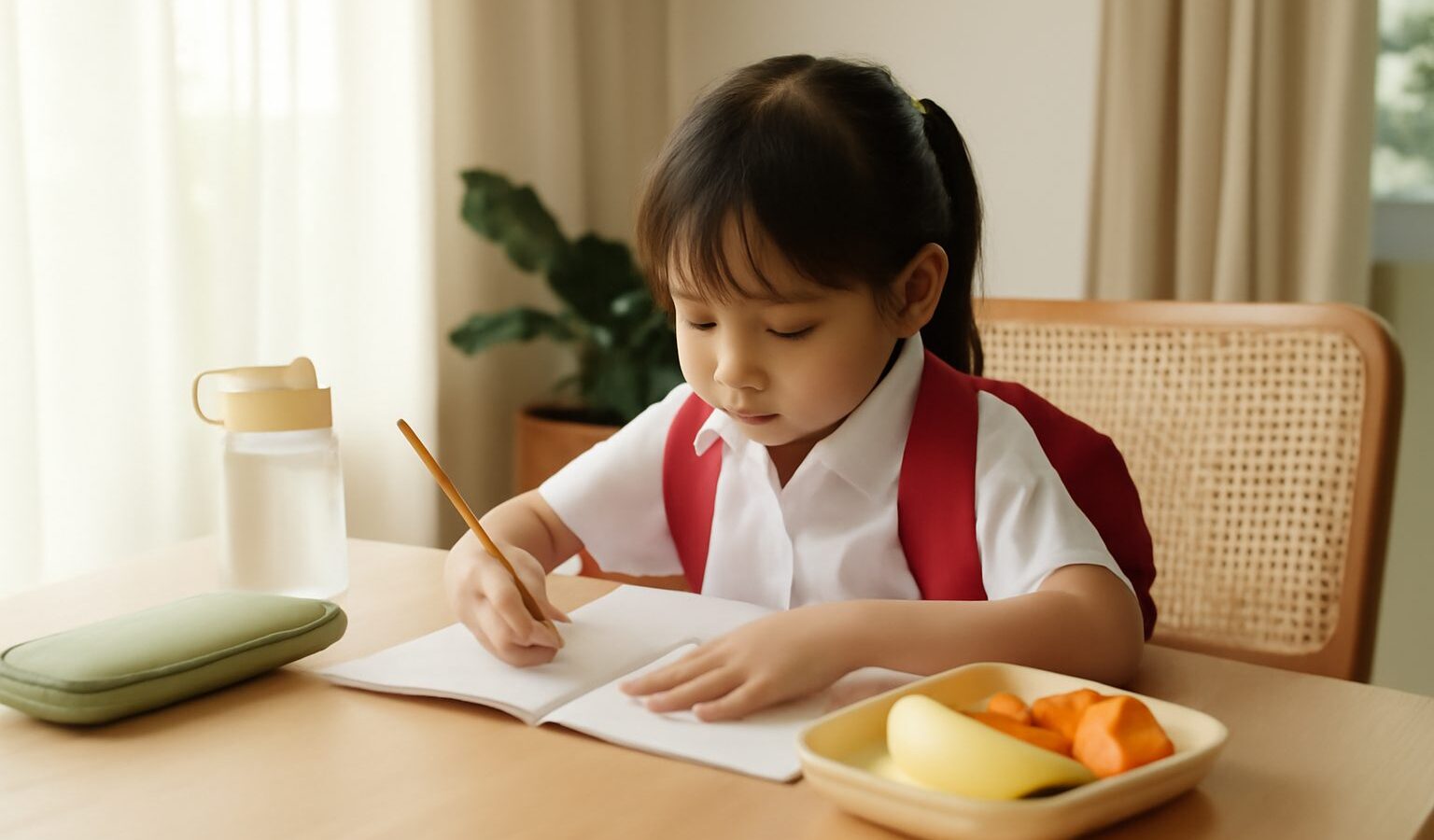
The jump from preschool to Primary 1 feels enormous, and not just for the child. Bigger campus, longer days, a proper uniform, and a school bag that suddenly seems full of books: it is a milestone for the whole family. The good news is that children are wonderfully adaptable, and with a little support most settle in within a few weeks. This guide to the first year primary school in Singapore covers what to expect and how to help your child thrive. Details of the school system can change, so always check current, official information from MOE and your child’s school.
What Primary 1 Is Really Like
Primary 1 is a year of big transitions. The school day is longer and more structured than preschool, with formal lessons, timetabled subjects, and set break times. Children learn to move between the classroom, the canteen, the hall, and other spaces, often in a much larger school than they are used to. Class sizes are bigger, and your child will be one of many, which is part of what helps them grow more independent.
The early weeks usually include an orientation period to help new pupils find their feet, learn routines, and get to know their teachers and classmates. Children learn practical independence too: buying food and drink at the canteen, managing their own bag and belongings, going to the toilet on their own, and keeping track of the day’s lessons. These everyday skills matter just as much as academic ones in the first year.
Academically, Primary 1 builds foundations in core areas such as English, Mother Tongue, and Mathematics, along with other subjects and plenty of activities that support well-rounded development. The emphasis in the early years is on helping children enjoy learning and build confidence. Because specific subjects, programmes, and school hours vary and are updated over time, check your own school’s information and the official MOE website for current details rather than relying on what an older sibling or neighbour experienced.
For families still working through the earlier steps, our guide to Primary One registration walks through the process, and your child’s first day of school covers the big morning itself.
Helping Your Child Settle In
A calm, prepared start makes the transition smoother. In the weeks before school begins, and through the first term, a few habits help enormously:
- Practise the morning routine, including waking up earlier, getting dressed, and eating breakfast, so school mornings are not a shock.
- Move bedtime earlier so your child is genuinely rested, as longer school days are tiring at first.
- Walk through practical skills together: opening their water bottle and food containers, using money at the canteen, packing and carrying their bag, and asking a teacher for help.
- Label belongings clearly, as small children lose things, and teach them to recognise their own bottle, bag, and shoes.
- Talk positively about school, listen to any worries, and reassure them that feeling nervous is normal and passes.
Choosing the right gear helps too. A well-fitting, not-too-heavy bag saves little shoulders, so look for supportive straps and pack only what the timetable needs.
Expect some tiredness, big feelings, and the odd wobble in the first few weeks. Meltdowns after school are common as children release the effort of holding it together all day. A relaxed afternoon, a snack, some downtime, and an early night usually do more good than extra activities. Give it time, and keep in gentle contact with the teacher if you have concerns.
Homework, Routines, and Balance
Formal homework is likely to appear in Primary 1, though the amount and type differ from school to school. The aim in the early years is to build good habits rather than to pile on pressure. A simple, consistent after-school routine helps: a rest and a snack first, then a short, focused stretch of homework or reading at a tidy table, followed by free time and play.
Keep sessions short and encouraging, and resist the urge to hover or correct everything. Reading together every day is one of the most powerful things you can do, and our guide to helping your child with reading fluency is full of gentle ideas. If homework becomes a nightly battle, handling homework battles and motivation offers practical strategies.
Balance matters. Children this age still need lots of play, movement, and unstructured time to thrive, alongside enough sleep and family time. Resist over-scheduling enrichment classes in the first year while your child is still adjusting. Protecting rest, play, and connection is not a distraction from learning; it is part of what makes learning stick.
A Practical Wrap-Up
The first year of primary school is a season of growth for the whole family. Expect an adjustment period, focus on independence and routines as much as academics, keep homework light and reading joyful, and protect plenty of rest and play. Stay in touch with your child’s teacher, celebrate small wins, and remember that details of the system change, so verify anything important with your school and the official MOE information. With patience and warmth, your child will find their feet.