
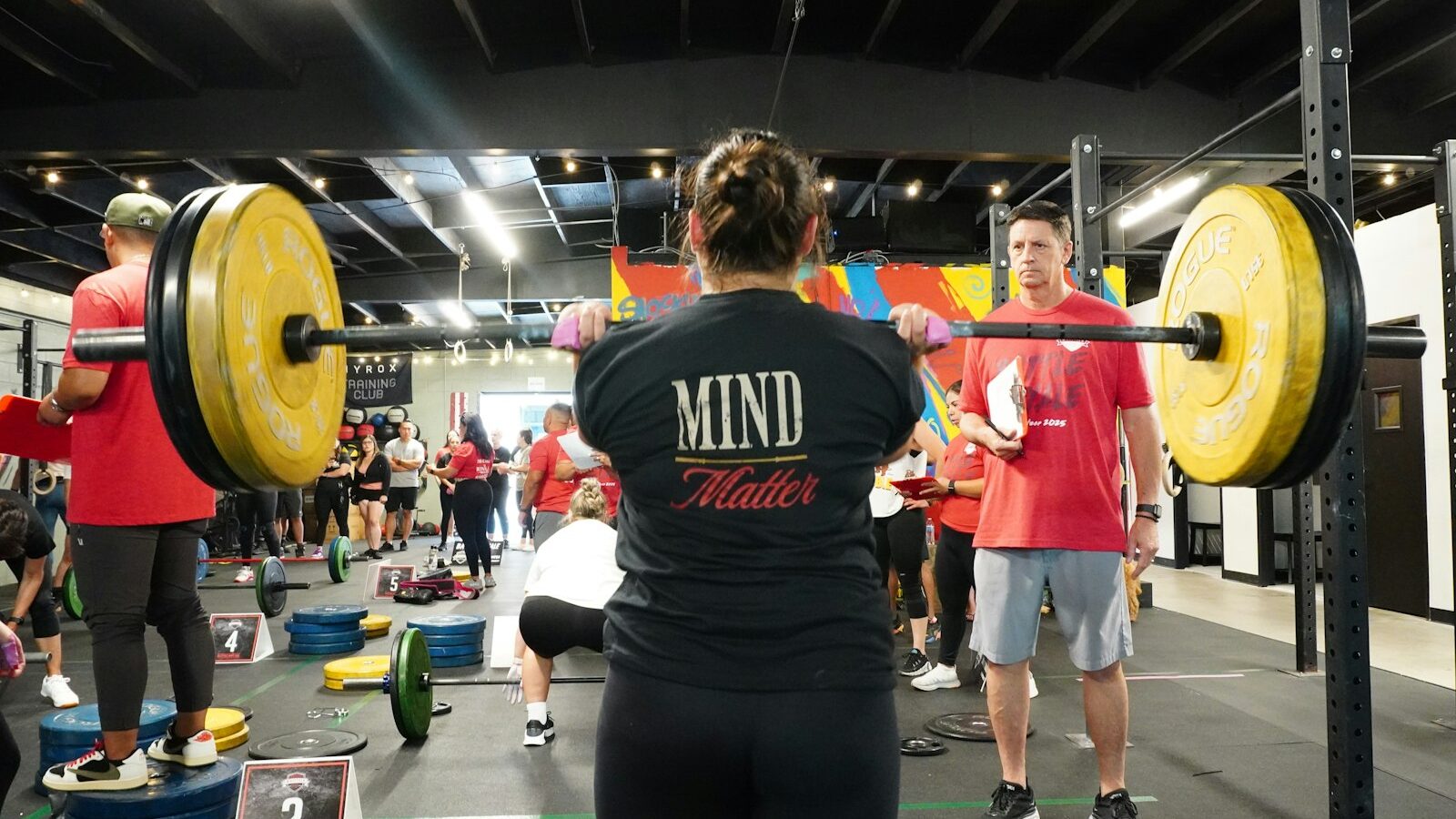
You have probably been told to “squeeze the muscle” or “really feel it working”. That coaching cue points at something real. The mind muscle connection singapore gym-goers keep hearing about is your ability to consciously focus on and contract the muscle you are actually trying to train, rather than just moving a weight from A to B. It is not mystical, and it will not replace hard work, but used well it can make your training more precise and, for some goals, more effective.
This is general fitness information, not personalised or medical advice. If you have an injury or a health condition, are pregnant, or are older, check with a doctor before starting a new programme, and see a physiotherapist or qualified coach for form or pain.
What the mind-muscle connection really is
Every time you lift, your brain sends signals that recruit muscle fibres to produce force. The mind-muscle connection is simply the skill of directing your attention to a target muscle so that it does more of the work. When you curl a dumbbell while thinking hard about your bicep contracting, you tend to activate that bicep more strongly than if your mind is elsewhere.
Sports scientists call this an “internal focus of attention”, meaning you concentrate on the body part doing the work. The opposite is an “external focus”, where you think about the outcome, such as pushing the floor away or driving the bar to the ceiling.
Here is the nuance that often gets lost. Internal focus is not always better. For building a specific muscle, especially in isolation exercises, focusing internally on that muscle can increase how much it works. For heavy, skill-heavy lifts where you want maximum weight moved safely, an external focus usually produces better performance and cleaner technique.
If you are still learning how a session hangs together, it helps to pair this idea with the basics in strength training for beginners so the cues have a structure to live in.
Does it actually matter?
The evidence is encouraging but modest. Studies have shown that when trained lifters deliberately focus on a muscle during lighter to moderate sets, that muscle can show greater activation. Over time, that may translate into slightly better muscle growth in the targeted area, particularly for exercises like curls, lateral raises, and certain back movements.
A few honest caveats:
– The effect is clearest at light to moderate loads. When the weight gets very heavy, your body recruits whatever it needs and conscious steering matters less.
– It seems more useful for muscle building than for lifting maximal weight.
– It is a supplement to good programming, not a substitute. No amount of focus makes up for never progressing your training over time.
So it is worth practising, but keep your expectations grounded. Think of it as sharpening a tool you already own rather than buying a new one.
How to build a better mind-muscle connection
This is a skill, and like any skill it improves with deliberate practice.
- Slow down. Lower the weight under control over two to three seconds and pause briefly where the muscle is most stretched or most contracted.
- Use lighter loads to learn. It is far easier to feel a muscle at 50 to 60 percent of your hardest weight than when you are straining near your limit.
- Add a warm-up “primer”. A few light sets, or even flexing the muscle without weight, can wake it up before your working sets. This pairs naturally with warming up and cooling down properly.
- Touch the muscle. Placing your free hand on the muscle you are training gives feedback that helps you locate the contraction.
- Reduce momentum. Swinging and jerking hands the work to other muscles and joints. Smooth, controlled reps keep tension where you want it.
Glutes are a classic example. Many people struggle to feel them working and end up loading their lower back instead. Deliberate practice, often with lighter activation drills first, can genuinely change that, which is why it comes up so often in glute training for strength.
Fitting it into training in Singapore
You do not need a fancy setup. A pair of dumbbells or resistance bands at home in an HDB flat is plenty for practising focus work, and the quieter environment can actually help you concentrate on the sensation. If you train in a warm, non-air-conditioned space, remember that heat can distract you and raise your perceived effort, so start light, stay hydrated, and build the skill on days when you feel fresh rather than frazzled.
A sensible approach is to reserve mind-muscle work for your isolation exercises and lighter accessory sets, while keeping an external, performance-focused mindset for your heavy compound lifts.
The practical wrap-up
The mind-muscle connection is a real and trainable skill, most valuable for muscle-building isolation work and less relevant for heavy maximal lifts. Slow your reps down, start light, cut out momentum, and genuinely pay attention to the muscle you are trying to train. Keep good form as the priority, stop if you feel pain rather than normal effort, and treat this focus as a refinement on top of consistent, progressive training rather than a shortcut around it.