
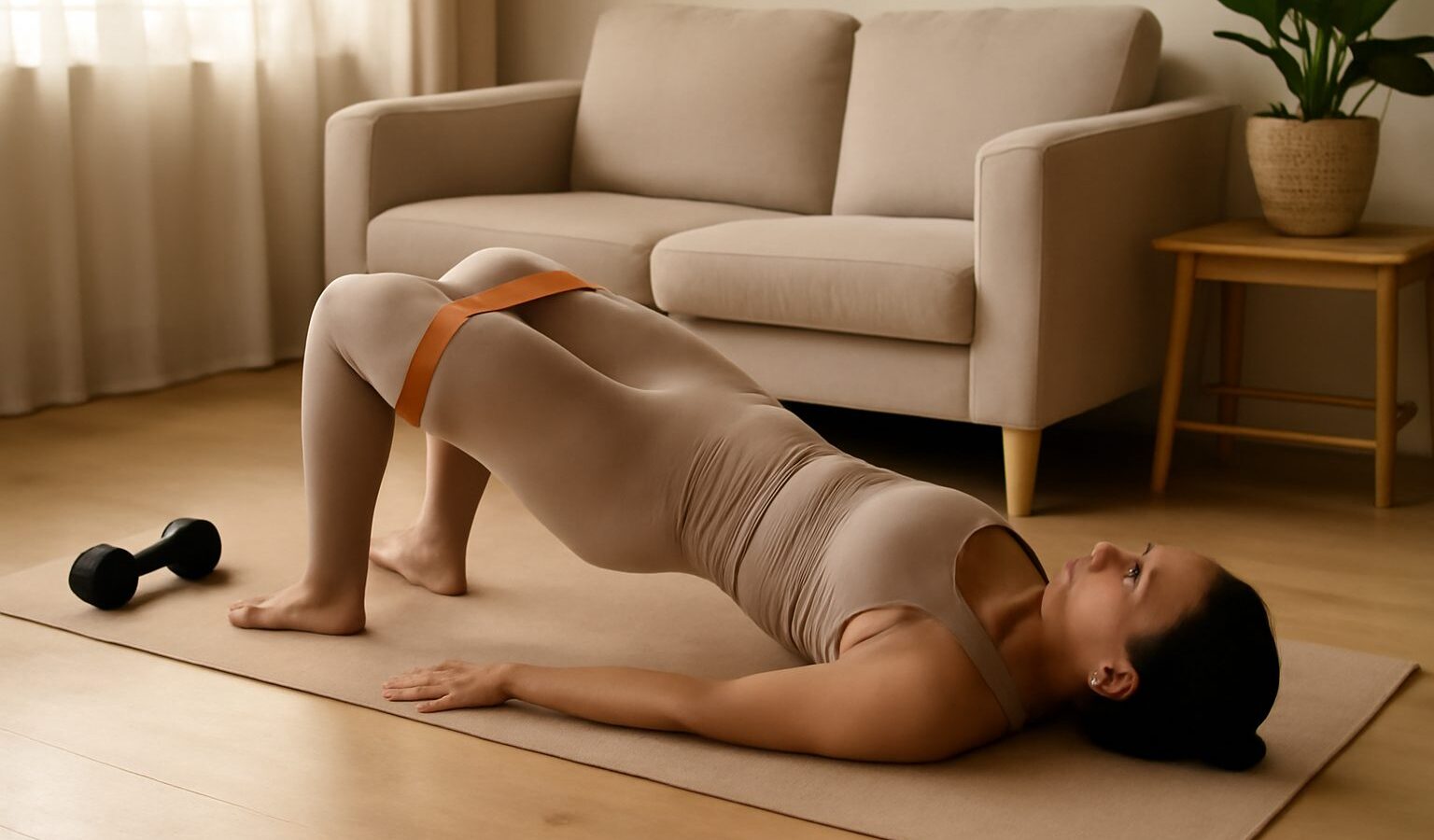
Glute training is often sold as a way to shape the backside, but the real reason it deserves a place in your week is strength and stability. Your glutes are the largest and among the most powerful muscles in your body, and they drive almost everything you do on your feet, from climbing HDB stairs and standing up out of a chair to sprinting for the MRT. Strong glutes stabilise your hips and pelvis, protect your lower back and knees, and improve your posture. The aesthetic benefits are simply a bonus that comes along with genuine function.
This guide explains what your glutes do, the exercises that build them, and how to train them safely from beginner to more advanced. As always, check with your doctor first if you are older, sedentary, pregnant, or managing a heart condition, high blood pressure, diabetes, or any hip, knee, or back injury.
What the Glutes Do and Why It Matters
The glutes are a group of three muscles in your buttocks. The largest, the gluteus maximus, extends your hip, meaning it drives your thigh backwards and powers you up from a squat, a lunge, or a jump. The two smaller muscles, higher and towards the side, stabilise your pelvis and keep your knees tracking properly when you walk, run, or stand on one leg. Together they are the engine of your lower body.
When the glutes are weak or underused, other muscles try to take over. The lower back, hamstrings, and knees end up doing work they were not designed to do, which is a common thread behind nagging back and knee aches. Modern life makes this worse, because sitting for long hours at a desk or on a commute leaves the glutes lazy and switched off. Deliberate glute training wakes them up and rebuilds that stabilising strength.
Waking Up Lazy Glutes
Before you load your glutes heavily, it helps to make sure they are actually firing. Many people, especially those who sit most of the day, struggle to feel their glutes working and instead compensate with the lower back or thighs. A short activation routine before your main session teaches the muscles to switch on. Warming up first is a good habit generally, as covered in warming up and cooling down properly.
Try these before your heavier lower-body work:
- Glute bridges: lie on your back, feet flat, and drive your hips up by squeezing your glutes, not by arching your back. Pause at the top and feel the muscle work.
- Banded lateral walks: with a mini band above your knees, take small steps sideways in a half-squat, keeping tension on the band.
- Clamshells: lie on your side, knees bent, and open the top knee while keeping your feet together.
- Single-leg glute bridges: the same as a bridge but on one leg, to expose and fix side-to-side imbalances.
A few minutes of this primes the muscles so that when you move to your main exercises, the glutes do their share of the work rather than sitting idle.
The Best Exercises, Compared
Once your glutes are firing, build your training around a mix of hip-extension moves, which target raw power, and single-leg and stability moves, which build the balance and control that protect your joints. Here is how the key exercises compare.
| Exercise | Main benefit | Level |
|---|---|---|
| Glute bridge | Activation, safe starting point | Beginner |
| Hip thrust | Maximum glute strength and power | Beginner to advanced |
| Squat | Overall lower body, glutes included | Beginner to advanced |
| Romanian deadlift | Glutes and hamstrings, hip hinge | Intermediate |
| Walking lunge | Single-leg strength and stability | Beginner to intermediate |
| Step-up | Single-leg power, balance | Beginner to intermediate |
A simple, balanced glute session might run like this:
- Hip thrusts for your main strength work, driving through the heels and squeezing at the top without over-arching your back.
- Squats or Romanian deadlifts as a second compound movement. Good technique matters here, so see how to do a proper squat and deadlift form for beginners.
- Walking lunges or step-ups for single-leg strength and hip stability.
- Banded work to finish, adding volume without heavy load. Bands are ideal for adding this kind of volume at home without heavy equipment.
Do 8 to 12 controlled reps of the main lifts, resting about a minute or two between sets, and stop any exercise that causes sharp pain rather than honest muscle effort.
Progressing Safely Over Time
Your glutes are large, strong muscles, so they can handle and benefit from meaningful load over time, but the golden rule still applies: master the movement before you add weight. Start light, keep a neutral spine, and never round your back to force a heavier hip thrust or deadlift. Progress by adding a little load, a rep or two, or a slower tempo across the weeks, following the steady approach in progressive overload explained.
Keep these safety points in mind:
- Drive through your heels, not your toes, on bridges, thrusts, and squats.
- Do not arch your lower back at the top of a hip thrust. The movement comes from the hips, and your ribs stay down.
- Keep your knees tracking over your toes on squats, lunges, and step-ups, rather than collapsing inwards.
- Stop for sharp or pinching pain, and see a physiotherapist for pain that is severe, persistent, or does not settle.
For heavy barbell hip thrusts or deadlifts, consider a session with a qualified trainer to check your form, since small technique errors matter more as the load climbs.
Fitting Glute Training Into Your Week
You do not need a separate glute day to get strong glutes. Two lower-body sessions a week, each including a hip-extension move and some single-leg work, is enough for most people, and it slots neatly into a full-body or upper lower training split. Consistency over months matters far more than any single clever exercise.
Much of this can be done at home with body weight and bands, which suits training indoors away from Singapore’s midday heat. If you do train outdoors at a park connector or an ActiveSG fitness corner, pick the cooler morning or evening hours, keep water handy, and watch for heat exhaustion signs such as dizziness or nausea. Build the habit, respect your form, progress patiently, and glute training will pay you back with a stronger, more stable body that moves and feels better in everyday life.