

If feeding has been tricky and someone has mentioned the term, you may be wondering about tongue-tie in Singapore and what it actually means. Tongue-tie is a common topic among new parents, yet it is often misunderstood, over-diagnosed at home, or blamed for problems it has nothing to do with. This guide explains what tongue-tie is in plain terms, what some parents notice, and, most importantly, why an assessment should come from a doctor or lactation consultant rather than from an internet search or a well-meaning relative.
This is general information only, not medical advice, and it is not a tool for self-diagnosis. Only a qualified professional can assess whether your baby has tongue-tie and whether anything needs to be done.
What Tongue-Tie Actually Is
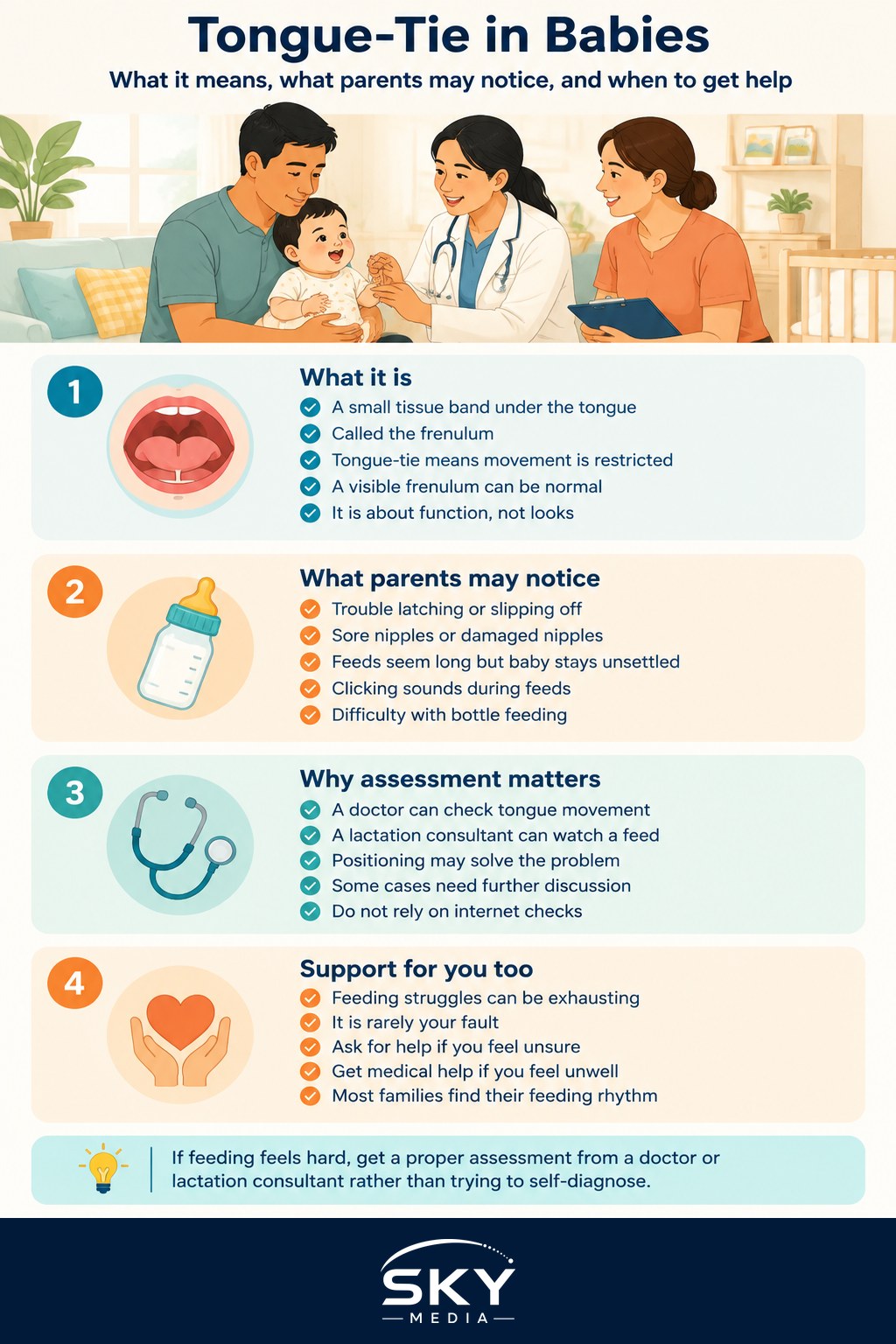
Every baby is born with a small band of tissue under the tongue called the frenulum, which connects the tongue to the floor of the mouth. In tongue-tie, medically known as ankyloglossia, this band is shorter, tighter, or attached further forward than usual, which can limit how freely the tongue moves.
It is important to know that having a visible frenulum is completely normal. Everyone has one. Tongue-tie is not simply about how the tissue looks; it is about whether tongue movement is restricted enough to cause a genuine problem, most often with feeding. Many babies with a noticeable frenulum feed perfectly well and never need anything done at all.
This is exactly why appearance alone is a poor guide, and why parents should resist the urge to peer into their baby’s mouth and reach a conclusion. What matters is function, and that takes a trained eye to judge.
Signs Some Parents Notice
Because tongue-tie can affect feeding, some of the things parents wonder about relate to how nursing or bottle feeding is going. These are not a checklist for diagnosing your baby, but rather examples of what sometimes prompts families to seek an assessment:
- Persistent difficulty latching, or a latch that keeps slipping
- Ongoing sore or damaged nipples despite trying to adjust positioning
- A baby who seems to feed for a very long time yet stays unsettled
- Clicking sounds during feeds
- Concerns about weight gain
- Difficulty with bottle feeding
Here is the crucial point: every one of these can have other causes. Sore nipples and latch trouble very often come down to positioning rather than tongue-tie, and slow weight gain has many possible explanations. That is why the answer is never to assume, but to get proper help. A lactation consultant can often improve feeding dramatically just by fine-tuning the latch, with no tongue-tie involved at all. Our guide to breastfeeding support in Singapore is a good place to start if feeding feels hard.
Some parents also worry about speech later on. Reassuringly, most children develop speech normally regardless, and if you ever have concerns as your child grows, a speech therapist is the right person to see. You may find our note on speech and language development helpful for understanding the usual milestones.
Why an Assessment Matters
If tongue-tie is affecting feeding, a proper assessment by a doctor, paediatrician, or a suitably qualified lactation consultant is the sensible next step. They will look at how your baby’s tongue moves, watch a feed, take your history, and consider the whole picture rather than a single feature. This tells them whether a tongue-tie is truly present and whether it is causing the difficulty you are experiencing.
Sometimes the recommendation is simply to work on positioning and feeding technique, which resolves things without any procedure. In other cases, where a significant tongue-tie is clearly interfering with feeding, a professional may discuss options with you and explain the possible benefits and risks so you can make an informed choice together. That conversation belongs with a qualified clinician who has examined your baby, not with a website.
Please avoid do-it-yourself checks, home remedies, or acting on strong opinions from social media. Feeling pressured to “fix” something that may not be a problem can add stress you do not need in the early weeks. If you are unsure, ask to be seen.
Looking After Yourself Too
Feeding worries can be exhausting and can chip away at your confidence. Be gentle with yourself, lean on support, and remember that struggling with feeding is common and rarely your fault. If sore nipples or a tender, red breast come with feeling unwell, our guide to mastitis and common breastfeeding problems explains when to see a doctor. And if the strain is weighing on your mood, please reach out for help.
A Gentle Wrap-Up
Tongue-tie is real but often over-blamed, and a visible frenulum on its own is normal. If feeding is hard, do not self-diagnose from the internet; get an assessment from a doctor or lactation consultant who can look at the whole picture. Many feeding problems improve with better positioning and support alone. Trust the professionals to guide you, be kind to yourself along the way, and know that with the right help, most families find their feeding rhythm.
Frequently Asked Questions
Who should assess my baby for tongue-tie? A doctor, paediatrician or suitably qualified lactation consultant can assess how your baby’s tongue moves and watch a full feed. Avoid judging it yourself from how the tissue looks. Ask your baby’s doctor for a referral if feeding stays difficult despite help with positioning.
Does tongue-tie always need a procedure? No. Many babies with a visible frenulum feed well and need nothing, and some feeding problems improve with better positioning and latch help alone. If a clinician finds a significant tongue-tie interfering with feeding, they will explain the options, benefits and risks.
Can tongue-tie cause speech problems later? Most children develop speech normally even when a frenulum is noticeable, so tongue-tie is rarely the only explanation for speech delay. If you have concerns as your child grows, a speech therapist or your child’s doctor can assess their language development.
Can bottle-fed babies have tongue-tie too? Yes, tongue-tie is about tongue movement, not how a baby is fed, so it can affect bottle feeding as well. Difficulty with a bottle can have other causes, though, so ask your baby’s doctor to look at the whole picture.
Why are my nipples sore if my baby does not have tongue-tie? Sore nipples very often come from latch and positioning rather than tongue-tie. A shallow latch is a common cause and usually improves with hands-on help. See a lactation consultant, and a doctor if you have cracks, bleeding or feel feverish.
Official sources: HealthHub