
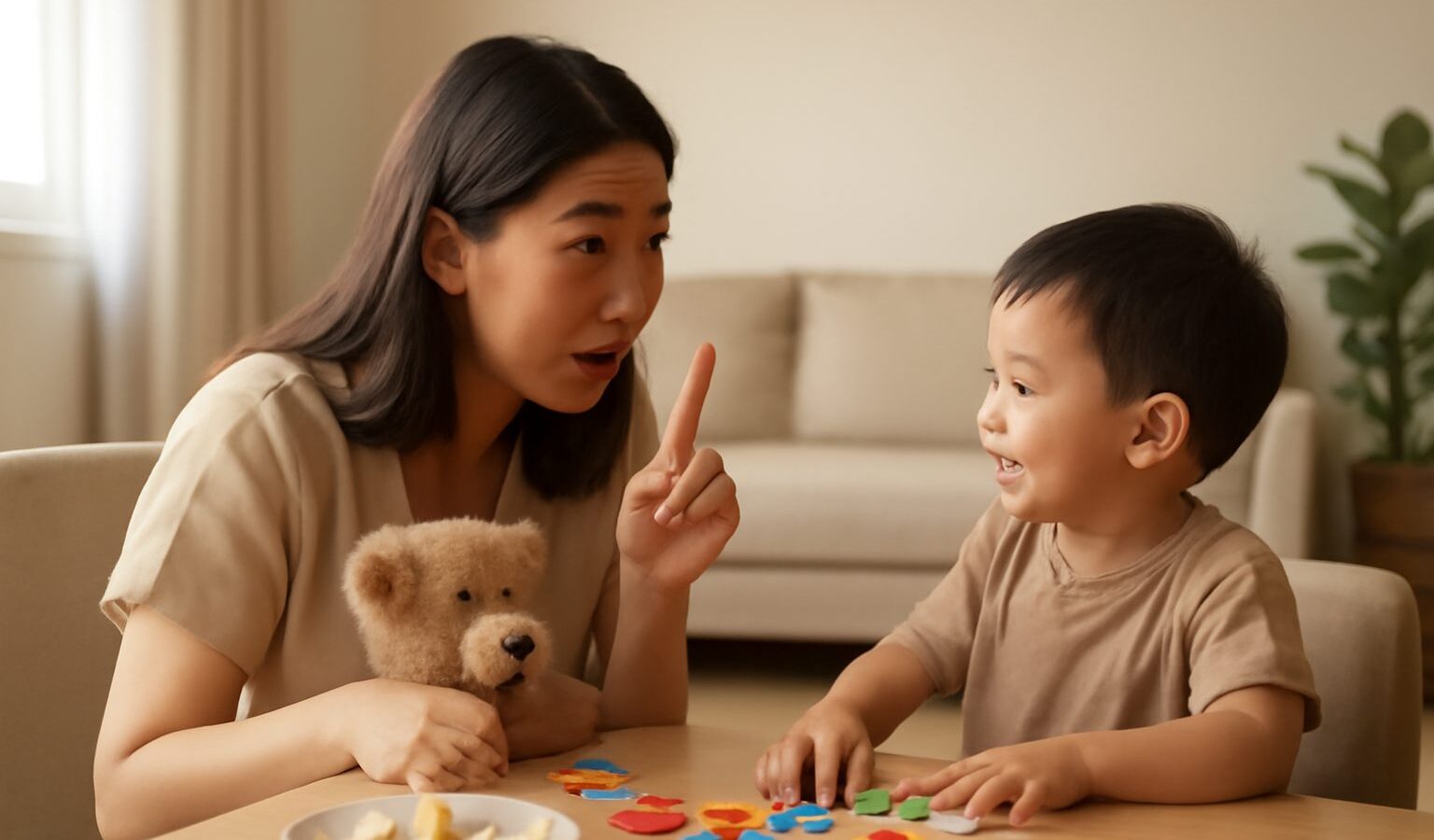
Watching a child find their voice is one of the quiet joys of parenting, and also, sometimes, a source of worry. If you are thinking about speech development in Singapore, it helps to start from a calm place: children learn to talk at very different paces, and a wide range of timing can be completely normal. This guide gives a warm, general overview of how speech and language tend to unfold, how you can gently support it at home, what the bilingual reality here means, and when it may help to check in with a professional. It is general information only and not medical advice, so please speak to your doctor, a polyclinic, or a speech therapist about your own child, and check HealthHub for current guidance.
How Speech and Language Generally Develop
Long before a child says clear words, they are busy learning language. Early on, babies communicate through eye contact, smiles, sounds, and gestures, then move towards babbling, first words, and eventually joining words into little phrases and sentences. Understanding usually runs ahead of speaking, so a young child often grasps far more than they can say.
A few things are worth holding onto:
- Ranges are wide. Two children the same age can be at quite different points and both be developing well.
- It is not just words. Gestures, understanding, and back-and-forth interaction all count as communication.
- Progress is uneven. Bursts, plateaus, and the occasional wobble during other big changes are normal.
Because milestones are described differently across sources and are updated over time, it is best to check current milestone guidance on HealthHub, or ask your doctor at a routine visit, rather than treating any single list as a strict test. Milestones are signposts, not deadlines.
Supporting Speech Through Everyday Moments
You do not need special equipment or drills to help a child’s language grow. The richest input is warm, responsive interaction woven through ordinary days. The simple trio of talking, reading, and singing does an enormous amount.
- Talk through the day. Describe what you are doing, name objects, and chat during meals, baths, and walks. Everyday narration is powerful.
- Follow their lead. Notice what your child is looking at, then talk about that. Shared attention helps words stick.
- Read together often. Picture books, pointing, and naming build vocabulary and a love of stories, whatever the child’s age.
- Sing and rhyme. Songs and nursery rhymes make sounds and patterns playful and memorable.
- Pause and listen. Leave space for your child to respond, even with a sound or gesture, and then build on what they offer.
- Reduce background screens. Real back-and-forth conversation supports language more than passive viewing.
Keep it light and enjoyable. Connection, not correction, is what helps most, so celebrate attempts rather than drilling for perfect words.
The Bilingual and Multilingual Reality Here
Many families in Singapore raise children across two or more languages, often a home language, English, and a mother tongue, and this is a wonderful, ordinary part of life here. A common worry is that using several languages, or mixing them within a sentence, somehow causes delay. Reassuringly, growing up multilingual is not a cause of speech or language delay. Children are well able to learn more than one language, and mixing languages, sometimes called code-switching, is a normal feature of bilingual life, not a problem to fix.
A few gentle pointers help multilingual families:
- Give rich input in each language. Plenty of warm talking, reading, and singing in every language matters more than strict separation.
- Consistency helps. Some families link a language to a person or a setting, but there is no single “correct” system.
- Judge across all languages. When thinking about how a child is doing, consider their total communication across every language they use, not just one.
If you do have concerns, they should be assessed with your child’s whole language world in mind. Our guide to raising bilingual children explains this further, and a speech therapist experienced with multilingual children can advise on your specific situation.
A General Guide to Communication by Age
Every child is different, so treat the table below as a broad orientation only, described in general terms, not a checklist to pass. Timing varies widely, and a child may sit outside these general descriptions and still be developing well. For current milestone details, check HealthHub or ask your doctor.
| General age range | Communication, described broadly | Note |
|---|---|---|
| Babyhood | Eye contact, smiles, sounds, babbling, and gestures | Understanding and interaction come first |
| Toddler stage | First words emerging, then small combinations of words | Vocabulary often grows in bursts |
| Preschool stage | Longer phrases and simple conversations develop | Clarity improves gradually over time |
| Around school entry | More complex sentences and fuller back-and-forth talk | Wide variation remains normal |
When a Check May Help
Because ranges are so wide, there is no single red line, but some signs are worth raising with a professional sooner rather than later. Trust your instincts, and speak to your doctor, a polyclinic, or a speech therapist if you notice things such as very little babbling or gesturing, limited understanding of simple everyday requests, a lack of interest in interaction, a loss of words or skills a child once had, or if your own sense simply tells you something is not right. Concerns about hearing are especially worth checking promptly, since hearing underpins speech.
You never need a “big enough” reason to ask. A check can be reassuring even when all is well, and professionals would far rather you asked early than waited alone. Asking questions is a sign of attentive parenting, not of overreacting.
Getting Support and Early Intervention
If a professional suggests a closer look, there are established pathways in Singapore to help. A doctor or polyclinic can guide you, and referrals may lead to hearing checks, a speech and language assessment, or early intervention support depending on what is found. Early intervention is simply about giving a child helpful support at a stage when it can make a real difference, and it works alongside, not instead of, everything you do at home.
Support is a normal, positive part of many children’s journeys, and reaching out early keeps options open. Your paediatrician, doctor, or a speech therapist can explain what is available and what would suit your child.
Explore more
Language grows best through everyday connection, and that looks a little different in a multilingual home. See our guide to raising bilingual children in Singapore, and if you are exploring support options, our overview of early intervention programmes in Singapore explains how these pathways generally work.