

If you own or plan to buy a motorised personal mobility device in Singapore, UL2272 PMD certification is the single most important label to understand. UL2272 is the fire safety standard that Singapore adopted for e-scooters and similar devices after a series of battery fires in homes. Using a non-certified e-scooter on public paths is not allowed, and certified devices must also be registered and inspected.
This guide explains what the standard actually tests, how to check a device yourself, and what it means if yours does not comply. It does not cover how to get rid of a non-compliant device; that is a separate process with its own disposal options.
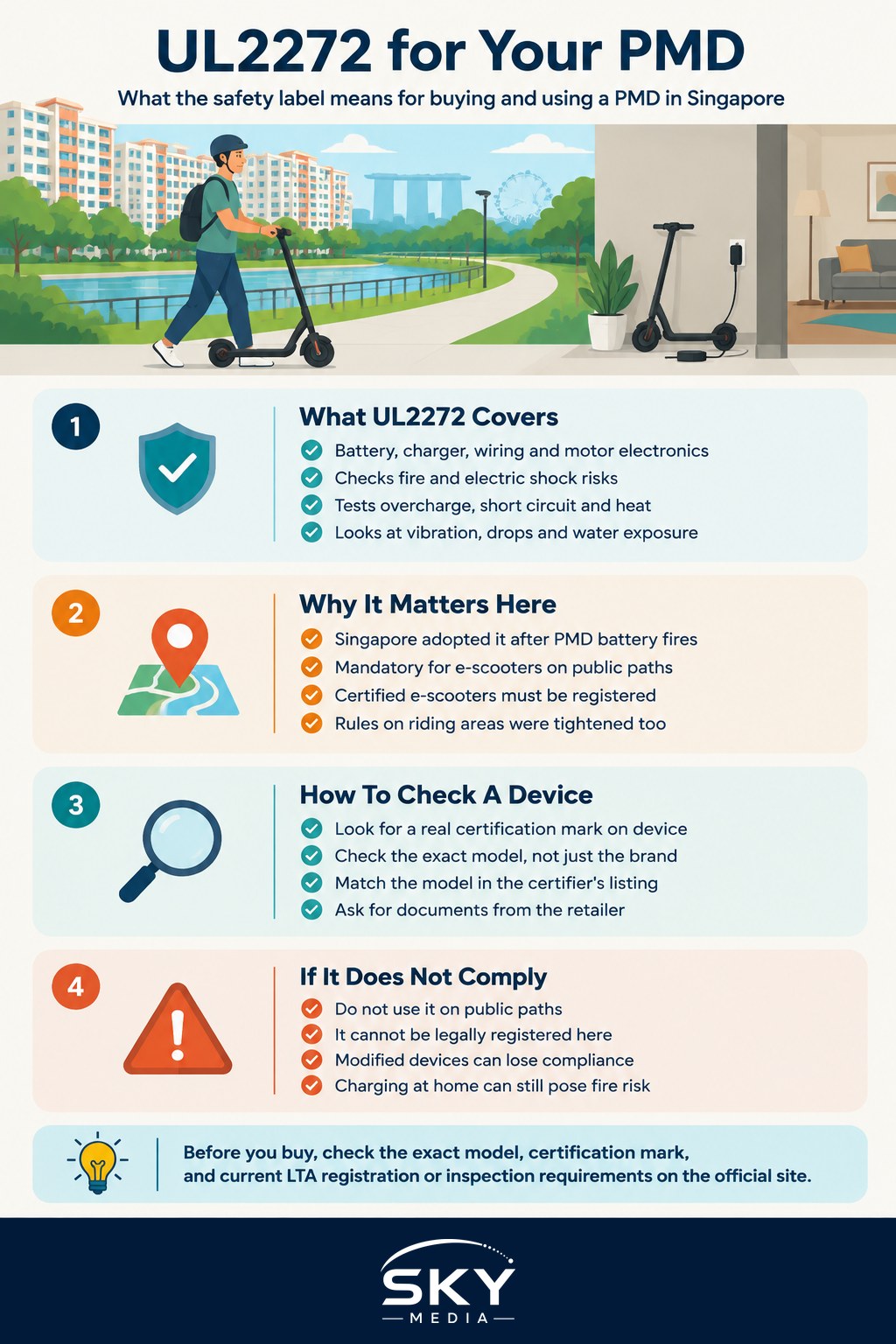
What the UL2272 Standard Is
UL2272 is a safety standard published by UL (originally Underwriters Laboratories), a US-based safety science organisation. Its full scope is the electrical systems of personal e-mobility devices. In plain terms, it checks whether the battery, charger, wiring and motor electronics work together safely, with a focus on fire and electrical shock risks.
Testing under the standard typically looks at things like:
- Overcharging and over-discharging. Whether the battery management system stops charging or discharging at safe limits.
- Short circuits. How the device behaves if a fault occurs.
- Temperature. Whether cells and components stay within safe temperatures in use and while charging.
- Mechanical stress. Vibration, shock, drops and crush tests, because scooters take knocks.
- Water exposure. Whether rain and splashes can cause dangerous faults.
- The charger and battery together. The standard assesses the system, not just a single part.
What UL2272 does not do is guarantee that a device can never catch fire, or that it stays safe after modification, damage or poor charging habits. It sets a baseline for design and manufacture.
Why Singapore Requires It
Singapore saw a number of fires linked to PMD batteries, several of them in HDB flats, which led to tighter rules. The Land Transport Authority (LTA) made UL2272 certification mandatory for e-scooters used on public paths, and introduced compulsory registration and periodic inspection for e-scooters. Over time, the government also restricted where PMDs can be ridden, banning them from footpaths and limiting them to cycling paths and park connectors.
The exact rules, deadlines and inspection intervals are set by LTA and can change. For the latest position, check LTA’s website or the Active Mobility section of OneMotoring. The broader rules on where and how to ride are covered in personal mobility device rules in Singapore and cycling and PMD rules.
How to Check If Your PMD Is Genuinely UL2272 Certified
Counterfeit or misleading labels exist, so it pays to check carefully, especially when buying second-hand or from overseas sellers. Steps to take:
- Look for the certification mark on the device. Genuine certified devices carry a mark from an accredited certification body indicating compliance with UL2272. A sticker on the box alone is not enough.
- Check the model, not just the brand. Certification applies to specific models and configurations. A brand having one certified model does not mean all its models are certified.
- Look for Singapore’s compliance and registration markings. Registered e-scooters in Singapore carry an LTA registration mark, and compliant devices carry an identifying label. If a device for use here has neither, ask why.
- Search the certifier’s public listing. Major certification bodies maintain online directories where you can search by manufacturer and model. Match the exact model number.
- Ask the retailer for documents. A reputable shop should be able to show the certification details for the model it sells.
- Be wary of modified devices. Swapping in a bigger battery, a third-party charger or a more powerful motor can invalidate compliance, even if the original device was certified.
| Check | Certified and compliant device | Warning sign |
|---|---|---|
| Certification mark | Permanent mark from an accredited certifier on the device | Only a printed sticker on packaging, or no mark |
| Model match | Exact model and battery listed in the certifier’s directory | Similar-looking model, different battery capacity |
| Singapore registration | LTA registration mark displayed as required | Seller says registration is “not needed” |
| Charger and battery | Original or manufacturer-approved parts | Generic charger, swapped or upgraded battery |
| Seller | Can provide documents and after-sales support | Online listing with no paperwork, unusually low price |
What Non-Compliance Means for You
If your device is not UL2272 certified, or has been modified so it no longer complies, several things follow:
- You cannot use it on public paths. Riding a non-compliant e-scooter on public paths, including cycling paths and park connectors, is an offence. Enforcement officers can take action, and penalties can include fines, seizure of the device and, for serious cases, prosecution.
- You cannot register it. Without registration, it cannot legally be used on public paths.
- Selling non-compliant devices for use on public paths is restricted. Retailers face rules too, which is another reason to buy from established sellers.
- Fire risk remains at home. The more practical danger is keeping and charging an uncertified device in your flat. SCDF (the Singapore Civil Defence Force) has repeatedly warned about fires starting from PMD batteries while charging.
- Insurance may be affected. If a fire or accident involves a non-compliant device, check how your home or personal insurance policy treats it; the policy wording decides.
Penalty amounts and enforcement details are set out by LTA and can change, so check the official site rather than relying on old news reports. If you decide to part with a non-compliant device, use the official disposal channels rather than leaving it at a bin centre.
Safe Charging Habits Even With a Certified Device
Certification lowers risk, but daily habits matter just as much:
- Use only the original or manufacturer-approved charger.
- Do not charge overnight or while you are out. Stay nearby while it charges and unplug when full.
- Charge in an open area, away from exits, sofas, curtains and anything flammable. Do not charge in a bedroom or block your main door.
- Let the battery cool after a ride before charging.
- Inspect regularly. Swelling, unusual heat, strange smells or hissing are signs to stop using the device and seek a professional check.
- Do not modify or repair batteries yourself. Leave battery work to authorised service centres.
- Avoid leaving it in direct sun or a hot car boot.
Buying a PMD With Compliance in Mind
If you are shopping for a new device, put compliance first and features second. Ask whether an e-scooter, an e-bike or a regular bicycle suits your commute better; our comparison of e-bikes vs PMDs vs bicycles can help. Then confirm the model’s certification, registration requirements and inspection schedule before you pay.
UL2272 is general safety information here, not legal advice. Rules on registration, inspection and penalties are decided by LTA, so confirm the current requirements on its website before you buy, ride or sell a PMD.
Official sources: Land Transport Authority (LTA)